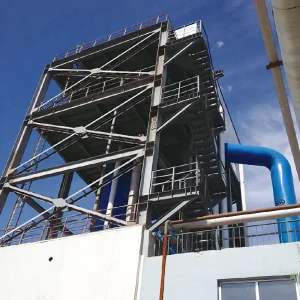
Energy-efficient vapor recompression solutions designed for industrial concentration processes, reducing operating costs significantly.
View Details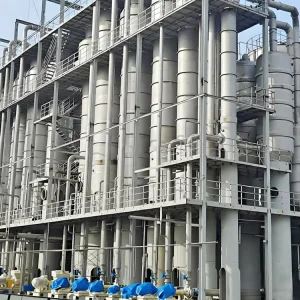
Engineered for high-efficiency concentration of industrial wastewater and steep liquor by recycling available thermal energy.
View Details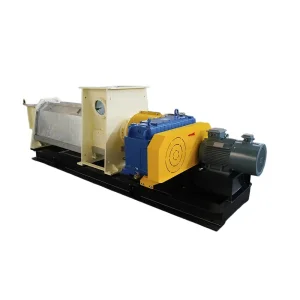
Top-tier solid-liquid separation equipment featuring robust torque outputs and optimized moisture extraction capabilities.
View Details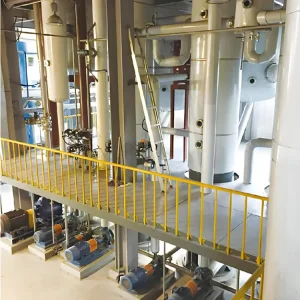
Preserves heat-sensitive liquids by establishing uniform, thin-film dynamics for accelerated evaporation under low operating temp.
View Details
Reliable and certified mechanical dewatering designed for demanding agricultural and chemical starch plant residues.
View Details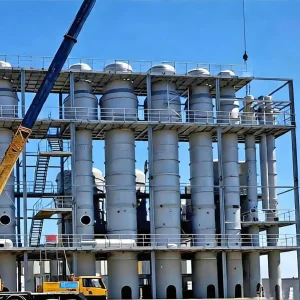
Cutting-edge evaporation system frameworks offering tailored configurations to meet custom industrial chemical requirements.
View Details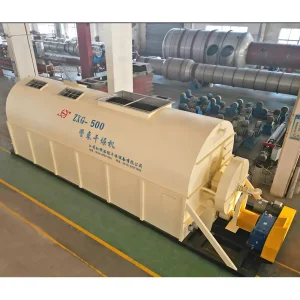
Indirect steam heating method optimized for safe, low-oxygen drying of heavy agricultural starches and protein powders.
View Details
Advanced thermal integration utilizing compressor loops to feed latent heat back into the concentration cycle.
View DetailsIn modern agricultural logistics, post-harvest losses present one of the most critical challenges to global food security. Moisture content management stands as the primary threshold parameter regulating whether bulk harvested crops survive warehousing, transit, and processing operations without developing mold, mycotoxins, or cellular degradation. Mobile grain dryers represent a pivotal advancement, combining mechanical adaptability with complex thermal dynamics to stabilize grain properties immediately after field extraction.
From a scientific standpoint, drying is not merely a process of heating; it is a highly controlled thermodynamic operation involving concurrent heat and mass transfer. Moisture within grain kernels is categorized into free surface water and bound interstitial water. Removing surface water is relatively simple, requiring sensible heat to overcome latent heat of vaporization. However, extractable bound water requires the creation of precise vapor pressure differentials between the inside of the kernel and the surrounding airflow without exceeding the thermal limits of the grain, which would compromise the protein matrices and germination viability.
"Optimizing thermal processing requires balancing thermal efficiency against grain quality. Jiangsu Zongheng leverages specialized structural designs to integrate dewatering presses, indirect steam tube bundle systems, and industrial evaporators into dynamic systems capable of maximizing performance across variable climates."
Historically, grain harvesting followed a rigid route: field harvesting, raw transport, and storage at centralized granaries where stationary, massive drying towers handled conditioning. This model introduces high operational risks. Freshly harvested crops with moisture percentages exceeding 20% can ferment within hours, leading to localized heating, spore germination, and total lot contamination.
Today, the industry is shifting toward decentralized processing. Sourcing mobile grain drying solutions allows farm cooperatives, starch manufacturers, and processing plants to dry crops directly at the collection nodes. By bringing high-capacity thermal systems to the crop origin, operators eliminate transportation weight penalties—avoiding paying freight fees for shipping excess water weight—and lower the biological risks of crop spoilage.
Large-scale corporate procurement teams evaluating suppliers place primary importance on reliable manufacturing standards and long-term durability. Dryers operate in highly abrasive, dust-laden, and chemically corrosive environments. To ensure operational longevity, key evaluation parameters include:
Utilizing sensor feedback networks to continuously adapt the air-to-grain thermal ratio, ensuring consistent drying rates even when atmospheric ambient moisture fluctuates.
Incorporates pre-heating chambers that route exit exhaust streams to warm incoming air, reducing overall energy demand by up to 25% compared to single-pass systems.
Allows seamless coupling with mechanical dewatering units (Single Screw Presses) to pre-extract excess water mechanically prior to thermal treatment, optimizing resource use.
Founded in 1992 (originally known as Yixing Yangxi Light Industry Machinery Factory), Jiangsu Zongheng Concentrating and Drying Equipment Co., Ltd. is a high-tech manufacturing enterprise specializing in state-of-the-art concentration, drying, and starch processing machinery. Strategically located in Zhoutie Town, Yixing City, on the shores of Taihu Lake, our facility spans a total area of over 54,000 square meters, containing a modern production workshop area of more than 22,000 square meters.
As an active member of the China Starch and Alcohol Association, Jiangsu Zongheng has dedicated over three decades to refining industrial drying technologies. Our structural team comprises 3 senior engineers and 20+ specialized mechanical, thermal, and process engineers. Over the years, our product catalog has expanded to encompass advanced systems including falling film evaporators, MVR evaporation plants, single screw presses, airflow dryers, and robust tube bundle dryers, catering to food fermentation, chemical processing, starch refining, alcohol production, and waste treatment sectors.
Established as Yixing Yangxi Light Industrial Machinery Factory with 45 employees, laying the groundwork for specialized light industrial engineering.
Formalized quality management systems under international standards, ensuring consistent production parameters across all product lines.
Recognized as a Jiangsu Provincial High-Tech Enterprise following successful patent filings and R&D achievements in thermal evaporation.
Acquired ASME authorization, qualifying the plant to design and manufacture heavy-duty Code-compliant pressure vessels for global markets.
Deploying advanced mechanical dewatering systems and optimized evaporation processes globally, backed by international quality systems.
For modern agro-industrial plants, drying is rarely an isolated procedure. To maximize yields and reduce emissions, engineers utilize a sequence of physical processes that integrate dewatering, thermal drying, and waste heat evaporation. For instance, in starch refining or bio-ethanol DDGS (Distillers Dried Grains with Solubles) production, raw inputs contain large ratios of liquid that are highly energy-intensive to dry directly.
The solution involves a three-stage mechanical and thermal pathway:
By coordinating screw presses, evaporation units, and drying systems, Jiangsu Zongheng helps facilities transition toward zero-liquid-discharge (ZLD) operations while capturing maximum by-product value.
Looking ahead, the development of industrial drying systems focuses on smart operations and carbon footprint reductions. The engineering team at Jiangsu Zongheng is actively developing and testing systems that utilize:
Collaborate with Jiangsu Zongheng's engineering team to design, manufacture, and commission drying and concentration systems tailored to your specific plant parameters.
Request Technical Consultation
Leading suppliers and factory providing energy-efficient concentration loops engineered for high-solute solutions.
View Details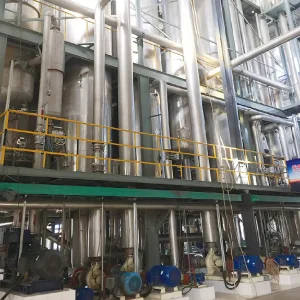
Specialized evaporation configurations using high-velocity pump circuits to prevent scaling during high-viscosity concentration.
View Details
Factory-direct, high-efficiency indirect steam drying units providing safe and continuous industrial processing loops.
View Details
Designed for crystallizer configurations and salting out operations where liquid feeds are prone to dynamic chemical scaling.
View Details
Reliable concentration systems engineered for premium juice, pharmaceutical, and biological thermal treatments.
View Details
Tested and certified industrial evaporation plant models optimized for handling concentrated residues under negative pressure.
View Details
Delivering high-efficiency plant designs that reduce steam dependency through advanced vapor recompression technology.
View Details
Designed for extracting water from corn fiber, germ, and wet distillers grains, increasing downstream dryer capacity.
View Details Zongheng