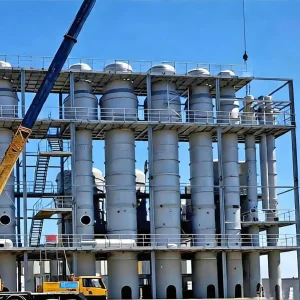
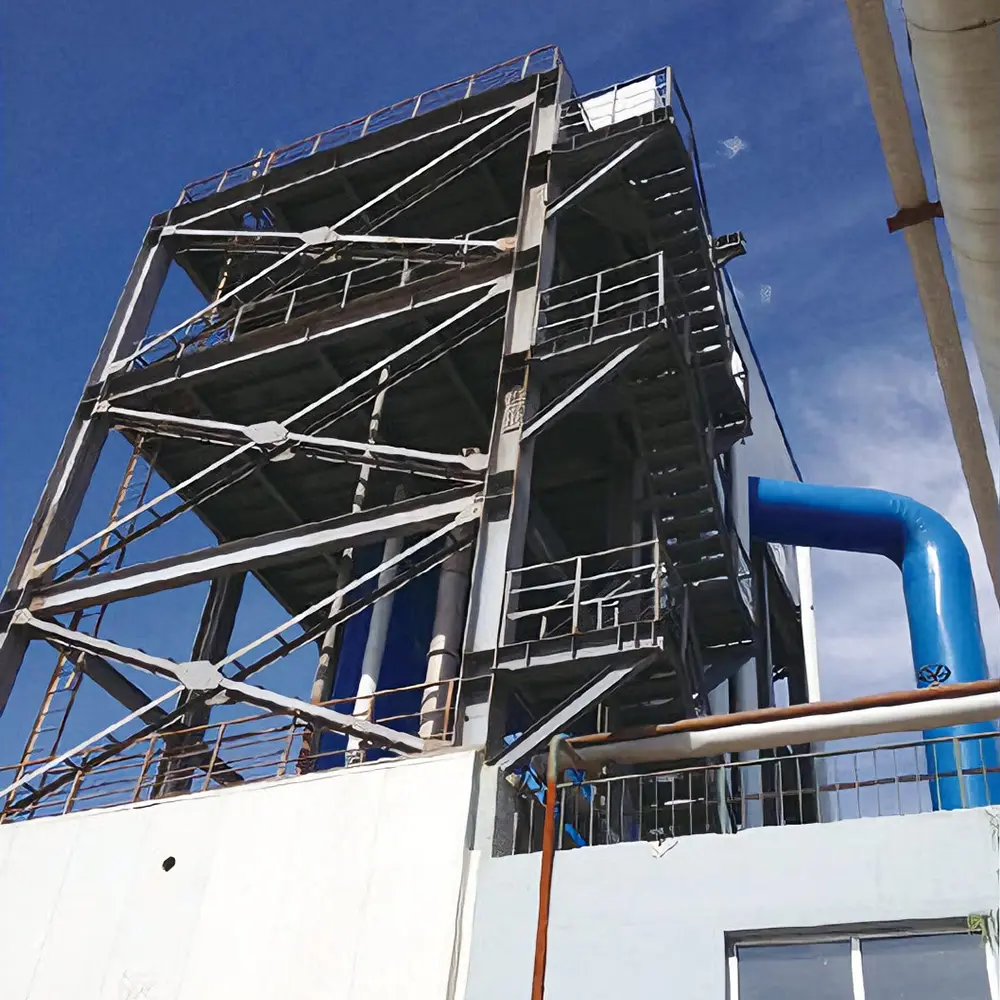
China Suppliers MVR Evaporation Plant by Zongheng: Energy-Efficient Solutions for Industry Needs

Mechanical Vapor Recompression (MVR) plants are revolutionizing industrial processes in China by providing substantial operational savings. These advanced systems utilize electricity to compress vapors, which are then reused as a heating medium, resulting in low energy consumption and efficient low-temperature evaporation. With high operational flexibility, MVR plants are ideal for a variety of applications in industries such as food processing, chemicals, and wastewater treatment. As leading suppliers in the market, our factory specializes in delivering high-quality MVR solutions tailored to meet the diverse needs of businesses across China.

Product Description

Description

MVR Evaporation plant delivers substantial operational cost savings in areas with an ample supply of low-cost electrical energy.

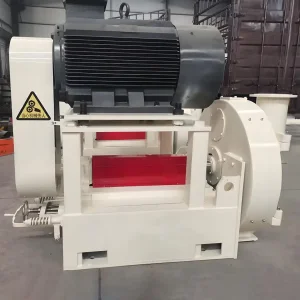
Once an MVR evaporation plant is running, little or no additional steam is required. In the MVR evaporation plant, a centrifugal fan is used to recompress the vapour to a higher pressure, resulting in a temperature rise. This means that the recompressed vapour can be used as the evaporation plant heating medium, while the condensate is ideal for preheating of the feed product.

For low boiling point increases, a single-stage compressor can be used to fulfill the requirements of the design.

For high boiling point increases, we will provide two designs: multiple-stage compressors, single stage compressors combined with multiple-effect.

The MVR evaporation plant almost doesn't use steam, but electric energy is required as the main energy source.

The power consumption of the main motor of MVR is due to the heat exchange area and the evaporating temperature of the evaporation plant. The Heat exchange area is bigger, and as a result, power consumption is lower, but the investment in equipment is increased.

Evaporating temperature is higher and as a result, power consumption is lower, but fouling in the calandria is therefore increased; Evaporating temperature is lower and as a result, power consumption is higher.

MVR can be powered by an electric motor, the rotary speed of an MVR can be controlled by a frequency converter, and the rotary speed of an MVR may control the evaporation rate and final concentration of the MVR evaporation plant.
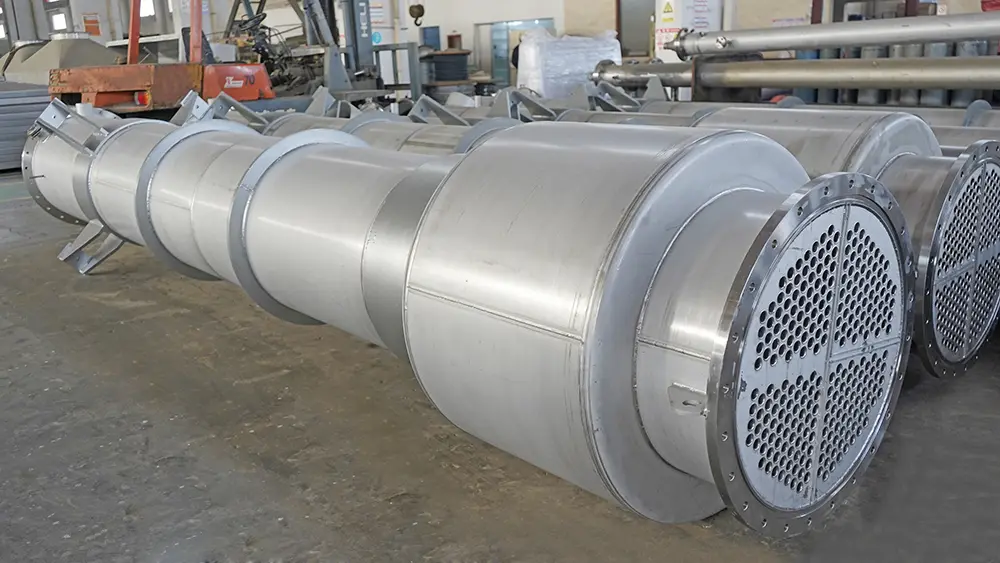
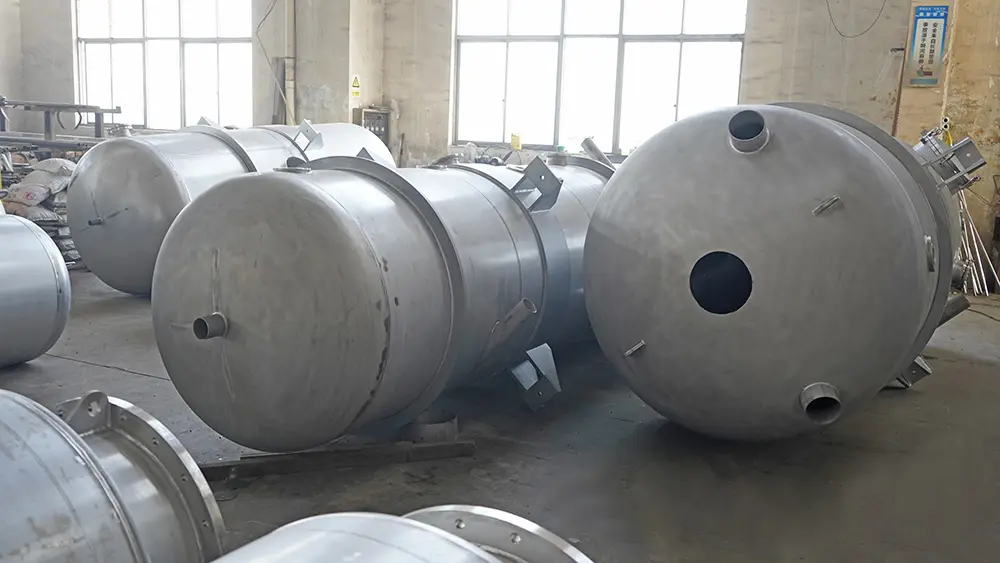
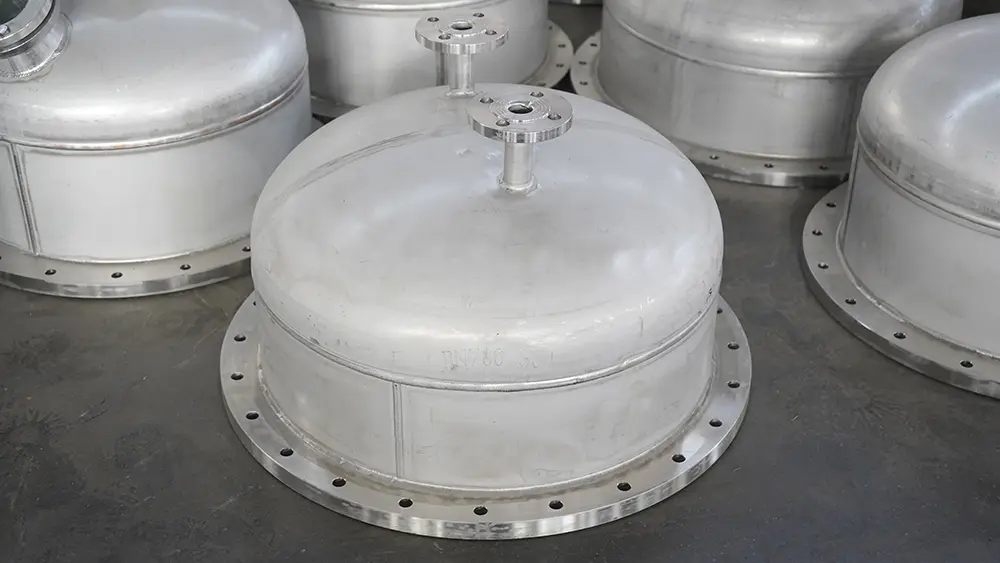
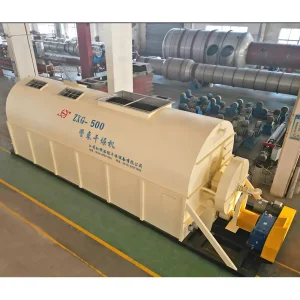
MVR Evaporation Plant Detail (1)
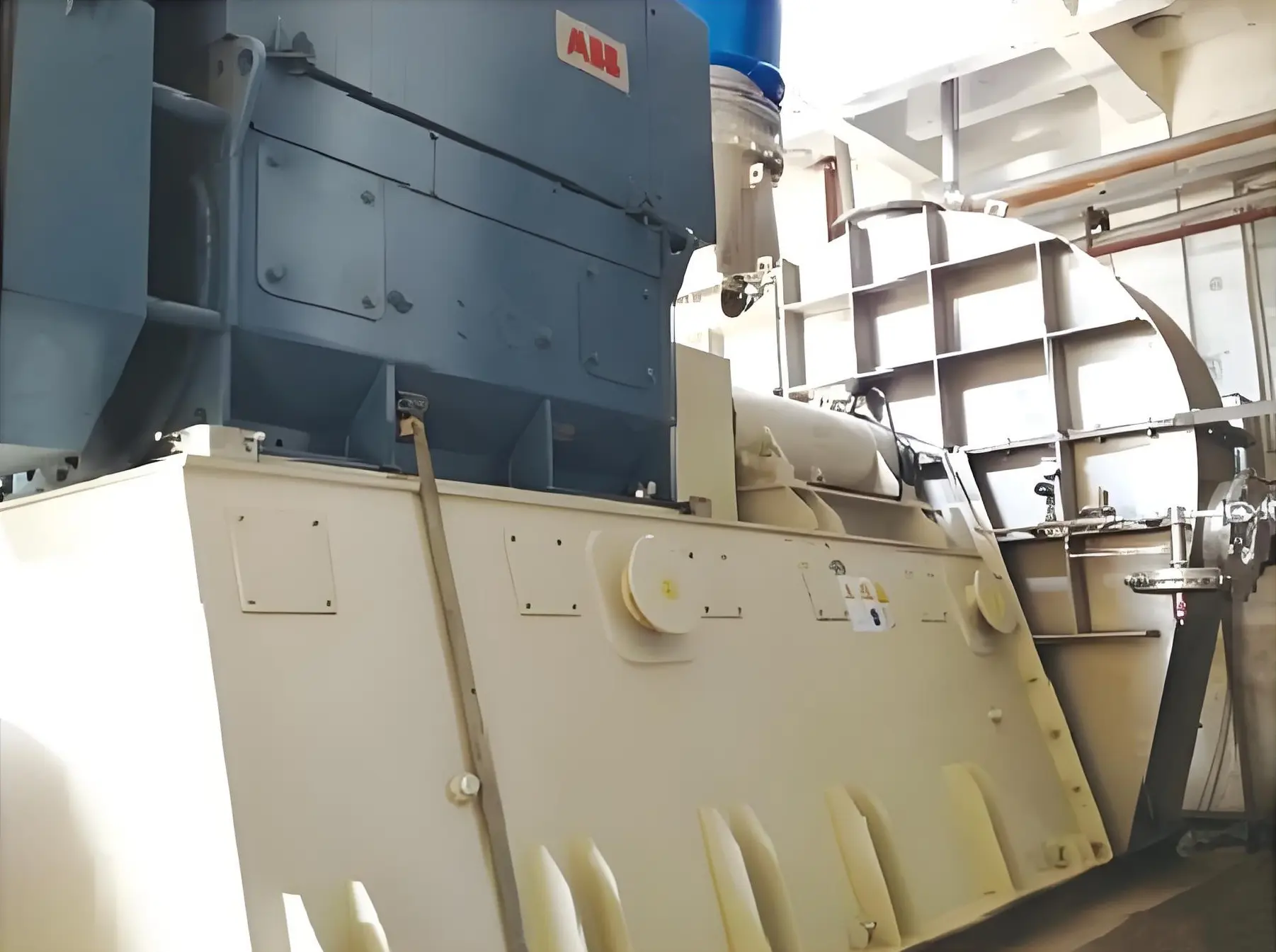
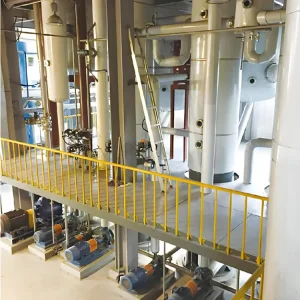
MVR Evaporation Plant Detail (2)
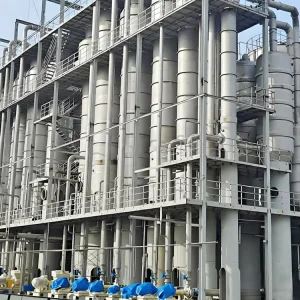
MVR Evaporation Plant Detail (3)
Particular Feature
  • Low specific energy consumption.
  • Gentle evaporation of the product due to low temperature differences largely increases product quality, decreases fouling.
  • Short residence times of the product, as a single-effect system is most often used.
  • Only a small area condenser, requiring little cooling water.
  • High availability of the plants due to the simplicity of the process.
  • Excellent partial load behaviour.
  • Low specific operating costs.
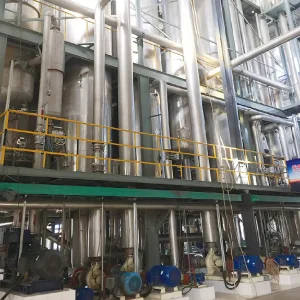
MVR Evaporation Plant Detail (4)
Fields of Application
🏭
Particularly suited for the food and beverages industry (evaporation of milk, whey, sugar solutions), chemical industry (evaporation of aqueous solutions), the salt works industry (evaporation of saline solutions), and environmental protection technology (concentration of waste water).
MVR Evaporation Plant Compared with a Normal Multiple-effect Evaporation Plant
Type Multiple-effect evaporation plant / TVR evaporation plant MVR evaporation plant
Energy sources Steam Electric power
Energy consumption of concentrating water of 1 ton, per hour 0.16–0.6T 18–26 Kw
💡
For example: Evaporation rate: 50T/h | Unit price of steam: 160 RMB/T | Unit price of electric power: 0.8 RMB/Kw | 8,000 hours per annum.
Type 4-effect evaporation plant MVR evaporation plant
Energy consumption Steam: 11T/h Electric power: 1,000 Kw/h
Expense of energy consumption, per annum 14,080,000 RMB 6,400,000 RMB
Economizing expense, per annum Zero 7,680,000 RMB
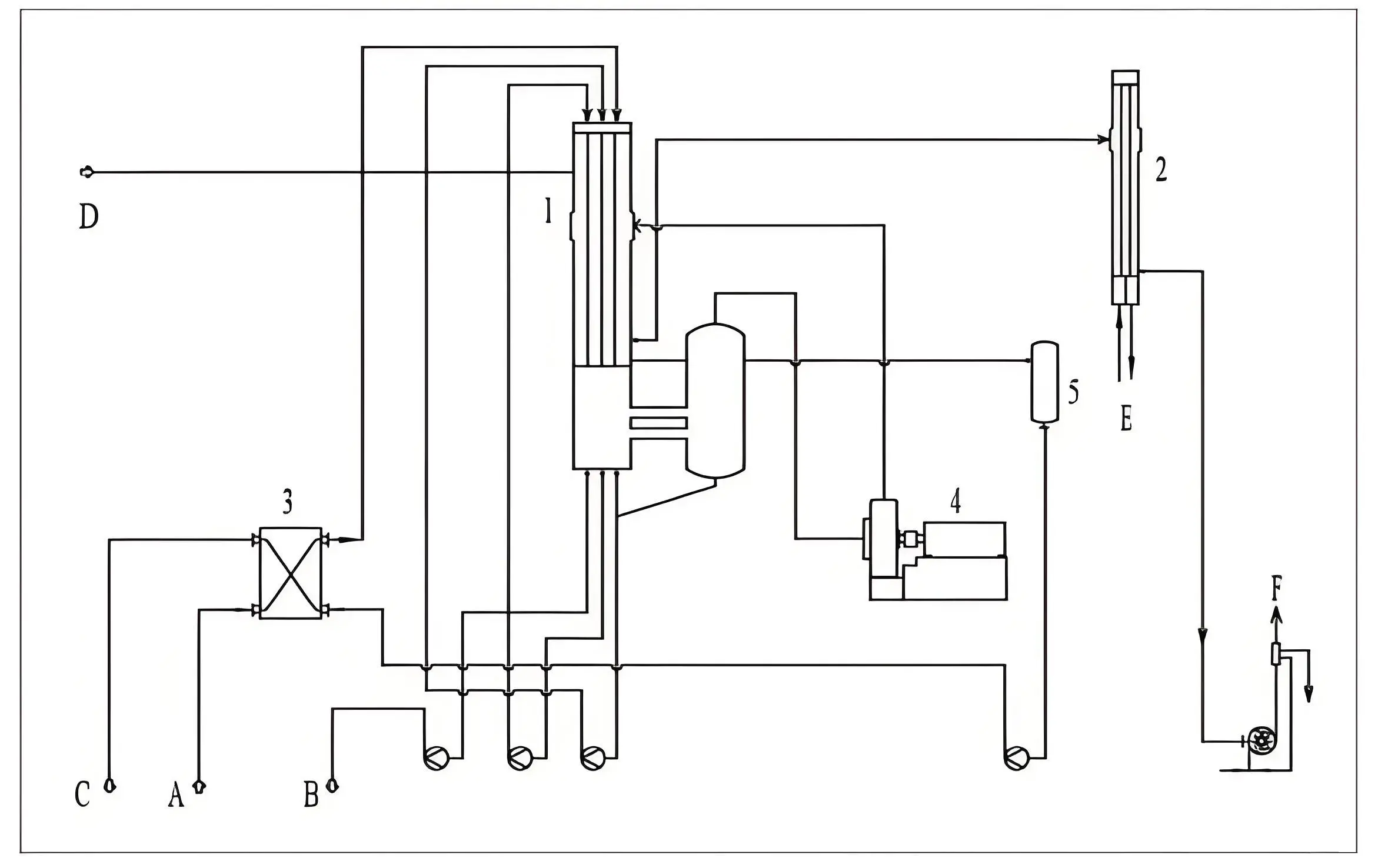
  • 1. Evaporator
  • 2. Condenser
  • 3. Plate heat exchanger
  • 4. MVR
  • 5. Condensate Tank
  • A. Liquor
  • B. Product
  • C. Condensate
  • D. Fresh steam
  • E. Cooling water
  • F. Deaeration
MVR Evaporation Plant Detail (5)
Type Selection Criteria for Evaporation Plants

When we design evaporation plants, various requirements must be considered. These determine the type of design, arrangement, the resulting process, the cost of investments, and running expenses.

⚙️ The most important requirements:
📊 Capacity and Operation Data
  • Name of Product
  • Feeding concentration (dry materials %)
  • Feeding temperature
  • Final concentration (dry materials %)
  • Evaporation rate (T/h)
  • If crystallization, requirement of crystals
  • Requirement of controlling, automatization
🔬 Product Properties
  • Product properties
  • Viscosity and flow properties
  • Tendency of foaming
  • Fouling and precipitation
  • Boiling Point
Utility Requirements
  • Steam pressure / temperature
  • Temperature of Cooling water feeding
  • Voltage / frequency
  • Unit price of steam (RMB/T)
  • Unit price of electric power (RMB/Kw)
♻️ Waste Heat Parameter
  • Waste vapour rate from dryer
  • Wet bulb temperature of waste vapour from dryer
  • Condensate rate from dryer
  • Condensate temperature from dryer
  • Liquefaction vapour rate
  • Liquefaction Vapour temperature
  • Others
🛠️ Selection of Materials
  • Material of heating pipe
  • Material of tube plate
  • Material of contacting with liquor
  • Material of contacting with secondary steam
  • Requirement of surface finish
🌿 Energy Efficiency of Evaporation Plants
  • Multiple-effect evaporation plant
  • TVR evaporation plant
  • MVR evaporation plant
  • Waste heat evaporation plant
Frequently Asked Questions (FAQ)
What is an MVR Evaporation Plant and how does it work?
An MVR (Mechanical Vapour Recompression) Evaporation Plant uses a centrifugal fan to recompress the vapour generated during evaporation to a higher pressure, which raises its temperature. This recompressed vapour is then recycled as the heating medium for the evaporation process itself, significantly reducing the need for external steam and lowering overall energy costs.
What are the main energy advantages of an MVR Evaporation Plant compared to a traditional multiple-effect evaporation plant?
The MVR Evaporation Plant primarily consumes electric power rather than steam. For example, concentrating 1 ton of water per hour requires only 18–26 Kw of electricity in an MVR system, compared to 0.16–0.6 tons of steam in a traditional multiple-effect system. At a 50T/h evaporation rate, an MVR plant can save approximately 7,680,000 RMB per year in energy costs compared to a 4-effect evaporation plant.
In which industries is the MVR Evaporation Plant most commonly applied?
The MVR Evaporation Plant is particularly suited for the food and beverages industry (evaporation of milk, whey, and sugar solutions), the chemical industry (evaporation of aqueous solutions), the salt works industry (evaporation of saline solutions), and environmental protection technology (concentration of wastewater).
How does the evaporating temperature affect the power consumption of an MVR system?
Higher evaporating temperatures result in lower power consumption for the MVR system, but this also increases fouling in the calandria. Conversely, lower evaporating temperatures reduce fouling but increase power consumption. The optimal evaporating temperature is therefore selected based on a balance between energy efficiency and equipment maintenance requirements.
Can the evaporation rate of an MVR plant be adjusted during operation?
Yes. The MVR is powered by an electric motor whose rotary speed can be precisely controlled by a frequency converter. By adjusting the rotary speed of the MVR, operators can effectively control both the evaporation rate and the final concentration of the product, giving the plant excellent partial load behaviour and operational flexibility.
What key parameters are needed to select the right evaporation plant for my application?
To select the most suitable evaporation plant, several parameters are required, including: product name and properties (viscosity, foaming tendency, boiling point, fouling), feeding and final concentration, evaporation rate, utility data (steam pressure, cooling water temperature, voltage/frequency, energy unit prices), waste heat parameters, and material requirements for components in contact with the product or steam. These factors together determine the optimal plant type, design, and energy efficiency strategy.

Related Products