Deploying advanced thermal evaporation technology across Georgia's agricultural, chemical, pulp & paper, and industrial wastewater treatment sectors. Our precision-engineered evaporators reduce thermal energy consumption by up to 80% while maximizing operational uptime.
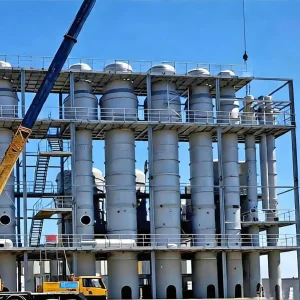
High-capacity thermal separation systems tailored for heavy industrial concentration, brine treatment, and chemical synthesis across Georgia facilities.
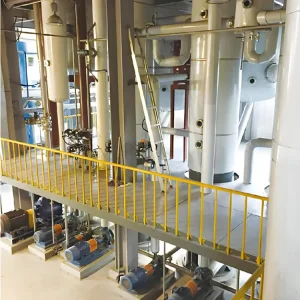
CE-certified low residual time evaporator designed for heat-sensitive liquids, starch slurry concentration, juice refining, and bio-pharmaceutical applications.
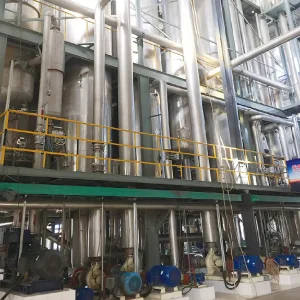
Robust anti-fouling concentration plant engineered for high-viscosity media, scale-forming crystallization feedstocks, and wastewater ZLD solutions.
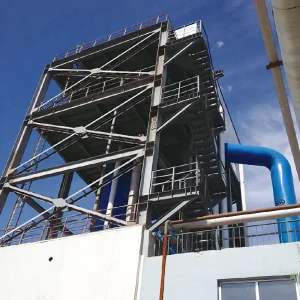
State-of-the-art Mechanical Vapor Recompression technology eliminating steam utility reliance by re-compressing secondary vapor for extreme efficiency.
As a critical industrial and logistics hub in the American Southeast, Georgia has experienced significant expansion across pulp and paper manufacturing, agricultural food processing, specialty chemical synthesis, and automotive component production. From the Port of Savannah's expanding chemical corridors to the agricultural processing belts in Southern Georgia and the manufacturing hubs surrounding Atlanta and Augusta, regional industries face a dual mandate: escalating production capacity while adhering to stringent environmental water discharge regulations established by the Georgia Environmental Protection Division (EPD) and the US EPA.
Evaporation technology serves as the cornerstone thermal separation process for these sectors. Whether managing black liquor concentration in pulp mills, recovering valuable co-products in corn wet milling and starch processing, or executing Zero Liquid Discharge (ZLD) strategies to meet National Pollutant Discharge Elimination System (NPDES) permit strictures, Georgia operators require custom-engineered evaporator units designed for resilience, energy frugality, and strict corrosion mitigation.
Georgia's agricultural strength in corn processing, peanut co-products, and fruit juice production demands high-clarity falling film evaporators and multi-stage starch washing cyclones. Liquid concentration preserves product integrity while reducing freight volumes.
With millions of acres of commercial timberland, Georgia pulp processing facilities utilize multiple-effect black liquor evaporators to concentrate spent liquor prior to recovery boiler incineration, maximizing thermal efficiency and chemical recovery.
For specialized chemical plants in Macon, Savannah, and Columbus, custom titanium and nickel-alloy forced circulation evaporators facilitate high-purity chemical concentration, acid recovery, and organic solvent purification under vacuum conditions.
Selecting the optimal industrial evaporator for a Georgia facility requires balancing initial capital expenditure (CAPEX) against long-term operational costs (OPEX), regional electricity rates (Georgia Power industrial tariffs), steam availability, and feed fluid characteristics. Below is an engineering framework comparing primary evaporation technical routes.
| Technology System | Primary Energy Source | Specific Energy Consumption | Ideal Feed Characteristics | Georgia Industrial Alignment |
|---|---|---|---|---|
| Mechanical Vapor Recompression (MVR) | Electricity (Centrifugal Compressor / Blower) | 15 - 35 kWh / ton water evaporated | Low-to-medium boiling point rise (BPR), large volume evaporation | High energy savings where steam boiler capacity is limited; ideal for starch, food, and wastewater treatment. |
| Multi-Effect Evaporator (MEE) | Live Steam (Coal, Natural Gas, Biomass Boiler) | 0.15 - 0.35 tons steam / ton water evaporated | High BPR, high concentration ratios, high-temperature tolerance | Ideal for facilities with low-cost excess boiler capacity or biomass steam production in pulp & wood industries. |
| Thermal Vapor Recompression (TVR) | Motive Steam + Entrained Vapor | 0.2 - 0.4 tons steam / ton water evaporated | Moderate steam availability, moderate boiling point elevation | Mid-tier retrofits seeking steam economy improvements without full mechanical compressor deployment. |
| Forced Circulation Crystallizer | Steam or MVR Integration | Dependent on salt concentration kinetics | High fouling, high viscosity, crystallizing brines (ZLD) | Final stage wastewater ZLD, chemical salt recovery, and high scaling industrial effluent treatment. |
Founded in 1992 (originally Yixing Yangxi Light Industry Machinery Factory), Jiangsu Zongheng Concentrating and Drying Equipment Co., Ltd. has developed into a global leader in high-efficiency thermal separation, concentration, and drying technology. Spanning over 54,000 square meters of manufacturing acreage with 22,000 square meters of specialized heavy fabrication workshops, our company brings unexcelled manufacturing expertise to industrial clients in Georgia and across North America.
As an active member of the China Starch and Alcohol Association and holder of Category III Special Equipment Manufacturing Licenses, ASME "U" Stamp Authorization, and ISO 9001 International Quality System Certification, Zongheng equipment complies with rigorous international engineering standards. Our team of 20+ senior thermal and mechanical engineers works directly with Georgia plant managers and consulting engineers to deliver turnkey, corrosion-resistant, high-efficiency equipment.
Establishment of production base; initiation of specialized industrial thermal pressure vessel manufacturing.
ISO9001 Quality System Certification achieved; acquired National Special Equipment License (TS2232C42) for Class III Pressure Vessels.
Awarded ASME "U" Stamp authorization for international export; expanded global footprint to over 40 countries.
Expanding AI-driven automated MVR systems, anti-scaling surface treatments, and advanced ZLD zero-emission solutions worldwide.
Talk directly with our thermal application engineers to evaluate MVR vapor compression payback times, conduct liquid bench testing, or request custom ASME pressure vessel quotes.
Send Inquiry NowIndustrial processing in Georgia is moving rapidly toward decarbonization, water scarcity resilience, and complete digital integration. Future-ready evaporator designs must evolve beyond traditional heat transfer to encompass dynamic real-time optimization.
Integration of ultrasonic inline sensors and IoT flow metering to dynamically adjust liquid recirculation velocity, predicting foulant deposition in heat exchange tubes before thermal degradation occurs.
Coupling electric mechanical vapor recompressors with industrial solar PV microgrids to create zero-carbon concentration processes aligned with Georgia sustainability targets.
Utilizing deep-vacuum technology to evaporate heat-sensitive biological fluids and high-purity inorganic salts at operating temperatures below 45°C, preventing thermal degradation.
Explore our comprehensive range of heat exchangers, dewatering presses, dryers, and specialized evaporation units engineered for Georgia manufacturing and environmental recovery facilities.
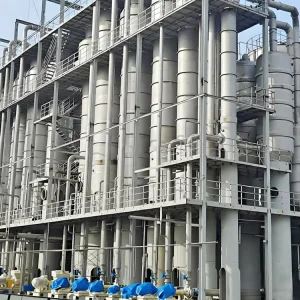
Harnesses flue gases, dryer vapor exhaust, or condenser hot water to drive secondary liquid concentration without added boiler loads.
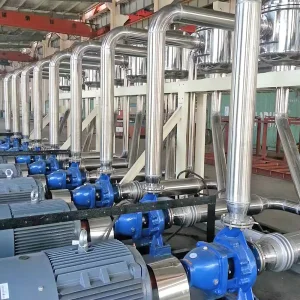
High-precision micro-cyclone system built for multi-stage starch washing, refining, and soluble impurity removal in wet milling processes.
Heavy-duty heat exchanger coupled with high-flow axial pumps to handle severe scaling, high viscosity, and crystallization duties.
Custom multi-stage evaporation architectures engineered to reduce utility costs across agricultural and industrial process applications.
Optimized fluid dynamics for high-purity separation of corn, wheat, cassava, or potato starches with minimal gluten loss.
Advanced compressor-driven vapor recycling plant designed to operating efficiencies near zero direct steam consumption.
Precise liquid distribution system guaranteeing total tube wetting, high overall U-values, and gentle heat application.
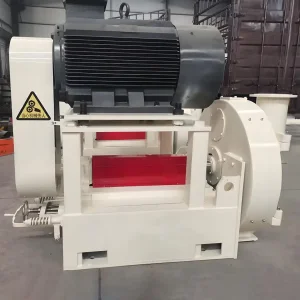
Engineered for maize processing plants, ensuring clean germ separation and kernel preservation prior to downstream drying and evaporation.
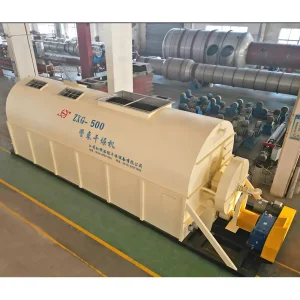
Indirect steam-heated counter-current bundle dryer ideal for DDGS, germ, fiber, and organic slurry drying applications.
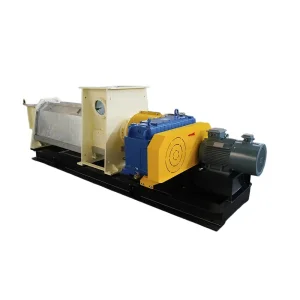
High-pressure mechanical dewatering press for solid-liquid separation upstream of thermal evaporators and dryers.
Turnkey evaporation skid engineering, automated PLC control, and custom metallurgical fabrication for chemical processing.
Heavy-duty grain degerming machine designed for continuous operation in large-scale starch wet milling lines.
Engineering insights addressing technical selection, regulatory compliance, energy ROI, and operational maintenance for industrial evaporators.
MVR technology recycles the latent heat contained in secondary vapor by re-compressing it using an electrically driven centrifugal fan or compressor. This raises the vapor's temperature and pressure, allowing it to act as the heating medium for the same system. In Georgia, where electrical grid infrastructure is highly reliable and live steam generation can be expensive due to natural gas pricing or strict boiler emission limits, MVR can achieve up to 90% savings in thermal energy compared to single-effect steam evaporators.
In a Falling Film Evaporator, liquid is distributed evenly across the top of vertical tubes and flows downward inside the tube walls as a thin film. This provides rapid heat transfer and extremely low residence time, ideal for heat-sensitive liquids like fruit juices, starch syrups, and dairy. However, if the feed has high viscosity or scaling salts, the film can dry out and foul. A Forced Circulation Evaporator uses a high-capacity circulation pump to force liquid through tubes at high velocities under pressure, preventing boiling inside the tubes and suppressing scale formation. Forced circulation is preferred for ZLD crystallization and severe scaling wastewater.
Jiangsu Zongheng manufactures evaporators from a broad range of high-grade materials tailored to chemical aggressiveness. Options include 304/316L Stainless Steel for standard food/organic applications, Duplex Stainless Steel (2205/2507) for high-chloride fluids, Titanium (Gr. 1, Gr. 2) for heavy salt and brine concentration, and Hastelloy or Nickel-based alloys for strong inorganic acid concentration.
Georgia Environmental Protection Division (EPD) regulations increasingly restrict the discharge of heavy industrial effluents into local watersheds. Jiangsu Zongheng provides complete two-stage ZLD systems: an initial MVR or Multi-Effect Evaporator concentrates incoming liquid to near-saturation (up to 30-40% solids), followed by a Forced Circulation Crystallizer or Spray Dryer that solidifies remaining salts into dry cakes for landfill disposal or byproduct recovery, returning clean distilled water back to plant process loops.
Custom industrial evaporators typically follow a 16-to-24-week engineering and manufacturing lifecycle, including thermal calculation verification, CAD 3D modeling, ASME pressure vessel welding, shop hydrostatic testing, and surface polishing. Equipment is modularized into skid-mounted assemblies for ocean freight to Savannah or direct transport to site, where our field engineering service provides installation supervision, commissioning, and staff training.
Whether you require a new MVR installation, waste heat recovery retrofit, or starch processing equipment in Georgia, our engineering team is ready to assist.
Send Inquiry Now Zongheng