In modern industrial processing, concentration and evaporation are highly resource-intensive phases. As global regulatory frameworks tighten regarding energy efficiency and Zero Liquid Discharge (ZLD) requirements, traditional thermal evaporation technologies like multi-effect steam evaporators face challenges due to high operating costs and carbon footprints. Mechanical Vapor Recompression (MVR) Falling Film Evaporators represent a major development in energy conservation and thermal efficiency.
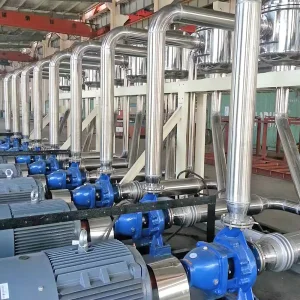
At the center of an MVR Falling Film Evaporator is the principle of recovering waste heat from secondary vapor. The process fluid is introduced at the top of a vertical tube bundle, where a specialized distributor distributes it evenly to form a thin, continuous film flowing down the inner walls of the tubes. Steam or heating medium in the shell side transfers thermal energy to the falling film, causing partial vaporization.
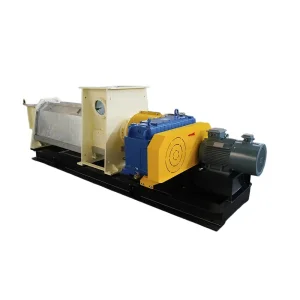
The vapor-liquid mixture exits the bottom of the tubes and enters a separator. The concentrated liquid goes to the next stage or is recycled, while the separated secondary vapor is routed to a high-efficiency centrifugal compressor or fan. The compressor mechanically compresses the vapor, raising its temperature, pressure, and enthalpy. This high-energy vapor is then returned to the shell side of the heat exchanger as heating steam, condensing as it releases its latent heat. Aside from the initial startup steam, the process requires only electrical power to run the compressor, minimizing external steam requirements.
MVR reduces fresh steam consumption by up to 90% compared to single-effect evaporators, cutting down utility costs.
Low residence times and adjustable vacuum control protect heat-sensitive compounds from thermal degradation.
Automated control systems monitor film thickness, vapor pressure, and feed distribution to prevent scaling.
Selecting an industrial evaporator requires analyzing feed characteristics, utility availability, and total cost of ownership (TCO). The table below compares Mechanical Vapor Recompression (MVR), Multi-Effect Evaporators (MEE), and Forced Circulation Evaporators to help guide procurement decisions.
| Parameter | MVR Falling Film | Multi-Effect (MEE) | Forced Circulation |
|---|---|---|---|
| Main Utility | Electricity (Compressor) | Live Steam | Steam & high-power pumps |
| Specific Energy Consumption | 15 - 25 kWh/t water evaporated | 120 - 250 kg steam per ton | High thermal + electrical load |
| Thermal Sensitivity | Excellent (Short residence time) | Moderate | High shear stress, variable temp |
| Fouling Sensitivity | Low to Moderate (Requires wetting) | Moderate | Very Low (Best for crystallizing) |
| Capital Cost (CAPEX) | Higher initial cost | Medium | High (due to heavy metallurgy) |
Jiangsu Zongheng Concentrating and Drying Equipment Co., Ltd (originally established in 1992 as Yixing Yangxi Light Industry Machinery Factory) has grown into a modern high-tech enterprise. Located in Zhoutie Town on the shores of Taihu Lake, the company focuses on designing and manufacturing concentration, drying, starch processing, and medium-pressure vessel equipment. As a member of the China Starch and Alcohol Association, we serve customers in the chemical, food, environmental, and pharmaceutical sectors.
Operating a 54,000 m² site with 22,000 m² of workshop space, employing 3 senior engineers, over 20 engineers, and a total of 120 staff members.
Obtained international quality system certification (Certificate No.: 45021), establishing a structured quality management system.
Earned the ASME "U" Stamp certification, enabling the design and fabrication of pressure vessels for international markets.
Acquired the Special Equipment Manufacturing License of the People's Republic of China (License No.: TS2232C42) for medium-pressure vessels.
Established as Yixing Yangxi Light Industrial Machinery Factory, beginning with 45 employees and 15 mu of land.
Our MVR Falling Film Evaporators are utilized in various industrial processes, including:
Our current R&D focuses on several key areas to improve evaporator reliability and performance:
Film Uniformity & Advanced Distribution Plates: Using computerized fluid dynamics (CFD) to design distribution plates that ensure even film thickness across the tube sheet, reducing dry spots and tube fouling.
High-Performance Metallurgy: Utilizing corrosion-resistant alloys, including Titanium (Grades 1 and 2), Duplex Stainless Steel (2205/2507), and Hastelloy, to handle high-chloride process fluids.
Smart Control Systems: Integrating PLC/DCS automation with real-time sensor monitoring to balance feed rates, compressor speed, and system pressure, maintaining stable operation under varying process loads.
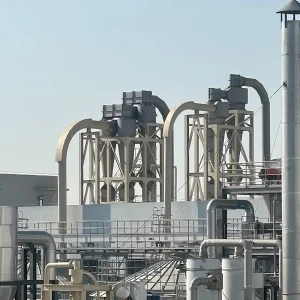
Jiangsu Zongheng's MQG Airflow Dryer employs high-speed hot air to suspend and fluidize the material. By utilizing impulse airflow generated from precisely varied tube diameters, it continuously tumbles the particles while conveying them. This design ensures rapid, uniform, and efficient drying throughout the entire transportation process within the system.
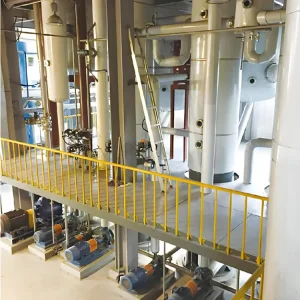
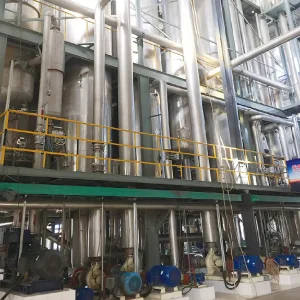
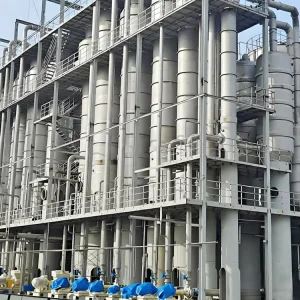
A falling film evaporator efficiently concentrates heat-sensitive liquids. The feed liquid forms a thin film flowing down heated vertical tubes, where it partially evaporates. Vapor generated flows parallel to the liquid, enhancing the process. It ensures a short residence time and low operating temperature, preserving product quality. The system requires proper liquid distribution and complete surface wetting to prevent fouling and maintain high thermal efficiency and operational stability.
Contact our engineering team to discuss custom MVR, falling film, or forced circulation solutions designed for your plant's specific requirements.
 Zongheng