In contemporary chemical processing, agricultural starch refining, wastewater mitigation, and biofuel distillation, mechanical dewatering stands as the single most critical precursor to energy-intensive thermal drying. Modern industrial operations face the dual challenge of escalating fuel costs and stringent carbon emission regulations. By replacing thermal evaporative processes with mechanical pressure filtration, plant operators achieve significant operational expenditure (OpEx) savings.
The global market for fiber dewatering presses is currently undergoing a massive technological shift. The combination of legislative mandates—such as the European Union’s Net-Zero Industry Act—and global ESG directives has pushed manufacturers to seek machinery carrying recognized safety and compliance marks. Among these, the CE Certification is a critical indicator of conformity, ensuring compliance with strict European mechanical, electrical, and operational safety standards. This certificate is crucial for plants in Europe, the Americas, and developed Asian economies that prioritize equipment safety, environmental footprint reduction, and structural reliability.
Thermal evaporation of water requires approximately 2,260 kJ per kilogram of water evaporated under standard conditions. In contrast, mechanical separation utilizing a single screw press or fiber dewatering press requires only a fraction of this energy—primarily mechanical electrical energy to power a high-torque gearbox. Achieving even a 5% reduction in feed moisture content before entering a tube bundle dryer or airflow dryer can result in up to a 20% savings in downstream steam and boiler fuel requirements.
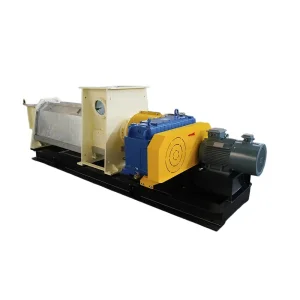
At Jiangsu Zongheng, we design our fiber dewatering systems to balance maximum moisture removal with structural longevity. Our machines run continuously under high-load conditions in corn wet milling plants, cassava root extraction lines, and DDGS plant configurations. By implementing variable-pitch screw geometries and custom-slotted wedge wire screens, our single screw press units achieve optimal compaction ratios without compromising raw material integrity or clogging.
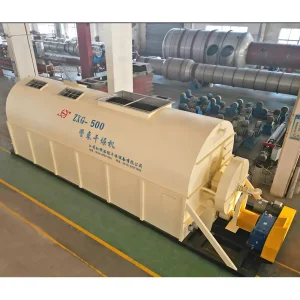
The mechanics of a fiber dewatering press (such as the Jiangsu Zongheng Single Screw Press) rely on the controlled reduction of volume as the feed slurry moves through the press cylinder. The raw material is fed into the hopper, where a heavy-duty screw flight conveys it horizontally. As the material progresses, the pitch of the screw flights decreases, or the root diameter of the screw shaft increases, exerting progressive mechanical pressure on the trapped solid fibers.
Liquid escapes through a highly precise wedge wire filter screen surrounding the screw. The spacing of the screen slots must be engineered according to the particle size distribution of the fiber. For instance, corn fiber dewatering typically requires screen slot tolerances ranging between 0.35 mm and 0.75 mm, whereas wood pulp or herbaceous fibers can handle different configurations to optimize separation kinetics and minimize fine solids passing into the filtrate.
| Parameters | Standard Configuration | High-Performance Upgrades |
|---|---|---|
| Metallurgy | SUS304 Stainless Steel | SUS316L / Duplex 2205 |
| Screen Gap Size | 0.5 mm - 1.0 mm | 0.2 mm - 0.5 mm (Wedge Wire) |
| Control Integration | Relay Logic / Standard VFD | Siemens PLC & Modbus Control |
| Drive Configuration | Direct Inline Gear Motor | Heavy-Duty Planetary Gearbox |
| Safety Standard | GB Standards | CE Mark & ASME Compliant |
In corn and potato starch extraction, separating soluble proteins and liquid starch from insoluble corn fiber is essential. Implementing a high-efficiency single screw press minimizes downstream dryer energy use and prevents starch losses in the filtrate stream.
Distillers Dried Grains with Solubles (DDGS) production requires the separation of spent brewer's grain from thin stillage. Our CE-certified presses consistently reduce cake moisture to under 60%, significantly improving tube bundle dryer performance.
Pulp processing mills and agricultural waste recycling facilities utilize dewatering presses to reclaim black liquor, process cellulose fibers, and dewater municipal sludge, preparing organic matter for composting or combustion.
Originally established as Yixing Yangxi Light Industry Machinery Factory. Began producing initial starch separation and concentration components in Yixing, Jiangsu.
Obtained ISO9001 certification. Established international-standard quality assurance processes to guide factory design and manufacturing.
Recognized as a Jiangsu Provincial High-Tech Enterprise, acknowledging our innovations in evaporation and drying systems.
Acquired the prestigious ASME "U" Stamp authorization, validating our capability to construct high-pressure industrial equipment.
Achieved ISO quality system recertification (Certificate No.: 45021). Began expanding our presence in international export markets.
Currently operating a modern 54,000+ sqm manufacturing facility with over 120 skilled staff and engineers, producing industry-leading CE-certified dewatering and evaporation systems.
The future of industrial mechanical separation is centered on real-time optimization. At Jiangsu Zongheng, our research and development pathway focuses on integrating smart sensors and IoT automation into our dewatering equipment. By measuring the torque demand on the screw shaft alongside real-time filtrate turbidity, our upcoming smart press series will dynamically adjust VFD speeds and discharge cone pressures to adapt to fluctuating raw material feeds.
Additionally, wear reduction remains a primary research focus. We are testing advanced physical vapor deposition (PVD) coatings and high-entropy alloy claddings to extend the service life of our screen baskets and screw flights when processing abrasive fibers. These developments ensure that our clients can maintain continuous operations with minimal downtime and reduced maintenance costs.
Transitioning to Duplex Stainless Steels (e.g., 2205) to handle corrosive, low-pH corn steep liquor and high-temperature sludges.
Utilizing laser-profiled wedge wire assemblies to optimize water escape dynamics while preventing fine particle blinding.
Integrating vibration sensors and temperature probes directly into the planetary gear assemblies to prevent unplanned downtime.
CE Certification confirms that the fiber dewatering press complies with all essential health, safety, and environmental protection requirements set by the European Union. This includes compliance with the Machinery Directive (2006/42/EC) to ensure structural integrity and operational safety, and the Low Voltage Directive (2014/35/EU) for electrical safety. For factory owners, this certification ensures compliance with international workplace safety standards.
Fluctuations in consistency are managed through a combination of variable speed drives (VFD) and automated backpressure discharge control. When the feed consistency drops, the PLC registers a reduction in motor torque and automatically adjusts the speed or increases the restriction of the discharge cone. This ensures a consistent moisture level in the output cake even with variable inlet feeds.
Wedge wire screens are engineered to be self-cleaning due to the mechanical wiping action of the screw flight outer diameters. However, daily or weekly clean-in-place (CIP) flushes are recommended when processing sticky or high-protein starches. Periodic checks are recommended every 3 to 6 months to inspect for screen wear or slot widening, which can lead to increased solids loss in the filtrate.
Yes. The choice of material is critical when handling corrosive feeds. While standard units are built with SUS304 stainless steel, we manufacture specialized configurations using SUS316L, 904L, or Duplex Stainless Steel (2205) to withstand low-pH agricultural processes or chemical industrial sludges without pitting or corrosion.
Partner with Jiangsu Zongheng, an ASME-certified and CE-compliant manufacturer with over 30 years of industrial engineering expertise.
Request a Custom Technical Proposal Zongheng