Engineered for maximum reliability, thermal efficiency, and compatibility with European quality and environmental compliance standards.
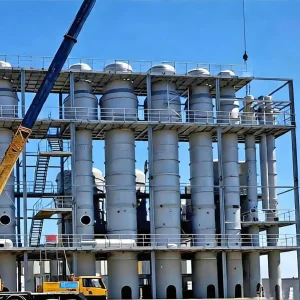
Zongheng provides energy-efficient, high-performance industrial evaporation solutions customized to withstand harsh operating parameters.
Explore Technology
Designed specifically for heat-sensitive food products, this falling film technology minimizes residence times to preserve organic quality.
Explore Technology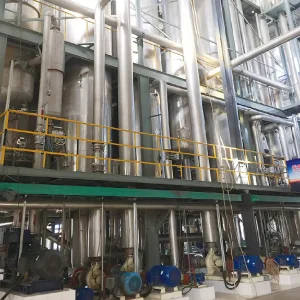
Equipped with robust high-velocity recirculating pumps to handle high viscosity, crystallization, and intense fouling tendencies.
Explore Technology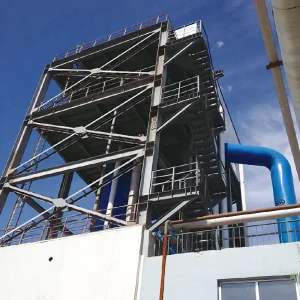
Utilizes Mechanical Vapor Recompression to recompress and reuse secondary steam, saving up to 90% of electricity compared to traditional thermal solutions.
Explore TechnologyGreece's industrial sector is undergoing a rapid transition toward ecological sustainability and energy conservation, driven by both strict European Union environmental guidelines (such as the Green Deal and Zero Liquid Discharge policies) and rising energy import prices. For local Greek operations, particularly in regions like Central Macedonia, Thessaly, and Attica, traditional thermal separation systems are no longer economically viable due to high fuel consumption and heat loss.
Furthermore, Greece's rich agricultural heritage (including olive oil extraction, dairy/feta whey processing, fruit canning, and winemaking) produces massive amounts of organic wastewater. Modern evaporator services and dedicated manufacturing factories play a vital role here by converting environmental waste liabilities into valuable concentrated by-products or pure reusable water.
How Jiangsu Zongheng assists Greek operators in matching global efficiency standards through structured technical parameters and thermodynamic design.
A comprehensive engineering guide explaining heat transfer coefficients, film dynamics, and vapor compression efficiencies.
The falling film evaporator is widely used for concentration of heat-sensitive products due to its exceptionally short liquid residence time (often less than a few minutes) and minimal operating temperature differences. The core design challenge lies in achieving uniform liquid distribution across all vertical tubes. If the liquid flow rate falls below a critical wetting rate, dry spots will form on the interior tube walls. This leads directly to localized overheating, chemical degradation, scaling, and accelerated fouling.
To mitigate this in Greek food processing plants (where high sugar or protein solutions are common), our factory utilizes advanced distributor plates combined with gravity-based spray nozzles. The film flows down the heated tubes as a thin, highly turbulent layer. The vapor generated flows in parallel cocurrent or countercurrent configurations, dragging the film downward and increasing the overall heat transfer coefficient (U-value). The average heat transfer coefficients range from 1500 to 3000 W/m²·K depending on the fluid viscosity and boiling point elevation (BPE).
Mechanical Vapor Recompression represents the cutting edge of industrial thermal separation. Traditional multi-effect evaporators require a continuous supply of fresh boiler steam, exhausting substantial waste heat. MVR operates on a closed thermal loop: the vapor boiled off from the liquid is passed through a high-efficiency mechanical centrifugal compressor (either single-stage high-speed centrifugal or root blowers). By compressing the vapor, its pressure and corresponding saturation temperature are elevated. This compressed "live" vapor is then fed back to the heating side of the same evaporator to act as the heating medium.
This closed-loop design ensures that thermal energy is continuously recycled. Only a small amount of electricity is required to run the compressor motor. The thermodynamic efficiency of this process is outstanding: the Coefficient of Performance (COP) of MVR systems often exceeds 10 to 20, making it significantly cheaper to operate than traditional multi-effect setups.
| Evaporation Technology Type | Steam Consumption (per ton water) | Electrical Consumption (per ton water) | Typical Application in Greece | Sensitivity to Fouling |
|---|---|---|---|---|
| Single-Effect Evaporator | ~1.0 - 1.2 tons | ~2 - 4 kWh | Small-scale chemical batching | Low to Medium |
| Triple-Effect Evaporator | ~0.35 - 0.4 tons | ~4 - 8 kWh | Traditional tomato paste processing | Medium |
| MVR Evaporation Plant | 0.0 - 0.05 tons (Startup only) | 15 - 28 kWh | Dairy whey & large chemical waste streams | Controlled via pre-heaters |
| Forced Circulation Plant | ~0.4 tons (or electrical equivalent) | 35 - 55 kWh | Wastewater crystallization & salt recovery | Very Low (Self-cleaning velocities) |
When the concentration of solutes exceeds the saturation limit, crystallization occurs. For fluids with high fouling factors, high viscosities, or crystalline precipitates (such as brine concentrates in Greek desalination projects or chemical waste treatment systems), falling film designs are inadequate. Here, forced circulation is required. The feed liquid is pumped through the heat exchanger tubes at high velocities (typically 1.5 to 3.0 m/s) to maintain highly turbulent flow and suppress boiling inside the tubes. Boiling only occurs when the liquid enters the flash separator chamber, where the hydrostatic head is released. This technique prevents scaling on the heat exchanger surface, extending run times between Clean-in-Place (CIP) cycles.
Our decades of specialized engineering experience translate directly into reliable on-site operations across Europe.
Custom-tailored evaporation equipment designed for specific regional industries and strict local regulatory guidelines.
Treating acidic and sweet whey by-products from Greek dairy factories to produce concentrated whey protein concentrates (WPC) and clean water loop recovery.
Processing complex polyphenolic wastewater from Peloponnese and Crete olive mills, transforming wet sludge into low-volume dry solids to prevent soil contamination.
Recovering dissolved solids from Ouzo, Tsipouro, and industrial ethanol distilleries, generating high-value animal feed additives while ensuring discharge compliance.
Supporting dry Greek islands and coastal heavy industries with high-efficiency multi-effect distillation (MED) and MVR evaporators to secure pure industrial water.
How future technical integrations address global decarbonization mandates and advanced system intelligence.
As the European Union moves toward carbon neutrality by 2050, burning fossil fuels to generate steam is being phased out. The first milestone of our technology roadmap is the complete transition to high-efficiency MVR systems. Modern MVR units replace fossil steam boilers entirely, utilizing renewable electric energy to drive vapor compressors. This development reduces operational carbon footprints by up to 85% depending on the carbon intensity of the local electrical grid.
Fouling is the primary operational challenge for any thermal evaporator. Real-time monitoring using advanced temperature sensors, flow meters, and AI models enables predictive maintenance. Our upcoming controls continuously calculate changes in heat transfer coefficients (U-values) and pressure drop anomalies. The system automatically prompts optimized CIP cycles before severe crystallization blocks the tubes, minimizing downtime and chemical consumption.
With abundant solar radiation throughout Greece, the integration of solar-thermal technology directly with concentration equipment is highly promising. High-temperature solar collectors can pre-heat industrial feeds or supply steam to small-scale thermal evaporators, reducing overall electrical grid draw and ensuring optimal efficiency in remote or island locations.
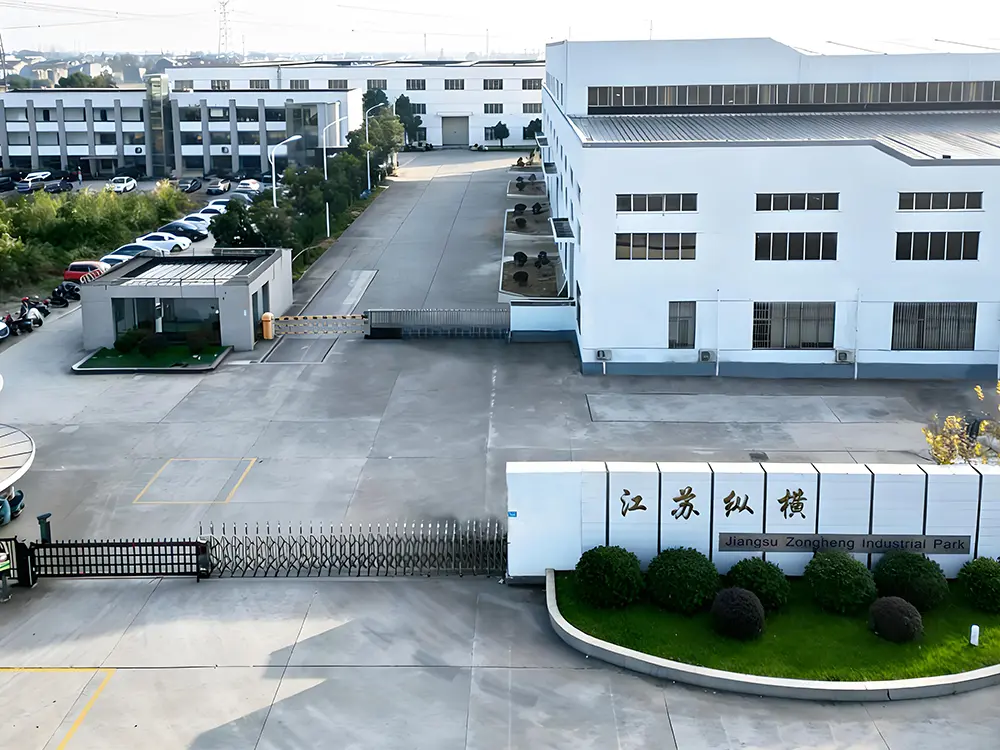
Jiangsu Zongheng Concentrating and Drying Equipment Co., Ltd (formerly known as Yixing Yangxi Light Industry Machinery Factory) was founded in 1992. Located in Zhoutie Town, Yixing City, on the shores of Taihu Lake, our state-of-the-art facility covers over 54,000 square meters. We are a specialized, high-tech enterprise focusing on the design, engineering, and manufacturing of concentration, drying, starch processing, and Class III medium/low-pressure vessel equipment.
As an active member of the China Starch and Alcohol Association, our products are widely utilized worldwide. To serve our European and Greek client base, we maintain strict adherence to international quality standards, holding key certifications including ISO9001 and the prestigious ASME "U" Stamp authorization.
Established Yixing Yangxi Light Industrial Machinery Factory, covering 15 mu of land with 45 employees.
Implemented international quality management frameworks, establishing a baseline for global expansion.
Officially recognized as a Provincial High-Tech Enterprise, marking a pivot toward proprietary thermodynamic R&D.
Obtained the official Special Equipment Manufacturing License of the People's Republic of China.
Acquired American Society of Mechanical Engineers (ASME) authorization, opening doors to highly regulated Western markets.
Upgraded to International Quality System Certification (Certificate No: 45021), aligning with modern European frameworks.
Operating across 54,000+ sqm with over 20 specialized design engineers, supplying advanced evaporators to the Mediterranean and worldwide.
Addressing crucial design, operational, and maintenance questions from engineers and procurement teams.
Discover our comprehensive engineering portfolio, featuring high-capacity evaporators, dryers, and separation systems built for demanding European applications.
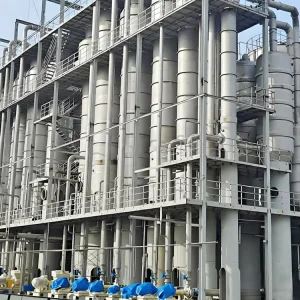
Utilizes residual heat from dry kilns or turbine exhausts, turning thermal waste streams into zero-cost evaporation energy.
Explore Technical Specs
Optimized design that reduces operational costs by reusing secondary steam via a mechanical compressor, ideal for Greek chemical plants.
Explore Technical Specs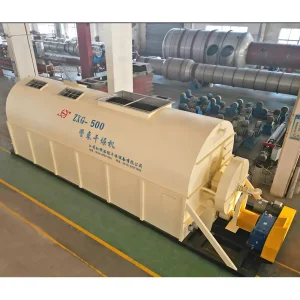
Features indirect heating via internal steam tubes, ideal for high-capacity starch, germ, and fiber drying with minimal dust emissions.
Explore Technical Specs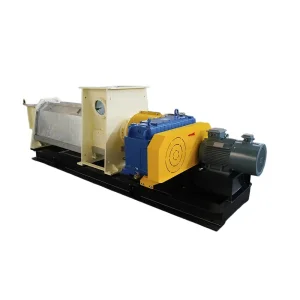
Delivers robust mechanical liquid-solid separation, reducing downstream thermal evaporation loads by dewatering high-moisture sludge.
Explore Technical Specs
Maintains high thermal performance and short contact times, preventing scorching of sugars and thermal denaturation of milk proteins.
Explore Technical Specs
Effectively concentrates starch process water and fermentation waste streams, utilizing hot exhaust air to minimize energy input.
Explore Technical Specs
Engineered for volatile, fine organic particulates. Operates under low oxygen conditions to prevent dust combustion and thermal degradation.
Explore Technical Specs
Designed for modern industrial operations, recovering raw water from mineralized effluents by harvesting available low-temperature waste heat sources.
Explore Technical SpecsConnect with our senior engineering team to design, manufacture, and integrate customized evaporation plants. All systems comply with local European safety, environmental, and thermal efficiency requirements.
Send Inquiry Now Zongheng