Explore our core certified heavy-industry engineering products designed to maximize thermal coefficient performance and reduce process utility footprints.
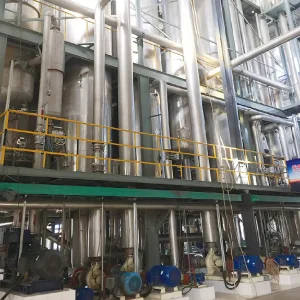
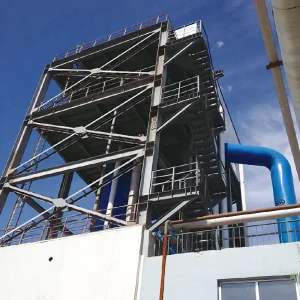
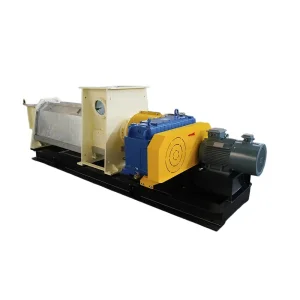
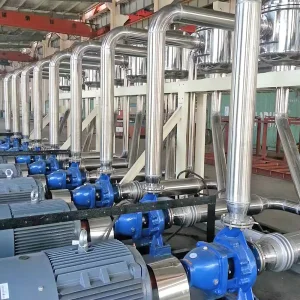
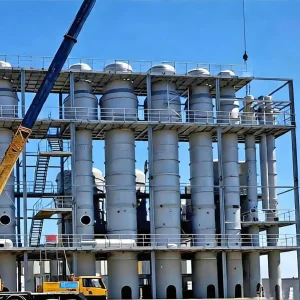
Mechanical Vapor Recompression represents the cutting edge of industrial thermal concentration technology. By utilizing a mechanical compressor (typically a centrifugal fan, high-speed blower, or radial compressor), MVR systems recompress the secondary vapor generated during the evaporation process. This compression increases both the pressure and the saturation temperature of the vapor, allowing it to be recycled back into the shell side of the heat exchanger to serve as the heating medium for the process fluid.
From a thermodynamic perspective, the COP (Coefficient of Performance) of an MVR system typically ranges from 10 to 30, meaning that for every 1 kW of electrical energy consumed by the compressor, 10 to 30 kW of heat energy is effectively transferred back into the process. This translates to an energy reduction of up to 90% compared to traditional single-effect steam evaporators, and 50% compared to typical triple-effect setups.
At Jiangsu Zongheng Concentrating and Drying Equipment Co., Ltd, our proprietary design configurations utilize finite element analysis (FEA) to structure vapor liquid separators and heat exchanger geometries, preventing droplet entrainment and optimizing overall thermal efficiency.
| Parameter | MVR Evaporator | 5-Effect Evaporator |
|---|---|---|
| Steam Consumption | ~0 tons / ton water (Startup only) | ~0.22 tons / ton water |
| Power Consumption | 15 - 28 kWh / ton water | 2 - 4 kWh / ton water |
| Cooling Water Need | Minimal (95% reduction) | High volume |
| CO2 Footprint | Very Low (Electrification) | High (Fossil Steam) |
| Boiling Point Elevation (BPE) | Max 15°C per stage | No structural limit |
Depending on fluid viscosity, thermal sensitivity, and precipitation characteristics, our engineering team optimizes the evaporation interface using three primary configurations.
A falling film evaporator efficiently concentrates heat-sensitive liquids. The feed liquid forms a thin film flowing down heated vertical tubes, where it partially evaporates. Vapor generated flows parallel to the liquid, enhancing the process. It ensures a short residence time and low operating temperature, preserving product quality. The system requires proper liquid distribution and complete surface wetting to prevent dry spots, fouling, and maintain high thermal efficiency and operational stability.
Specially engineered for highly viscous materials, crystallization operations, and high-fouling solutions. High-capacity axial flow pumps force the liquid through heat exchanger tubes at velocity ranges between 1.5 to 3.5 m/s. Boiling is suppressed inside the tubes by maintaining hydrostatic head, and flash evaporation occurs only when the liquid enters the vapor-liquid separator. This design prevents scaling on heat transfer surfaces and handles solids dynamically.
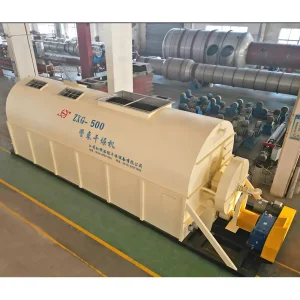
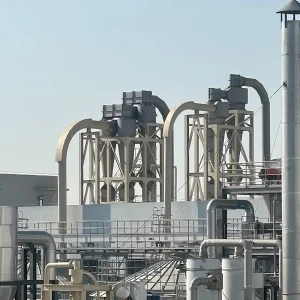
By integrating low-pressure thermal exhausts (drying vapors, flash steam, distillates) as supplementary heat sources, our Waste Heat Evaporator designs enhance overall factory COP. Coupled with Jiangsu Zongheng's MQG Airflow Dryer and ZXG Tube Bundle Dryer, we construct closed-loop vapor thermal pathways that dramatically reduce system enthalpy losses and total plant carbon output.
How Jiangsu Zongheng is leading the transition to smart, digitalized, and electrified thermal separation processes.
The global industrial transition away from fossil fuel boilers has accelerated the adoption of fully electric MVR evaporators. By replacing coal or gas-fired steam with electricity-driven compression, MVR systems can be powered entirely by renewable energy grids (solar, wind, hydro), enabling carbon-neutral evaporation plants.
Integrating IoT sensors in vapor compressors and piping systems allows our cloud platform to monitor vibrational spectroscopy and thermal drop-offs. Machine learning algorithms predict scale formation inside heat exchanger tubes, notifying maintenance crews of targeted CIP (Cleaning-in-Place) schedules before system performance degrades.
Future designs focus on multi-stage high-efficiency centrifugal compressors capable of achieving saturation temperature lifts of up to 20-25°C per stage. This allows MVR to be used in high-boiling point elevation (BPE) applications such as concentrated brine systems, which historically required multi-effect steam plants.
We are pioneering the integration of composite alloys and titanium coatings (such as TA1, TA2, Hastelloy C276, and Super Duplex Stainless Steel 2507) into core contact zones. This ensures our evaporators withstand highly acidic or alkaline wastewater streams without pitting corrosion or structural failure over a 25-year design life.
Engineered for global environmental compliance and circular economy value creation.
We deliver fully integrated evaporation and drying systems for the starch and alcohol industries. Concentrating corn steep liquor (CSL), thin stillage, and light steep water using multi-effect waste-heat evaporators, then routing the concentrate to ZXG tube bundle dryers or single screw presses to extract dry DDGS feed with optimal protein values.
Our industrial MVR crystallization systems are core elements of Zero Liquid Discharge setups in petrochemical plants, coal chemical processing, and lithium battery precursor manufacturing. We separate clean distillate water for recycling while crystallizing hazardous mineral salts out of the process waste streams.
For heat-sensitive active pharmaceutical ingredients (APIs), organic acid salts, and polymer solutions, we design specialized vacuum falling film plants. Operating at low temperatures (down to 45°C), we prevent chemical degradation or thermal denaturation of the organic molecules while achieving targeted density levels.
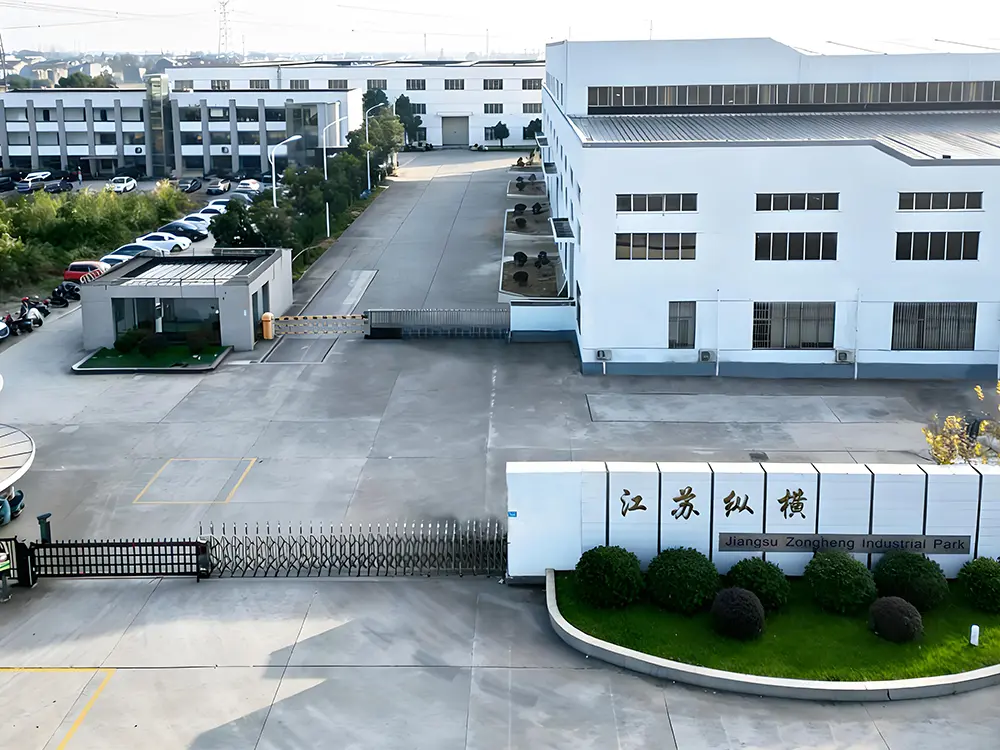
Located in Zhoutie Town, Yixing City, Jiangsu Province, our modern fabrication facility spans over 54,000 square meters of total footprint, with 22,000 square meters dedicated strictly to advanced pressure vessel manufacturing and testing bays.
By localizing the entire manufacturing chain—from initial plate cutting, cold-forming, automatic orbital tube-to-tubesheet welding, and heat treatment to final non-destructive testing (NDT)—we maintain absolute control over the production timeline. This integrated supply chain reduces standard lead times by 20% to 30% compared to Western competitors, shielding clients from supply disruptions.
Additionally, our proximity to Shanghai port simplifies ocean freight transport of large-scale pre-assembled evaporator skids, reducing site installation overhead and accelerating commissioning timelines.
Helping procurement managers evaluate the Total Cost of Ownership (TCO) of complex thermodynamic assets.
While MVR systems command a higher initial capital expense (CAPEX) due to high-precision vapor compressor requirements, the operational expenditure (OPEX) is typically 70% to 80% lower than steam-driven systems. In high-cost utility regions, the typical ROI payback window ranges between 12 and 18 months.
Procurement teams must ensure that heat exchanger tubes are specified correctly for corrosion environments. We assist engineers in runing pilot-scale testing and laboratory analysis of feedstocks to choose optimal alloys, preventing catastrophic operational outages.
To minimize costly on-site labor and construction delays, we design and pre-assemble structural skid modules. Piping, electrical, instrumentation, and control structures (PLC) are wired, mounted, and tested in our factory prior to transport.
A history of technological achievements and certifications that underline our status as a trusted manufacturer.
Established as Yixing Yangxi Light Industrial Machinery Factory, specializing in light industry process machinery.
Obtained international quality system standard certification ISO9001, setting up a rigorous QA framework.
Officially recognized as a High-Tech Enterprise of Jiangsu Province for our continuous thermal technology patents.
Acquired the Special Equipment Manufacturing License of the People's Republic of China (License No.: TS2232C42) for pressure vessels.
Obtained the ASME "U" Stamp authorization from the American Society of Mechanical Engineers, enabling international project bidding.
Achieved ISO14001 and OHSAS18001 certifications, establishing environmental and health safety management systems.
Evolved into a global powerhouse with a 54,000+ sqm factory, serving multinational clients across Europe, Southeast Asia, and the Americas.
To qualify for deployment within the European Economic Area (EEA), industrial evaporators must satisfy the rigorous requirements of the Pressure Equipment Directive (PED) 2014/68/EU. Our systems undergo comprehensive testing, covering structural calculations, welder qualifications (EN ISO 9606-1), and material certificate traceabilities (EN 10204 3.1 / 3.2).
We coordinate directly with notified bodies (such as TÜV SÜD, SGS, or Bureau Veritas) to inspect structural design calculations, perform pressure tests, and verify safety interlock controls before issuing the CE conformity declaration.
Furthermore, we provide complete, localized documentation suites (including operating manuals, P&ID schematics, loop diagrams, and safety matrixes in English, German, French, or Spanish) to facilitate quick local permitting processes.
Answers to critical technical queries frequently raised by chemical process engineers and procurement teams.
Complete your production loop with our specialized industrial recovery, drying, and washing plants.
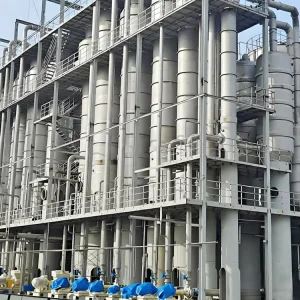
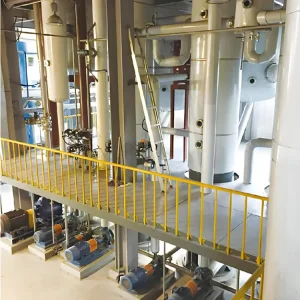
Whether you require an ASME-compliant vacuum concentration unit or a large-scale CE-certified MVR system, our engineering design team is ready to analyze your feed properties and provide detailed heat balance projections.
 Zongheng