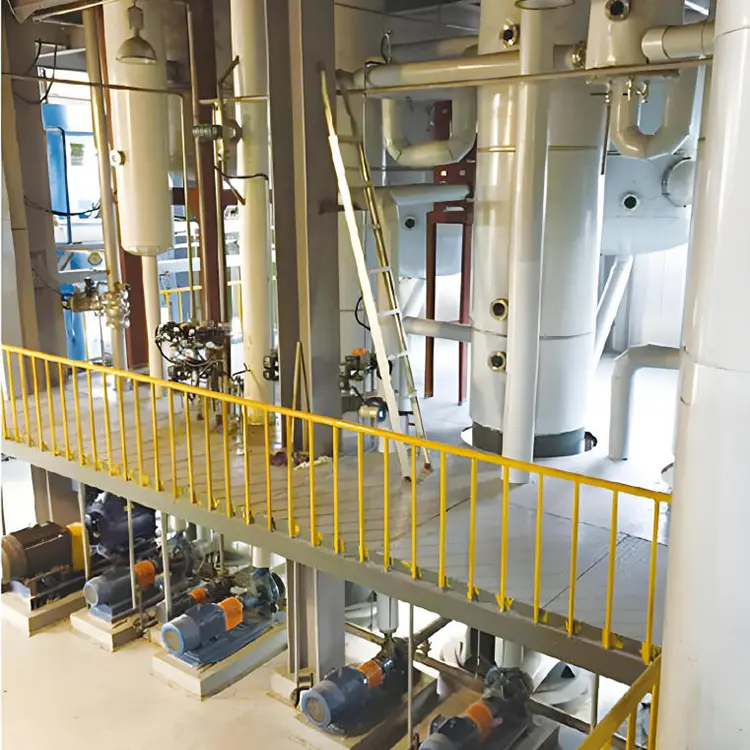
CE Certification Efficient Falling Film Evaporator from China Suppliers | High-Quality Factory Solutions for Heat-Sensitive Liquids Suppliers, Service

The falling film evaporator is an advanced solution for efficiently concentrating heat-sensitive liquids, particularly in the context of China’s growing industrial landscape. This innovative system facilitates the formation of a thin film as the feed liquid flows down heated vertical tubes, allowing for partial evaporation of the liquid. The vapor generated travels in parallel with the liquid, significantly enhancing the evaporation process. With a focus on preserving product quality, this technology ensures a short residence time and low operating temperatures, It is crucial for the system to have proper liquid distribution and complete surface wetting to prevent fouling, thereby maintaining high thermal efficiency and operational stability. As a leading factory in the region, we take pride in supplying top-notch falling film evaporators that meet the needs of various industries while upholding high standards of performance and reliability. Trust our Chinese manufacturing expertise for your evaporator solutions

Product Description

Description

The liquid feed is introduced at the top of the calandria, where a distribution system ensures the formation of a uniform liquid film along the inner walls of the heating tubes. As the film flows downward under gravity, it is heated externally and begins to boil, partially evaporating along its path. The downward flow is further promoted by the co-current flow of vapor generated during boiling.

Separation of the remaining liquid film and vapor takes place in the lower section of the calandria and is completed in a downstream centrifugal droplet separator. To prevent dry spots—which can cause fouling and deposit accumulation—it is critical to maintain complete and even wetting of the entire heating surface. This can be achieved by using longer heating tubes, dividing the evaporator into multiple compartments, or implementing product recirculation.
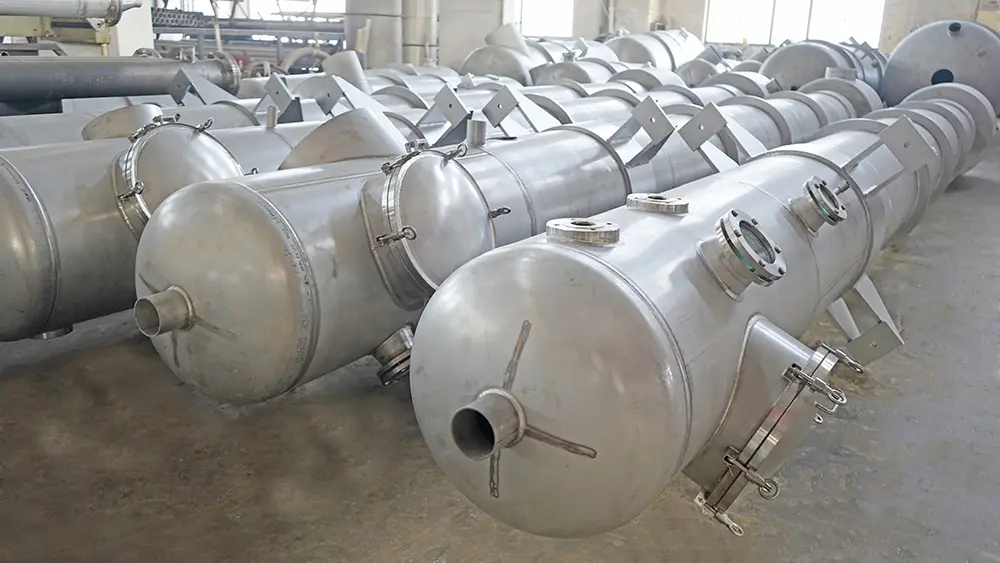
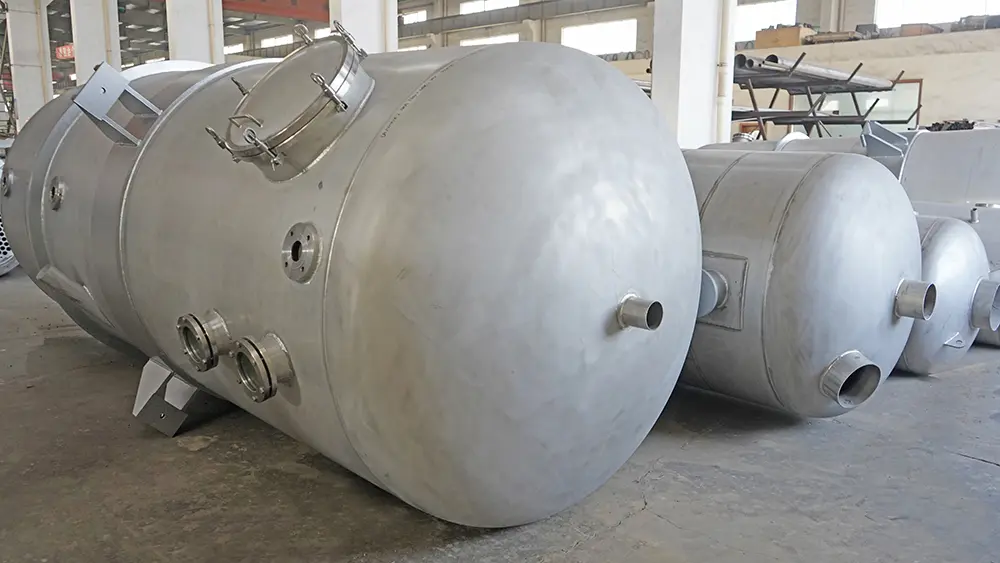
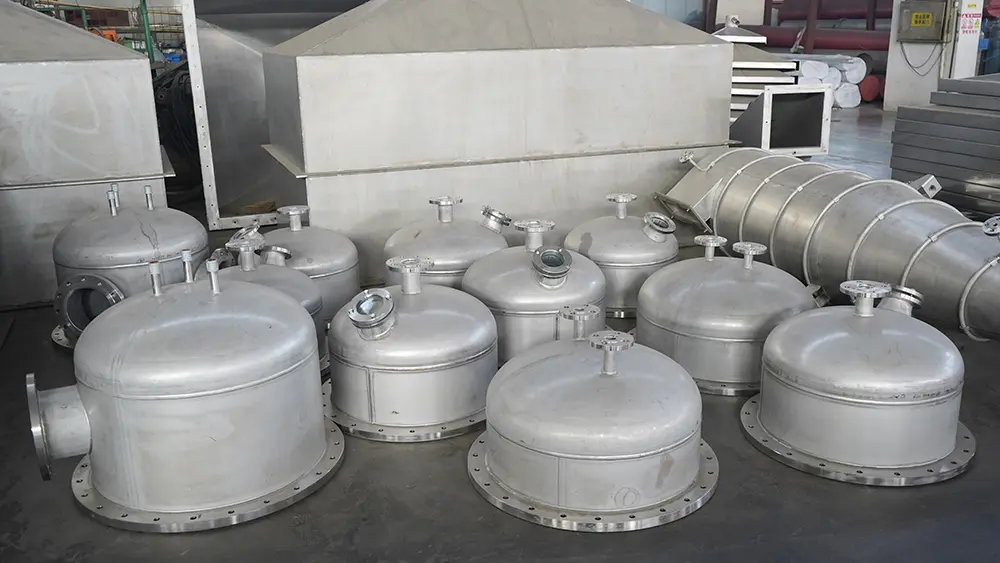
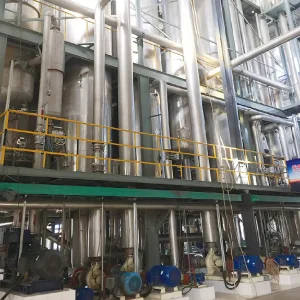
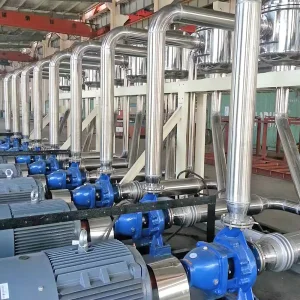
Falling Film Evaporation Plant Detail (1)
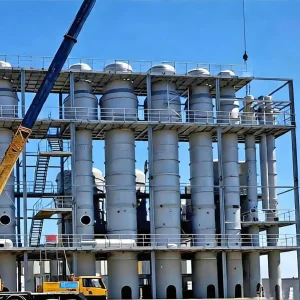
Falling Film Evaporation Plant Detail (2)
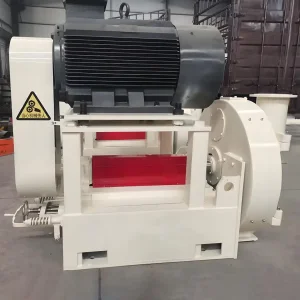
Falling Film Evaporation Plant Detail (3)
Particular Features
  • Best product quality, gentle evaporation, mostly under vacuum, and extremely short residence times in the evaporator.
  • Simple process control and automation.
  • Flexible operation, quick start-up and easy switchover from operation to cleaning, uncomplicated changes of product.
  • High efficiency heat transfer — it is possible to design multiple-effect, thermal vapour recompression, mechanical vapour recompression.
Fields of Application
  • Particularly suited for temperature-sensitive products, such as dairy products, fruit juices, plant extracts, sugar, and blood plasma.
  • For liquids which contain small quantities of solids and have a low to moderate tendency to form incrustations.
Key Advantages
Advanced Energy-Efficient Technologies

Integration of multi-effect evaporation and mechanical vapor recompression (MVR) systems significantly reduces energy consumption and operational costs.

High-Quality and Durable Construction

Utilization of high-grade stainless steel and industrial alloys ensures corrosion resistance, durability, and long-term reliability under continuous operation.

Comprehensive Customization

Tailored system design, layout, and material selection to meet specific client requirements, supported by end-to-end services from simulation to commissioning and training.

Precision Automation and Control

Equipped with advanced PLC and HMI systems for real-time monitoring, precise process adjustments, remote control capabilities, and predictive maintenance.

Stringent Quality Assurance

Rigorous testing and inspection processes aligned with international standards (ISO, CE, ASME), ensuring safety, performance, and worldwide regulatory compliance.
Frequently Asked Questions
How does a falling film evaporator work?
In a falling film evaporator, liquid feed is introduced at the top of the calandria and flows downward as a thin film along the inner walls of the heating tubes. As it descends under gravity, the liquid is heated externally, causing partial evaporation. The co-current vapor flow further assists the downward movement. Liquid and vapor are then separated in the lower section and a downstream centrifugal droplet separator.
What products are best suited for falling film evaporation?
Falling film evaporators are particularly well-suited for temperature-sensitive products such as dairy products, fruit juices, plant extracts, sugar solutions, and blood plasma. They are also effective for liquids containing small quantities of solids with a low to moderate tendency to form incrustations.
How can dry spots and fouling be prevented in a falling film evaporator?
Dry spots can be prevented by ensuring complete and even wetting of the entire heating surface. This is typically achieved through the use of longer heating tubes, dividing the evaporator into multiple compartments, or implementing product recirculation to maintain a continuous and uniform liquid film.
What energy-saving technologies are available for falling film evaporation systems?
Falling film evaporators can be designed with multiple-effect configurations, thermal vapor recompression (TVR), or mechanical vapor recompression (MVR) systems. These technologies significantly reduce steam consumption and overall energy costs, making the process more economical and environmentally efficient.
What international standards do the evaporation systems comply with?
The evaporation systems are designed and tested in accordance with internationally recognized standards including ISO, CE, and ASME. This ensures that each system meets stringent safety, performance, and quality requirements for global regulatory compliance.
Can customized falling film evaporation solutions be provided?
Yes. Comprehensive customization and turnkey solutions can be tailored to specific requirements. This includes custom system design, layout planning, material selection, and full end-to-end support covering simulation, installation, commissioning, and operator training.

Related Products