Direct supply of high-end dewatering, evaporation, and wet-milling machinery optimized for Egyptian industrial standards.
Egypt's manufacturing sector is undergoing a rapid transition toward industrial modernization and sustainable green manufacturing. Influenced by macroeconomic initiatives such as the Suez Canal Economic Zone (SCZONE) development and stringent mandates by the Egyptian Environmental Affairs Agency (EEAA), local factories are adopting high-efficiency processing systems. Among these systems, the mechanical dewatering of solid-liquid mixtures and thermal concentration of processing wastewater remain critical operations. High-capacity processing of agricultural products, starch extraction, and chemical waste management requires exceptionally durable, energy-conserving capital equipment. This technical brief details the industrial application of Single Screw Presses and Degerming Mills, showcasing why Chinese manufacturing excellence represents the ideal partnership for Egypt's leading factories.
Egypt stands as one of the largest food processing hubs in the Middle East and North Africa (MENA) region. Industries located in major industrial cities—such as 10th of Ramadan City, 6th of October City, and Sadat City—rely heavily on the processing of local and imported grains. Corn (maize) wet milling plants, sugar refineries, and distilleries generate massive volumes of byproduct materials that require immediate mechanical dewatering and drying. Starch and glucose factories, which supply vital ingredients to Egypt's vast food sector, must process maize kernels efficiently to maximize yields while minimizing water footprint. Furthermore, the local animal feed industry depends heavily on dried fiber and corn germ dewatering to produce high-protein feed additives like DDGS (Distillers Dried Grains with Solubles).
Information Gain Insight: Unlike standard dewatering setups, Egyptian processing facilities face unique challenges. High ambient summer temperatures (exceeding 45°C in Upper Egypt and Delta industrial zones) elevate feed temperatures, accelerating biological fermentation in organic slurries. This demands rapid, continuous dewatering to prevent spoilage and odor emissions, highlighting the critical value of closed, highly efficient mechanical systems like the single screw press.
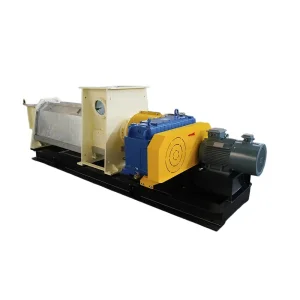
A single screw press operates by continuously compressing wet organic or inorganic slurries within a wedge-wire or perforated screen basket. As the material progresses along the screw shaft, the pitch of the flight decreases and the root diameter increases, creating high volumetric pressure. This forces water to escape through the screen plates, while the dewatered cake exits at the discharge end against a pneumatic backpressure cone.
For Egypt's wet milling and starch processing plants, the Jiangsu Zongheng Single Screw Press is engineered to handle abrasive fibers, spent grain, and chemical pulps. Key technical highlights include:
| Parameters | Standard Single Screw Press | Jiangsu Zongheng Heavy-Duty Press | Application Benefit in Egypt |
|---|---|---|---|
| Inlet Cake Moisture | 80% - 85% | 80% - 88% | Handles highly dilute Egyptian process residues |
| Outlet Cake Moisture | 60% - 65% | 50% - 55% | Reduces subsequent steam drying energy costs by up to 30% |
| Wear Surface Treatment | Standard Spray Coating | ASME-grade Tungsten Cladding | Extended service life under continuous hot-climate shifts |
| Screen Plate Design | Standard Mesh | Reinforced Wedge Wire (0.35-0.75mm) | Prevents clogging with high starch-recovery efficiency |
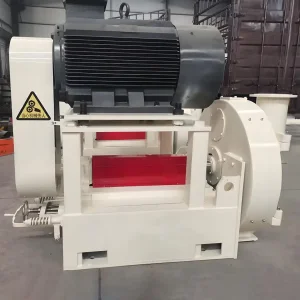
Maize wet milling requires the complete, undamaged separation of the corn germ from the endosperm. If the germ is crushed during milling, free oil is released into the starch slurry, reducing starch purity and degrading the valuable corn oil byproduct. Degerming mills must execute precision impact grinding to release the germ whole.
In Egyptian mills, which process both domestic white corn and imported yellow corn (primarily from Brazil and Argentina), moisture levels and kernel hardness vary significantly. Jiangsu Zongheng's Degerming Mills utilize adjustable disc gaps and premium alloy grinding plates to accommodate these raw material variations. By maintaining precise rotational dynamics, our mills peel the endosperm away from the germ cleanly. This process yields clean corn germ ready for the single screw press dewatering stage and starch slurry that enters the hydroclones with minimal protein contamination.
Processing raw corn into starch, liquid glucose, and crystalline sweeteners. Requires high-precision degerming and continuous dewatering of corn fiber, germ, and gluten.
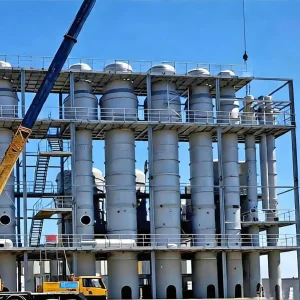
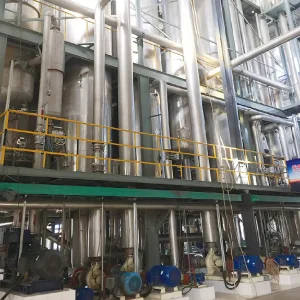
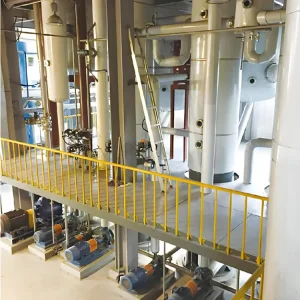
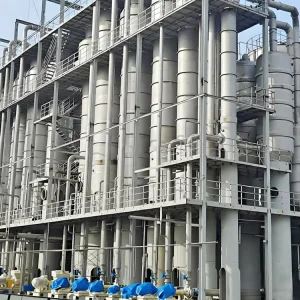
Concentrating spent distiller's grains from ethanol fermentation. The combination of MVR evaporators and tube bundle dryers turns liquid wastewater into a valuable, dry protein export.
Concentration of high-COD corn steep liquor and salt-laden industrial wastewater, meeting the strict environmental discharge standards set by the Egyptian government.
Collaborating with Jiangsu Zongheng Concentrating and Drying Equipment Co., Ltd. provides Egyptian enterprises with several major strategic and operational advantages:
Value-Add Engineering: Our equipment is designed for direct integration with existing systems. If your plant is upgrading its evaporator line, our MVR and Multi-Effect evaporation units can be retrofitted directly to reuse waste heat from your dryers, maximizing overall thermal efficiency.
Speak directly with our process engineers today to configure a customized dewatering, drying, or evaporation solution for your specific plant requirements.
Send Inquiry NowExplore our ASME-certified evaporators, industrial bundle dryers, and precision milling solutions configured for local industrial applications.
Key technical and logistics inquiries resolved by our design engineers.
Partner with Jiangsu Zongheng for reliable, ASME-certified processing equipment designed to lower operational overhead and boost production capacity.
Send Inquiry Now Zongheng