The city of Riyadh is undergoing a massive industrial transformation, driven by the ambitious goals of Saudi Vision 2030. As the Kingdom seeks to diversify its economy away from oil dependency, the local food processing, starch production, animal feed, and bio-chemical sectors are expanding at an unprecedented rate. Establishing localized, highly efficient manufacturing facilities within Riyadh's industrial zones (such as MODON's Second Industrial City and Sudair Industrial City) has become a top priority for developers and global investors alike.
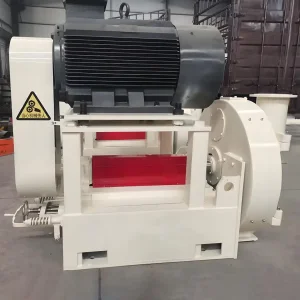
"With the rapid growth of the domestic food security infrastructure in Saudi Arabia, the demand for high-efficiency wet milling machinery—specifically Degerming Mills—has surged. These machines are critical for processing maize (corn) to extract high-purity germ, starch, and fiber, serving as the foundation for sweeteners, cooking oils, and high-protein animal feed (DDGS)."
Operating a manufacturing plant in the Riyadh market presents unique environmental and operational challenges. The arid climate requires machinery that optimizes water usage and minimizes thermal losses. Furthermore, local regulatory frameworks mandate strict compliance with SASO (Saudi Standards, Metrology and Quality Organization) standards, energy efficiency ratings, and environmental protection guidelines. Consequently, procurement managers in Riyadh are no longer just looking for standard machinery; they demand heavy-duty, certified, and highly reliable degerming mills that can deliver maximum yield with minimal downtime.
A Degerming Mill is the heart of the wet milling process. Its primary function is to tear open the pre-soaked (steeped) maize kernels to release the germ without crushing it. Preserving the physical integrity of the germ is vital because broken germs release oil into the starch slurry, reducing starch purity and complicating downstream separation processes (such as hydrocyclone washing and centrifugal separation).
Our mills feature dynamic, micro-adjustable disc clearance systems. This allows operators to fine-tune the milling gap based on maize variety, moisture content, and steeping quality, ensuring optimal germ release without kernel crushing.
The rotor and stator plates are cast from proprietary high-chromium and tungsten carbide alloys. This metallurgy resists the abrasive nature of corn hulls and the corrosive effects of sulfur dioxide (SO2) used in steeping water.
Equipped with integrated smart sensors that feed real-time data to the plant's SCADA system. This prevents catastrophic bearing failures and maintains consistent throughput under continuous 24/7 operations.
In a typical Riyadh starch processing plant, the degerming mill operates in a two-stage system. The first-stage mill breaks the kernel into 2 to 4 pieces, releasing about 70-80% of the germ. The slurry is then pumped to germ cyclones (hydrocyclones) where the lighter germ floats to the top and is separated. The underflow, containing the remaining bound germ and endosperm, passes through the second-stage degerming mill with a tighter clearance setting to release the remaining germ. This dual-stage configuration ensures a germ recovery rate exceeding 98.5% while maintaining starch loss in the germ fraction below 1.5%.
Jiangsu Zongheng Concentrating and Drying Equipment Co., Ltd. (formerly Yixing Yangxi Light Industry Machinery Factory), founded in 1992, is located in Zhoutie Town, Yixing City, on the shores of the beautiful Taihu Lake. The company covers an area of over 54,000 square meters, with a production workshop area of over 22,000 square meters. As a modern high-tech enterprise, we specialize in the design, manufacturing, and optimization of concentration, drying, starch industry processing, alcohol DDGS, and Category III medium & low-pressure vessel equipment. We are a proud member enterprise of the China Starch and Alcohol Association, and our products are widely utilized globally across food fermentation, chemical, pharmaceutical, environmental protection, and petrochemical sectors.
Established as Yixing Yangxi Light Industrial Machinery Factory, covering 15 mu with 45 pioneering employees.
Took the lead in obtaining the ISO9001 International Quality Management System certification, establishing standardized manufacturing protocols.
Recognized officially as a Jiangsu Provincial High-Tech Enterprise, reflecting our commitment to R&D and technological innovation.
Obtained the Special Equipment Manufacturing License of the People's Republic of China (License No.: TS2232C42) for pressure vessel fabrication.
Acquired the prestigious ASME "U" Stamp authorization, opening doors to supply high-pressure industrial vessels to global markets, including the Middle East.
Achieved International Quality System Certification (Certificate No.: 45021), aligning our quality assurance systems with global standards.
Expanded operations to over 54,000 square meters, employing 3 senior engineers, over 20 engineers, and a dedicated workforce of 120 specialists.
Procuring heavy industrial machinery from our state-of-the-art factory in China offers Riyadh-based enterprises a unique combination of cost efficiency, advanced engineering, and robust supply chain reliability. By leveraging China's mature industrial ecosystem and our 30+ years of specialized manufacturing experience, we deliver world-class processing equipment at highly competitive capital expenditures (CAPEX).
We understand that Saudi Arabian industrial projects require strict adherence to international safety and quality codes. Our production lines are certified under the ASME (American Society of Mechanical Engineers) 'U' Stamp and carry CE Certification. This ensures that every evaporator, screw press, and degerming mill leaving our factory meets the rigorous safety inspections required by Saudi municipalities, insurance companies, and civil defense authorities.
To support our clients in the Riyadh market, we have established streamlined shipping channels through the Port of King Abdulaziz (Dammam) and the Port of Jeddah, followed by secure inland transport directly to Riyadh's industrial zones. Furthermore, we provide:
Our processing equipment is engineered to adapt to various industrial applications across the Middle East, ensuring high efficiency even under extreme ambient temperatures:
In Riyadh's food production zones, our degerming mills process imported corn to produce high-purity starch, which is subsequently converted into glucose, fructose, and maltodextrin syrups for the regional beverage and confectionery industries.
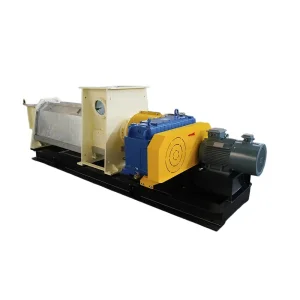
Integrating our Single Screw Press and Tube Bundle Dryers allows local feed mills to dewater and dry corn gluten, fiber, and spent grains, creating high-protein animal feed to support Saudi Arabia's expanding poultry and dairy sectors.
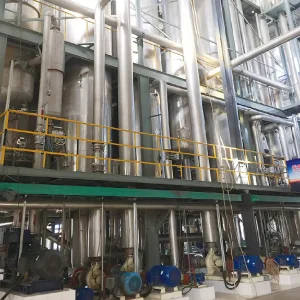
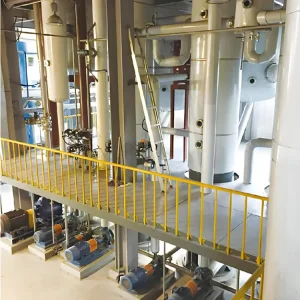
Utilizing our Forced Circulation and MVR Evaporation Plants, chemical and pharmaceutical factories in Riyadh achieve Zero Liquid Discharge (ZLD), recycling process water and complying with strict environmental regulations.
Published: Jun 18, 2026
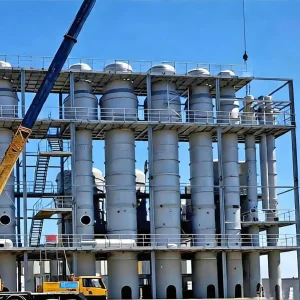
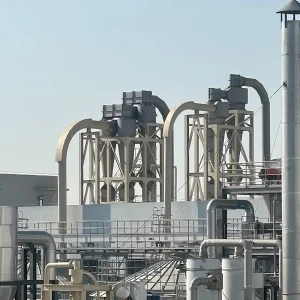
Today, Jiangsu Zongheng Concentration and Drying Equipment Co., Ltd., a leading manufacturer of industrial evaporators, released a technical brief detailing the operational differences between evaporators and condensers. The evaporator absorbs heat to vaporize media, while the condenser releases heat to liquefy vapor; the two perform opposite cooling and heating functions. Operating under low pressure, the evaporator generates cold energy and concentrates heat-sensitive liquids, which is vital for starch processing, chemical concentration, and environmental wastewater treatment. Understanding these thermal dynamics allows engineers to design more energy-efficient plants, particularly in hot climates like Riyadh, where cooling water temperature management is critical.
Get in touch with our technical sales team today. We provide comprehensive engineering consultations, detailed equipment specifications, and customized quotes tailored to your project requirements in Saudi Arabia.
Send Inquiry Now Zongheng