In the modern industrial landscape, wastewater management has shifted from a regulatory compliance burden to a critical driver of operational sustainability and resource recovery. As global environmental mandates tighten, industries worldwide are adopting Zero Liquid Discharge (ZLD) strategies. At the heart of these systems lies the industrial wastewater evaporator—a highly engineered thermal separation system designed to concentrate complex, high-salinity wastewater streams, recover clean distillate for reuse, and minimize waste volumes.
Jiangsu Zongheng Concentrating and Drying Equipment Co., Ltd. (formerly Yixing Yangxi Light Industry Machinery Factory), established in 1992, stands at the forefront of this technological evolution. With over three decades of manufacturing expertise, ASME "U" Stamp authorization, and CE certification, we engineer custom evaporation and drying plants that optimize energy consumption, mitigate fouling, and deliver long-term mechanical reliability.
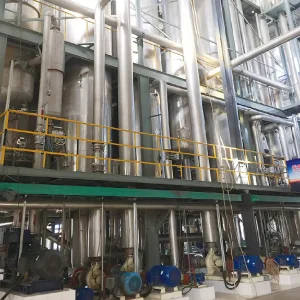
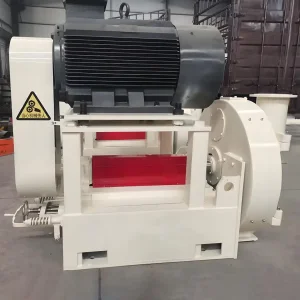
MVR represents the pinnacle of energy-efficient thermal evaporation. By utilizing a centrifugal compressor or blower to recompress the vapor generated within the system, the latent heat of vaporization is recovered and returned to the process. This reduces steam consumption by up to 90% compared to traditional single-effect evaporators, achieving an electrical energy consumption of only 15-25 kWh per ton of evaporated water.
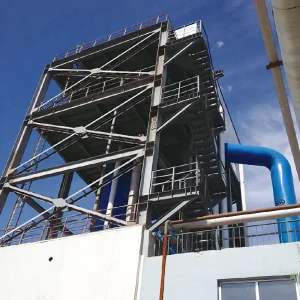
Engineered for heat-sensitive liquids and low-viscosity applications. The feed liquid is distributed evenly across the inner surfaces of vertical tubes, forming a thin film that flows downward under gravity. Boiling occurs within this film, resulting in high heat transfer coefficients and extremely short residence times. This prevents thermal degradation of organic compounds and minimizes scaling when processing clean or moderately scaling effluents.
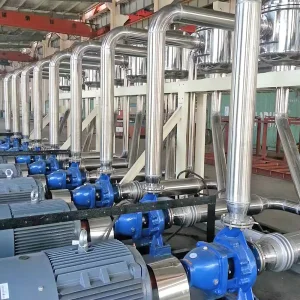
For high-fouling, high-viscosity, and crystallizing wastewater streams, forced circulation is the industry standard. High-efficiency axial flow pumps circulate the liquid through the heat exchanger tubes at high velocities (typically 1.5 to 3.0 m/s). Boiling is suppressed inside the tubes by maintaining hydrostatic head, preventing scaling and crystallization on the heat transfer surfaces. Instead, vaporization and crystallization occur safely within the flash vessel.
The future of industrial wastewater evaporation lies in the integration of digital twin technology, real-time thermodynamic modeling, and hybrid membrane-thermal configurations. Jiangsu Zongheng is actively developing smart control systems that utilize predictive AI algorithms to monitor fouling rates, optimize clean-in-place (CIP) cycles, and dynamically adjust compressor speeds in MVR systems to match fluctuating feed compositions. Furthermore, integrating waste heat sources—such as dryer exhaust vapors or low-pressure flash steam—allows for the design of multi-effect waste heat evaporators that operate at near-zero utility costs.
Industrial wastewater is rarely uniform. Different sectors present distinct chemical profiles, requiring specialized evaporation configurations to prevent corrosion, manage fouling, and maximize resource recovery.
Located in Zhoutie Town, Yixing City, Jiangsu Province—on the shores of Taihu Lake—Jiangsu Zongheng operates a modern, high-tech manufacturing facility spanning over 54,000 square meters. Our production workshop, exceeding 22,000 square meters, is equipped with state-of-the-art fabrication machinery, including heavy-duty plate rolling machines, automatic plasma welding systems, CNC machining centers, and comprehensive non-destructive testing (NDT) facilities.
Our workforce of 120 skilled professionals, including 3 senior engineers and over 20 specialized engineers, ensures that every piece of equipment is designed, fabricated, and tested to meet international standards. By integrating advanced manufacturing processes with robust supply chain logistics, we deliver heavy industrial equipment that stands up to the most demanding operational environments globally.
Operating pressure vessels and complex thermal systems requires strict adherence to regional safety and quality regulations. Jiangsu Zongheng has built a comprehensive compliance framework to support global installations:
To support our international clientele, we offer comprehensive project lifecycle services. This includes initial feed analysis and pilot-scale testing, custom process engineering, structural and thermal design, global logistics management, and on-site commissioning support led by our experienced field engineers.
When procuring an industrial wastewater evaporator, evaluating the Total Cost of Ownership (TCO) is critical. A low initial capital expenditure (CAPEX) can quickly be offset by high operating expenditures (OPEX) due to energy consumption, frequent maintenance, or premature equipment failure caused by corrosion.
The choice between MVR, Multi-Effect Evaporation (MEE), and Thermal Vapor Recompression (TVR) depends heavily on local utility costs. If electricity is cost-effective and steam is expensive or unavailable, MVR is the preferred choice. Conversely, if low-cost waste steam or waste heat is available from other plant processes, a multi-effect waste heat evaporator can deliver lower operating costs.
Wastewater concentration increases chloride levels, which can cause severe pitting and stress corrosion cracking in standard stainless steels. We conduct detailed water chemistry analyses to select the optimal metallurgy for each project:
Established as Yixing Yangxi Light Industrial Machinery Factory, covering 15 mu with 45 employees, laying the foundation for our thermal processing expertise.
Implemented international quality management systems, standardizing our design and manufacturing workflows.
Officially recognized as a Jiangsu Provincial High-Tech Enterprise, reflecting our commitment to R&D and technical innovation.
Obtained the Special Equipment Manufacturing License of the People's Republic of China (License No.: TS2232C42) for pressure vessel fabrication.
Acquired ASME "U" Stamp authorization, opening doors to global markets and high-spec international engineering projects.
Obtained international quality system certification (Certificate No.: 45021), aligning our quality assurance with global standards.
Expanding to over 54,000 m² total area with 22,000 m² of workshops, employing 120 staff, including 3 senior engineers and 20+ specialized engineers.
Beyond evaporation, Jiangsu Zongheng designs and manufactures a complete suite of solid-liquid separation and drying equipment to provide end-to-end process solutions:
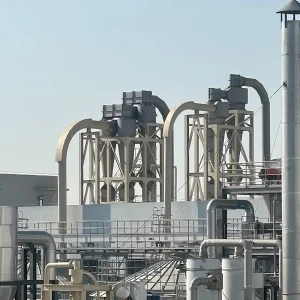
Utilizes high-speed hot air to suspend and fluidize materials. By employing impulse airflow generated through varied tube diameters, it tumbles particles while conveying them. This design ensures rapid, uniform, and efficient drying throughout the system, making it ideal for starch, proteins, and organic residues.
Designed for the concentration of heat-sensitive liquids. The feed forms a thin film flowing down vertical tubes, where it evaporates under low operating temperatures and short residence times. Proper liquid distribution and wetting rates prevent fouling and maintain high thermal efficiency.
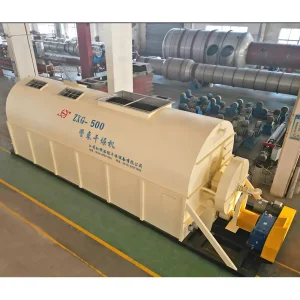
An indirect steam-heated dryer designed for safe, low-oxygen drying of bulk materials. The material is dried via contact with a rotating bundle of steam tubes, offering high thermal efficiency, low exhaust gas volumes, and precise moisture control.
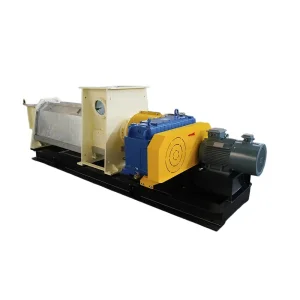
Engineered for high-performance dewatering of solid-containing materials. It mechanically presses water out of slurries, sludges, and fibrous materials prior to thermal drying, significantly reducing the overall energy required for drying.
Contact our engineering team today to request a technical consultation, run a pilot-scale test, or obtain a detailed project quote.
 Zongheng