China Falling Film Evaporator Working Principle Manufacturers & Factory

Precision Thermal Concentration Technologies for Heat-Sensitive Fluids, Industrial Starch, Wastewater Treatment, and Chemical Production Globally

30+
Years of Experience
20+
Elite R&D Engineers
54,000+
Factory Area (m²)
22,000+
Production Plant Area (m²)

In modern industrial processing, concentration technologies demand high efficiency, thermal optimization, and delicate handling of heat-sensitive materials. A falling film evaporator stands as the pinnacle of thin-film evaporation machinery, designed to process large quantities of liquid with minimal residence time and low temperature driving forces. As a leading high-tech manufacturer from China, Jiangsu Zongheng Concentrating and Drying Equipment Co., Ltd (established in 1992) designs and manufactures state-of-the-art Falling Film Evaporation Plants, MVR (Mechanical Vapor Recompression) Evaporator units, and multi-effect configurations that redefine processing efficiency globally. Under strict ASME and ISO certifications, our technologies support agricultural processing, corn wet milling, DDGS plant construction, waste heat management, and zero-liquid-discharge (ZLD) systems.
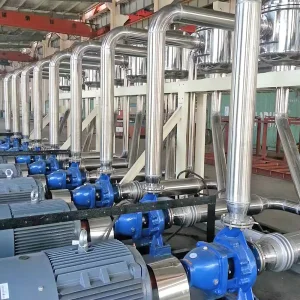
Curated Solutions

High-Efficiency Evaporation & Drying Systems

China MVR Evaporation Plant Factory

China MVR Evaporation Plant Factory: High-Efficiency, Cost-Saving Solutions

Read More
YDX Starch Washing Cyclone

YDX Starch Washing Cyclone for Effective Starch Purification & Impurity Removal

Read More
China Falling Film Evaporation Plant Suppliers

China Falling Film Evaporation Plant Suppliers | High-Quality Factory Solutions

Read More
China MQG Airflow Dryer Suppliers

China Suppliers of MQG Airflow Dryer - Efficient Drying Solution

Read More
China Zongheng Waste Heat Evaporator Factory

China Zongheng Waste Heat Evaporator Factory - Solution for Corn Steep Liquor

Read More
Jiangsu Zongheng ZXG Tube Bundle Dryer

Jiangsu Zongheng ZXG Tube Bundle Dryer - Indirect Steam Heating Factory Solution

Read More
High-Quality MQG Airflow Dryer

High-Quality MQG Airflow Dryer from China Suppliers | Jiangsu Zongheng

Read More
CE Certification Forced Circulation Evaporation Plants

CE Certification High-Performance Forced Circulation Evaporation Plants

Read More
Deep Technical Analysis

How a Falling Film Evaporator Operates

The Working Principle and Thermodynamic Design

The primary mechanism of a falling film evaporator involves feeding process liquid through the top of a vertical shell-and-tube heat exchanger. To achieve optimal performance, the liquid must be distributed evenly across all heat-exchanger tubes. This is accomplished using precision-engineered distribution plates, spray nozzles, or overflow weirs at the top column head.

Once distributed, gravity pulls the liquid downward, causing it to flow along the inner walls of the vertical tubes as a thin, uniform, continuous film. Simultaneously, heating steam (or recompressed vapor) enters the shell side of the unit, transferring heat through the tube walls. As the liquid film flows downward, it begins to boil and partially vaporize.
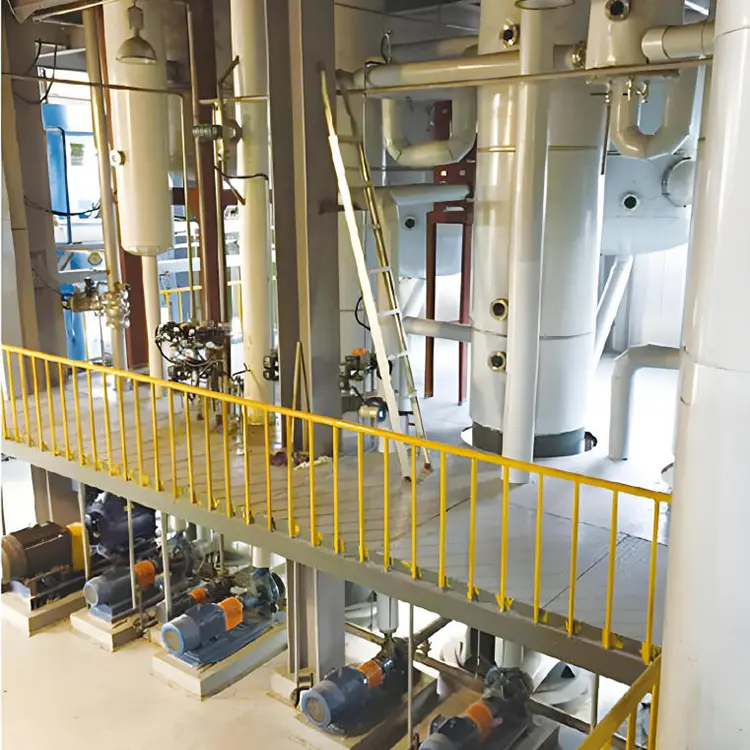
  • Optimized Residence Time: The rapid downward movement ensures the liquid stays in contact with the hot surface for only seconds, preventing thermal degradation.
  • High Heat Transfer Coefficient: The thin liquid layer exhibits low thermal resistance, yielding high heat transfer rates (U-values) even under low temperature differences.
  • Parallel Vapor Flow: The generated vapor flows downward parallel to the liquid, creating shear stress that further thins the film and enhances heat transfer.
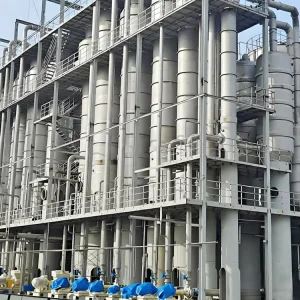
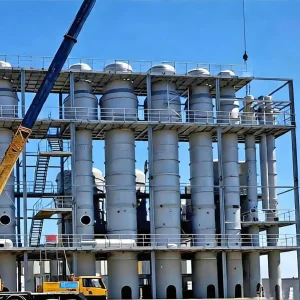
Falling Film Evaporator Plant Diagram

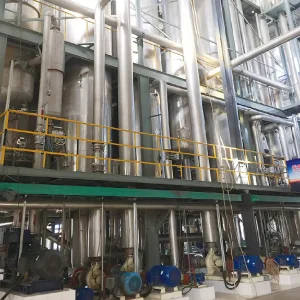
Figure 1: Falling Film Evaporation Plant manufactured at Jiangsu Zongheng facility.

Market Insights

Global Commercial & Industrial Status

As manufacturing sectors transition toward sustainable and low-carbon operations, energy consumption remains the primary cost driver for industrial concentration. Modern chemical, food, and environmental facilities are replacing older rising-film or natural-circulation units with advanced falling film technologies.

Zero Liquid Discharge (ZLD)

Strict environmental regulations in North America, Europe, and Asia require chemical and mining facilities to implement zero-liquid-discharge wastewater programs. Multi-effect and MVR falling film evaporators concentrate highly saline solutions before crystallization, dramatically lowering disposal costs.

Corn Starch & Grain Processing

In global agriculture-heavy markets, processing corn, starch, and cassava generates large volumes of light steep water and effluent. Falling film plants efficiently concentrate steep water for animal feed formulations (DDGS) while utilizing waste heat from nearby airflow or tube bundle dryers.

Lithium-Ion Battery Chemical Recovery

With the global rise in electric vehicle battery manufacturing, extracting and purifying lithium, cobalt, and nickel sulfate requires high-volume, continuous concentration. Falling film configurations prevent product scaling and yield high purity products.

Technology Roadmap Comparison

Choosing the Right Evaporator Configuration

Industrial projects evaluate evaporator designs based on boiling point elevation (BPE), material scaling potential, capital expenditure (CAPEX), and operational energy requirements (OPEX).

Evaporator Type Best Application Energy Source Relative CAPEX Relative OPEX Fouling Risk Handling
Falling Film Evaporator Low-viscosity, heat-sensitive fluids (starch slurry, wastewater, juices) Steam / Recompressed Vapor Moderate Very Low (Highly Efficient) Moderate (Requires proper distribution)
Forced Circulation Evaporator High viscosity, crystallization, high scaling fluids Steam High High (Pumping power needed) Excellent (Turbulence prevents fouling)
MVR (Mechanical Vapor Recompression) Continuous operation with low boiling point elevation Electricity (Compressor) High Initial Lowest (Saves up to 90% steam) Moderate
Multi-Effect Evaporator Low electricity access regions, fluctuating steam utilities Fresh Boiler Steam Moderate to High Moderate (Depends on effects number) Moderate
30+ Years of Manufacturing Evolution

Technology & Enterprise Roadmap

From a specialized light industry machinery shop to a global supplier of Category III medium/low-pressure vessel equipment and thermal systems.

  • 1992

    Establishment

    Founded as Yixing Yangxi Light Industry Machinery Factory, focusing on regional starch and fermentation equipment fabrication.

  • 2002

    ISO9001 Certification

    Achieved formal international quality management system standard certification, boosting domestic market trust.

  • 2007

    High-Tech Enterprise Status

    Recognized as a Jiangsu Provincial High-Tech Enterprise, investing heavily in thermal and mechanical vapor recompression R&D.

  • 2009

    Pressure Vessel Licensing

    Obtained the Special Equipment Manufacturing License of the People's Republic of China for Category III pressure vessels.

  • 2012

    ASME "U" Stamp Authorization

    Authorized to manufacture ASME pressure vessels, positioning the company as a premium supplier for global engineering firms.

  • 2015

    Internationalization Program

    Integrated global quality systems, exporting multi-effect evaporators, bundle dryers, and airflow system units to Southeast Asia, Europe, and the Americas.

  • 2026

    Smart Factory Expansion

    Occupying a modern facility over 54,000 m², employing senior metallurgical and thermal design engineers, and leading smart evaporation technology.

Macro Industry Solutions

Integrated Thermal Systems & Drying Plants

Jiangsu Zongheng delivers end-to-end processing systems that integrate evaporation, dewatering, and final product drying for chemical and agricultural sectors.
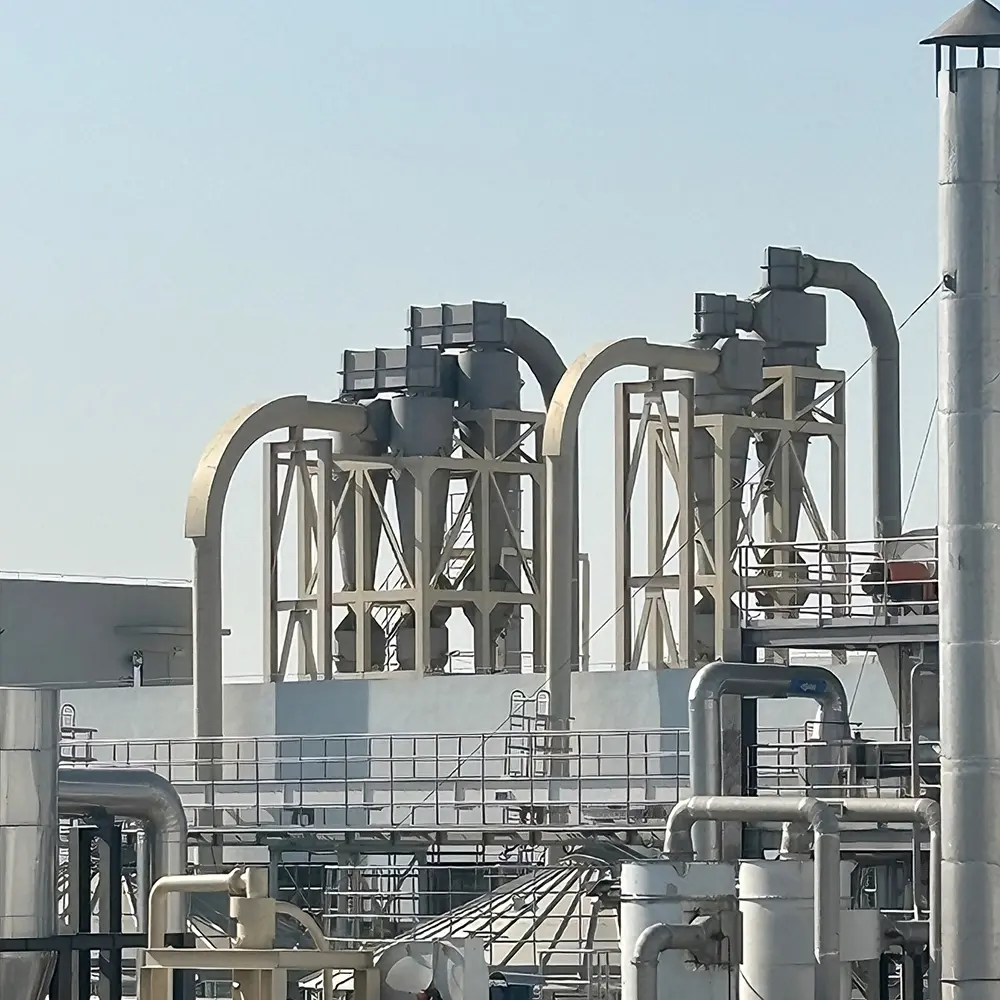
MQG Airflow Drying Plant

The Zongheng Integrated Plant Architecture

Raw materials such as maize steep liquid, starch residues, or chemical effluents rarely undergo simple concentration alone. Typically, concentration must interface directly with mechanical separation and thermal drying stages:

  • Upstream Centrifugal Separation: YDX Starch Washing Cyclones and screw presses extract fiber, leaving low-viscosity liquid for concentration.
  • Thermal Evaporation Stage: Falling Film Evaporators concentrate the liquid from 5% solids to over 50% solids, using waste steam.
  • Downstream Industrial Drying: Tube Bundle Dryers (ZXG models) and High-Speed MQG Airflow Dryers process concentrated cake and fiber into dry powder.

By purchasing complete plant equipment from a single certified China factory, processors reduce engineering risks, guarantee material compatibility, and maximize heat integration.
Expert Knowledge Base

Frequently Asked Technical Questions

What is the minimum wetting rate in a falling film evaporator? +
The minimum wetting rate is the threshold liquid feed flow rate required to maintain a continuous, uninterrupted liquid film along the inner walls of the heat exchanger tubes. If the feed rate falls below this value, the liquid film ruptures, causing dry spots. These dry spots lead to immediate product burning, local scaling, fouling, and a significant drop in thermal performance.
How does an MVR system save energy compared to traditional multi-effect setups? +
An MVR (Mechanical Vapor Recompression) evaporator uses a mechanical centrifugal fan or high-pressure compressor to compress the low-temperature, low-pressure vapor evaporated from the product. This compression increases the vapor's temperature and pressure, allowing it to be recycled back as heating steam for the same evaporator effect. This process eliminates the need for fresh steam (except during startup) and reduces energy consumption by up to 90% compared to single-effect evaporators.
What certifications should a reliable China evaporator factory hold? +
Because evaporators operate under high pressure and temperature differentials, safety is critical. A world-class manufacturer must hold ASME "U" Stamp authorization, the Special Equipment Manufacturing License of China (for Category III vessels), CE conformity certifications, and ISO 9001:2015 quality management compliance. Jiangsu Zongheng holds all these credentials, ensuring compliance with global engineering standards.
Why is short residence time important for heat-sensitive liquids? +
Thermal degradation of organic molecules (such as starch, enzymes, vitamins, and milk proteins) is a function of both temperature and exposure time. Falling film evaporators operate with a liquid film thickness of only 0.5 to 2 mm. Gravity pulls the liquid down the tube walls in seconds, minimizing exposure to heat and preserving chemical properties, taste, color, and nutritional value.
How do you handle scaling and fouling in falling film tubes? +
Scale control is managed through feed pre-treatment, precise liquid distribution, and maintaining proper wetting rates. If fouling occurs, automated Clean-In-Place (CIP) systems wash the tubes with tailored chemical solutions, restoring heat transfer rates without requiring manual disassembly.
Factory Selection

Industrial Processing Equipment Product Portfolio

China Suppliers MVR Evaporation Plant

China Suppliers MVR Evaporation Plant - Energy-Efficient Factory Solution

Read More
China MVR Evaporation Plant

China MVR Evaporation Plant - Energy Efficient Solutions from Suppliers

Read More
China Zongheng Industrial Evaporation Technology

China Zongheng Industrial Evaporation Technology: Leading Suppliers & Factory

Read More
China Zongheng Degerming Mill Machine

China Zongheng Degerming Mill Machine: Top Suppliers & Factory

Read More
China Suppliers Factory Single Screw Press

China Suppliers Factory Efficient Single Screw Press for Dewatering

Read More
China Falling Film Evaporation Plant for Heat-Sensitive Liquids

China Falling Film Evaporation Plant for Heat-Sensitive Liquids | Suppliers

Read More
China Suppliers Factory MQG Airflow Dryer

China Suppliers Factory MQG Airflow Dryer for Efficient Drying Solutions

Read More
China Zongheng Degerming Mill Machine Top Suppliers

China Zongheng Degerming Mill Machine - Top Suppliers & Factory

Read More

Ready to Optimize Your Concentration & Drying Plant?

Connect with our engineering team for a customized, ASME-certified processing solution.