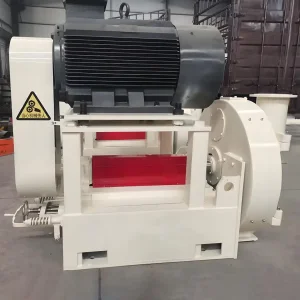
In the contemporary landscape of industrial manufacturing, the demand for high-efficiency solid-liquid separation has reached an unprecedented peak. As global industries shift toward a Circular Economy, the Single Screw Press has emerged as a cornerstone technology for dewatering, material concentration, and resource recovery. This white paper explores the critical role of CE Certification, the technical intricacies of modern screw presses, and the macro-industrial shift toward energy-neutral processing.
The global market for single screw press equipment is projected to witness significant growth, driven by stringent environmental regulations and the rising cost of waste disposal. In Europe and North America, industries are mandated to reduce the moisture content of waste streams to minimize transportation costs and facilitate downstream processes like incineration or composting.
Currently, China-based manufacturers like Jiangsu Zongheng Concentrating and Drying Equipment Co., Ltd. are leading the charge by integrating advanced metallurgy with cost-effective engineering, providing the global market with "Tier-1" performance at competitive price points. The focus has transitioned from mere mechanical pressing to "Smart Dewatering," where IoT sensors monitor torque and moisture levels in real-time.
For global trade, CE Certification is not merely a label; it is a declaration that the machinery meets the rigorous safety, health, and environmental protection requirements of the European Economic Area (EEA). As a leading Single Screw Press Manufacturer, our commitment to CE standards ensures:
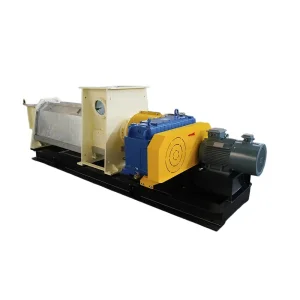
Variable pitch screw designs allow for gradual compression, maximizing liquid extraction without damaging fiber structures.
Utilization of SS304/SS316L and specialized wear-resistant coatings for abrasive industrial environments.
Low RPM operation translates to reduced energy consumption and minimized mechanical wear over long duty cycles.
The technical trajectory of the Single Screw Press is moving towards Multi-Stage Compression and AI-Optimized Control Loops. Traditional presses operated at constant speeds; however, the next generation utilizes Variable Frequency Drives (VFD) coupled with moisture sensors. If the input material becomes more viscous, the system automatically adjusts the torque to prevent clogging.
Future innovations also include self-cleaning filter screens and modular screw segments that allow factories to reconfigure their machines for different materials (e.g., transitioning from corn starch to fruit pulp) with minimal downtime.
The versatility of the Jiangsu Zongheng Single Screw Press allows it to thrive in diverse local environments:
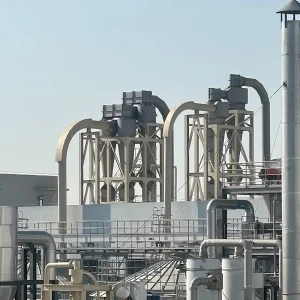
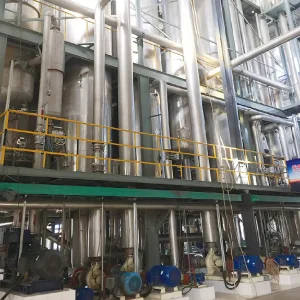
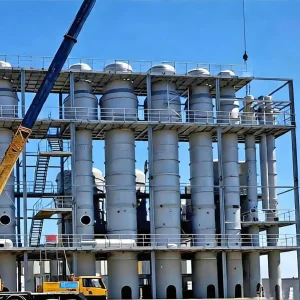
A Single Screw Press rarely works in isolation. In a modern "Zero-Liquid Discharge" (ZLD) plant, it serves as the primary dewatering stage. The separated liquid is often processed by a Forced Circulation Evaporation Plant or an MVR System to recover pure water, while the solid cake is sent to an Airflow Dryer or Tube Bundle Dryer for final drying.
Jiangsu Zongheng provides a unified solution, ensuring that the moisture output of the press perfectly matches the input requirements of the subsequent drying stage, optimizing the Total Cost of Ownership (TCO) for the client.
The Single Screw Press operates at significantly lower speeds (RPM), which results in lower energy consumption, reduced noise levels, and much lower maintenance costs due to decreased wear and tear on rotating parts. It is particularly effective for fibrous materials where high pressure is more beneficial than high G-force.
CE Certification ensures the machine adheres to European safety directives. For the user, this means guaranteed electrical safety, verified structural integrity under load, and the inclusion of mandatory fail-safes, which directly translates to higher operational uptime and reduced liability.
Yes. Our Single Screw Presses are designed with thermal expansion in mind. By utilizing high-grade stainless steel and heat-resistant seals, we can process materials directly from boiling or evaporation stages without compromising the machine's alignment or seal integrity.
Regular maintenance involves checking the filter screen for blinding and monitoring the screw flight edges for wear. Our modular design allows for the quick replacement of wear parts, and the low-speed operation ensures that these intervals are significantly longer than those of high-speed separation equipment.
 Zongheng