China Evaporator Double Effect Manufacturers & Factory

High-Performance Industrial Evaporation & Dewatering Plant Systems for Starch Purification, Wastewater Treatment, and Chemical Processing

Advanced Industrial Evaporator & Dewatering Solutions

Explore our elite engineering portfolio of primary product offerings tailored for global starch, industrial fermentation, alcohol DDGS, and liquid concentration sectors.
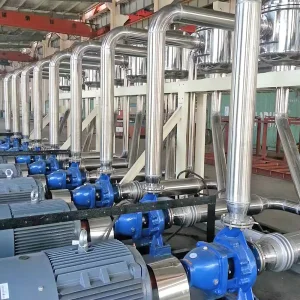
YDX Starch Washing Cyclone

China Suppliers Factory YDX Starch Washing Cyclone for Efficient Starch Purification and Impurity Removal

Read More
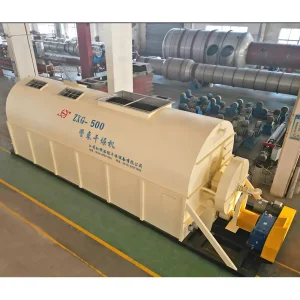
ZXG Tube Bundle Dryer

China Suppliers Factory ZXG Tube Bundle Dryer - Safe, Efficient, Indirect Steam Drying for Industrial Applications

Read More
Forced Circulation Evaporation Plants

High-Quality High-Efficiency Forced Circulation Evaporation Plants from Leading China Suppliers | Premier Factory Solutions

Read More
China MVR Evaporation Plant

China MVR Evaporation Plant - Energy Efficient Solutions from Leading Suppliers & Factory

Read More
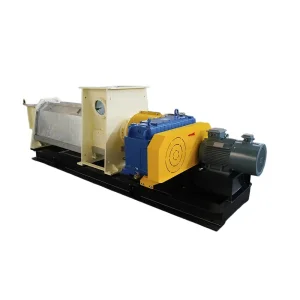
Jiangsu Zongheng Single Screw Press

China Suppliers: Jiangsu Zongheng Single Screw Press - High Efficiency Dewatering Solution from Factory

Read More
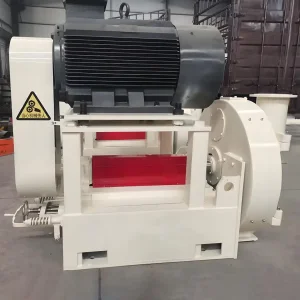
Zongheng Degerming Mill Machine

China Suppliers Zongheng Degerming Mill Machine - High Precision Corn Processing Factory Solutions

Read More
Waste Heat Evaporator

China Zongheng Waste Heat Evaporator Factory - Efficient Solution for Corn Steep Liquor and Wastewater Suppliers

Read More
High Quality Airflow Dryer

High-Quality Airflow Dryer from China Suppliers - Jiangsu Zongheng Factory for Efficient Material Drying

Read More

1. Double-Effect Evaporation: Thermodynamic Foundations & Operational Mechanics

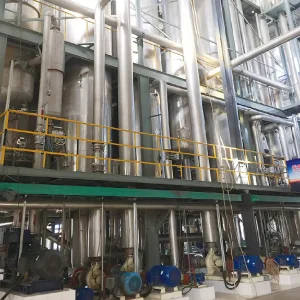
Industrial evaporation demands severe focus on energy efficiency. Multi-effect evaporation, specifically the Double-Effect Evaporator, remains a thermodynamic gold standard for processing heat-sensitive feed liquors, organic waste streams, and concentrated food products. In a double-effect configuration, liquid concentration occurs in two successive stages (effects), where the secondary vapor generated in the first effect acts as the primary heating medium for the second effect.

By operating the second effect under a higher vacuum (and consequently, a lower boiling temperature), the temperature gradient ($\Delta T$) is maintained without requiring additional live steam. This thermal cascading achieves a Specific Steam Consumption (SSC) of approximately 0.5 to 0.55 kg of live steam per kg of evaporated water, yielding a nearly 50% energy saving compared to conventional single-effect systems.
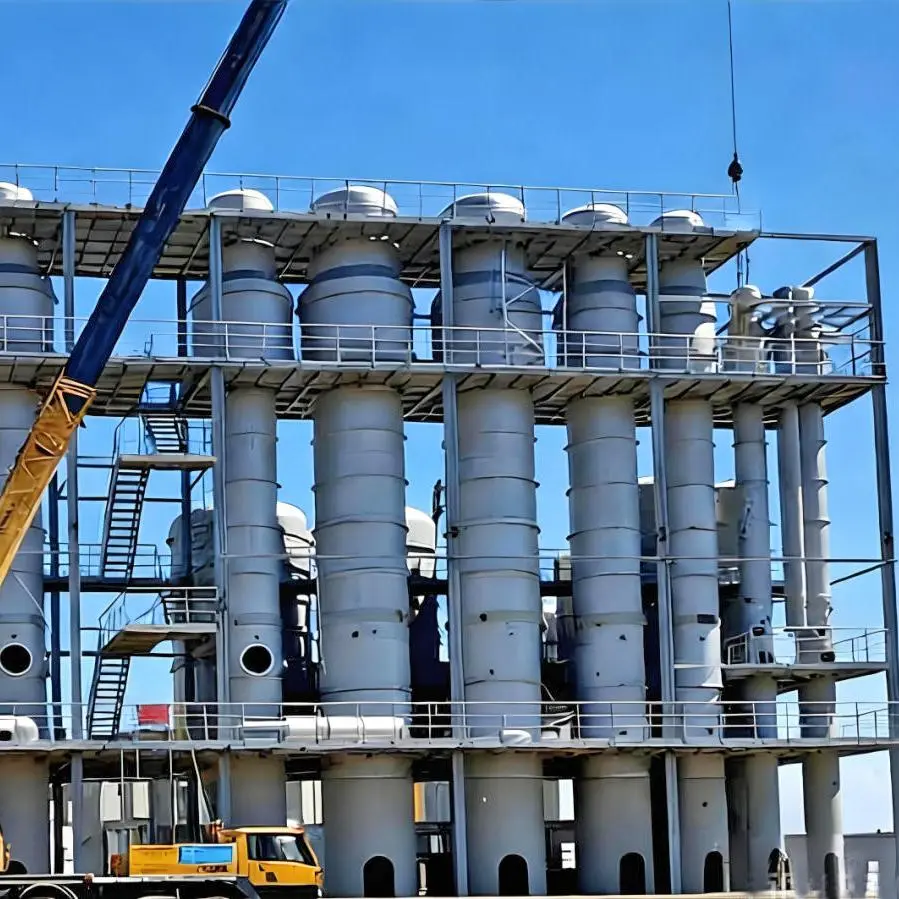
  • Thermal Cascade Utilization: Utilizes latent heat of vaporization from the first effect to vaporize water in the second effect under reduced pressures.
  • Optimized Residence Time: Preserves heat-sensitive proteins, starches, and active organic compounds through low boiling-point operations.
  • Reduced Condenser Loads: Minimizes cooling water requirements by condensing substantial vapor inside the second-stage calandria.
Jiangsu Zongheng Industrial Evaporation Technology

Vapor Velocity Control

Specially engineered tangential vapor separators reduce liquid droplet entrainment, achieving separation efficiencies above 99.9% and preventing product loss.

Advanced Metallurgy

Offered in high-grade Titanium, Duplex Stainless Steels (e.g., 2205), and Hastelloy to combat chloride-induced pitting and severe chemical corrosion.

Automated PLC Interface

Integrated SCADA/DCS systems automatically adjust vacuum pressures, steam supply valves, and feed rates to prevent boiling dry or tube fouling.

2. Sourcing Double-Effect Evaporators: The Global Procurement Paradigm

How engineering procurement officers navigate CAPEX, OPEX, and compliance standards when selecting Chinese manufacturers.

CAPEX & OPEX Balance

Procurement teams must analyze life-cycle costs. While falling film double-effect evaporators demand precision manufacturing (increasing initial CAPEX), their low steam consumption and minimal maintenance translate to unmatched OPEX savings over a 20-year service life.

Standards & Certification

For global installation, pressure vessels must comply with strict international regulatory codes. Top-tier Chinese manufacturers hold the ASME "U" stamp authorization, CE certification under the PED directive, and ISO9001 quality system standards to guarantee safe operation under high pressure.

Industrial Scalability

Whether processing corn steep liquor, starch washing water, or pharmaceutical intermediate fractions, a manufacturer's capacity to design custom column geometries and heat transfer areas (ranging from 100 m² to over 8000 m²) is essential for long-term scalability.

Evaporation Technology Typical Steam Economy Suitability for Viscous Fluids Thermal Degradation Risk Ideal Application Areas
Double-Effect Falling Film 1.8 - 2.0 (Water evaporated per steam unit) Moderate (up to 150 cP) Very Low (short residence time) Starch sweetening, juices, chemical separation
Forced Circulation (Double-Effect) 1.7 - 1.9 Excellent (up to 1000 cP) Low to Moderate Salting wastewater, high-fouling slurries, crystallization
Mechanical Vapor Recompression (MVR) 10 - 20 (Equivalent steam efficiency) Moderate Low Large-scale starch washing, environmental wastewater
Waste Heat Evaporator Utilizes secondary/flue streams Low to Moderate Low DDGS distilleries, corn steep liquor concentration
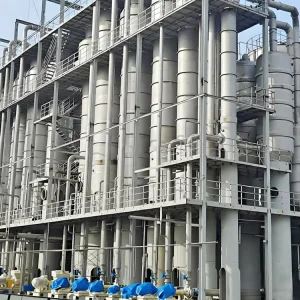
Falling Film Evaporation Plant

3. Macro Industry Solutions: Starch Processing & Downstream Engineering Integration

In modern wet milling and grain processing factories, evaporation plants do not operate in isolation. They form the core of a highly integrated mechanical processing loop designed to refine corn, wheat, or cassava into pure starches, proteins, and high-value coproducts.

Our structural process loop begins at the Degerming Mill Machine, which separates the corn kernels to isolate the valuable germ without breaking the fiber matrix. The slurry is then routed through the YDX Starch Washing Cyclone system, where multiple micro-cyclone stages utilize centrifugal forces to separate starch milk from gluten, proteins, and soluble impurities under high fluid pressure.

  • Efficient Dewatering: The extracted fibers and gluten go through the Single Screw Press to reduce moisture levels down to 55-60%, optimizing the thermal load for subsequent drying.
  • Indirect Bundle Drying: The ZXG Tube Bundle Dryer uses low-pressure steam passed through concentric tube nests to dry fiber and germ products safely and uniformly in a low-oxygen environment.
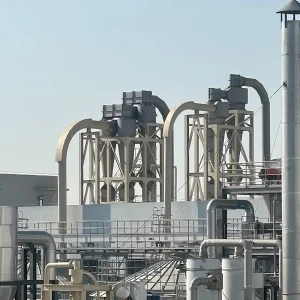
  • Pneumatic Airflow Flash Drying: For refined starch products, our Industrial Airflow Dryer uses high-speed hot air to suspend, fluidize, and dry starch instantly during transport.

30+ Years of Manufacturing Excellence & Authority

Established in 1992, Jiangsu Zongheng Concentrating and Drying Equipment Co., Ltd. is a leading high-tech enterprise specializing in heavy industrial evaporation, drying, and pressure vessel manufacturing.

30+
Years of Manufacturing Experience
20+
Senior & Professional Engineers
54k+
Total Factory Area (m²)
22k+
Heavy Production Plant Area (m²)

1992 - Foundation

Founded as Yixing Yangxi Light Industry Machinery Factory, commencing dedicated fabrication of light industry concentration equipment on the shores of Taihu Lake.

2002 - ISO9001 Certification

Pioneered quality control in the region by acquiring formal ISO9001 international quality management certification, establishing a robust quality assurance framework.

2007 - Provincial Recognition

Officially recognized as a "Jiangsu Provincial High-Tech Enterprise" for innovations in energy-efficient evaporator designs and tube bundle dryers.

2012 - ASME U-Stamp Accreditation

Obtained the ASME "U" Stamp authorization, validating our welding and engineering standards for global pressure vessel delivery.

2026 - Present Scale

Operating a 54,000+ m² modern facility with over 120 dedicated staff, supplying evaporators, starch washing lines, and dryers to global processing markets.

4. Technology Roadmap & Technical Developments in Evaporator Design

The global push for carbon-neutral industrial processing is reshaping evaporator design. Traditional multi-effect steam-heated systems are evolving to integrate advanced thermal recovery technologies. Our engineering division has identified three main technical trends guiding modern projects:

Hybrid MVR and Multi-Effect Systems: In applications with high boiling point elevation (BPE) or high viscosity, a standalone MVR system may struggle. Designing a hybrid layout where a double-effect evaporator is coupled with a Mechanical Vapor Recompression compressor allows plants to handle the initial concentration stage using low-power electricity, before switching to steam for the final concentration.
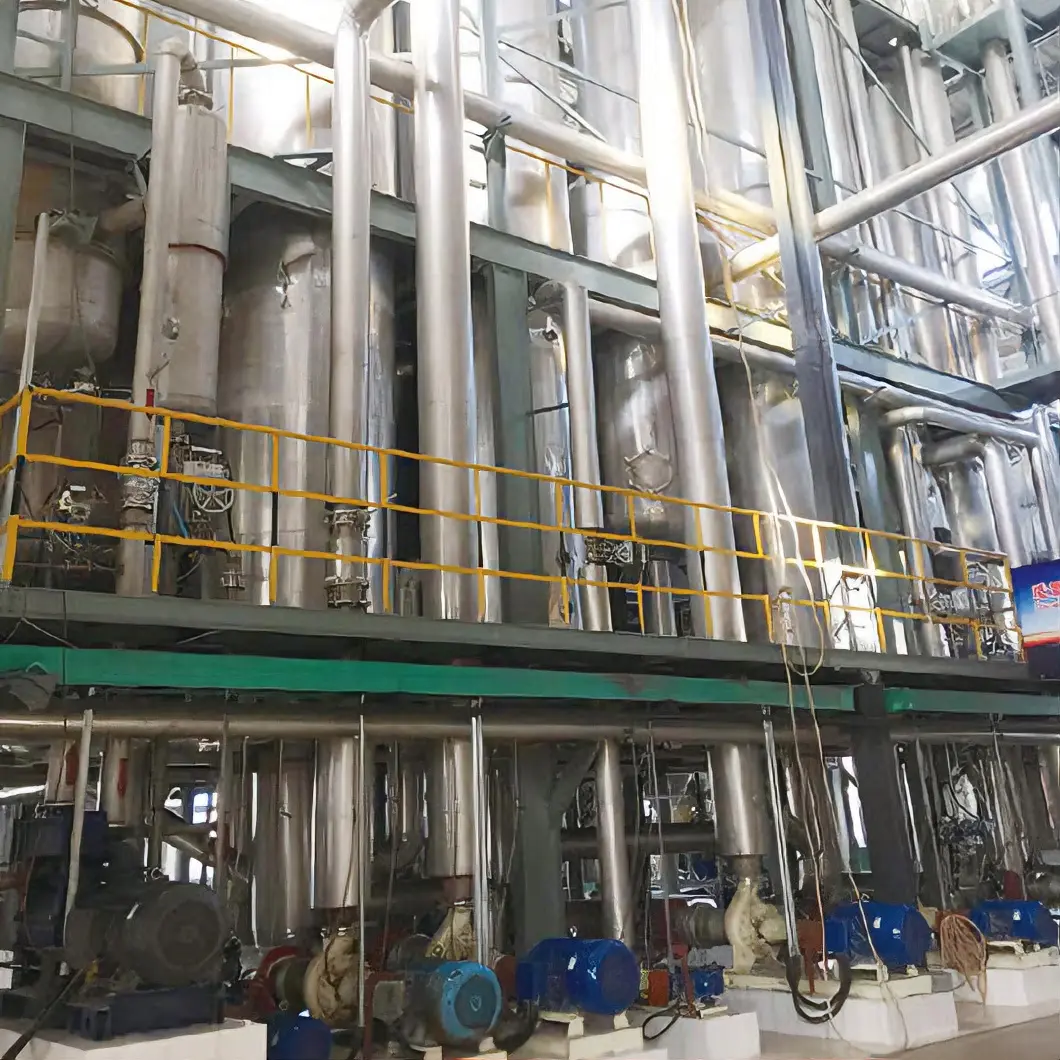
  • Thermal Vapor Recompression (TVR): Integrating steam ejectors to entrain and compress a portion of the secondary vapor from the first effect using high-pressure motive steam. This configuration increases energy efficiency by up to 30% with minimal capital cost.
  • Intelligent Intelligent Anti-Fouling Systems: Designing customized liquid distributors and electing optimal tube diameters ensures fluid shear velocity is maintained above critical thresholds, delaying scaling and fouling.
  • Complete Waste Heat Cascading: Reclaiming waste heat from tube bundle dryers or flash dryers to preheat incoming feed liquor to its boiling point before it enters the first evaporator effect.
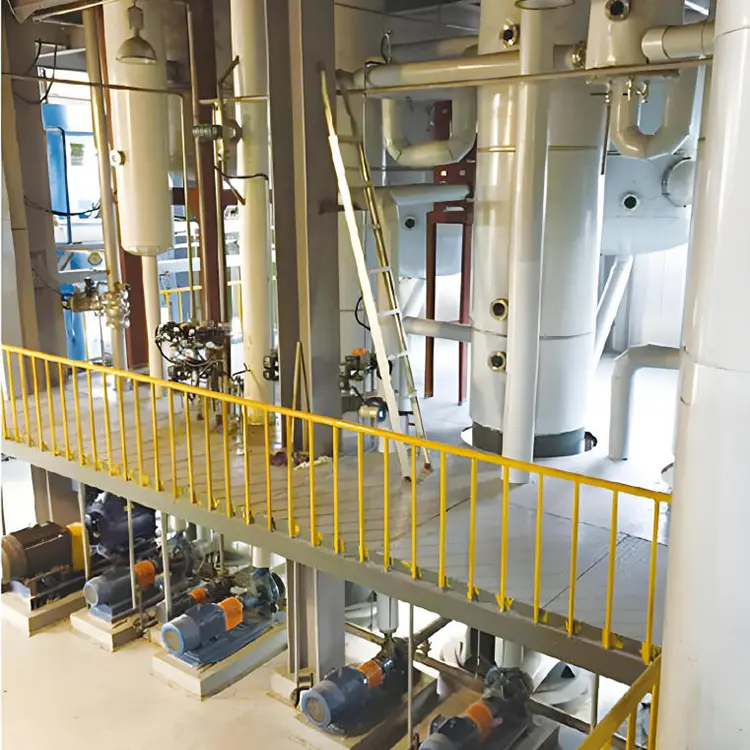
Forced Circulation Evaporation Plant

5. Global Compliance & Local Commissioning Support

Ensuring seamless installation, commissioning, and operational compliance across international borders.

Local On-Site Commissioning

Our expert team of commission engineers provides complete on-site supervision of piping, electrical, structural, and control systems. We conduct rigorous hydrostatic tests, dynamic vacuum checks, and water-run simulations before introducing product feeds to ensure smooth plant start-ups.

Strict Regulatory Compliance

We manage compliance across multiple standards. Our pressure vessels are designed, inspected, and stamped under the ASME Section VIII Div 1 code, European CE-PED directives, and local pressure vessel regulations, backed by certified raw-material trace reports.

Industrial Evaporation FAQ

Answers to key technical questions from procurement specialists and process engineers.

What is the principal difference between a Double-Effect Evaporator and an MVR Evaporator?
A Double-Effect Evaporator utilizes thermal cascading, recycling secondary vapor from the first effect to heat the second effect under vacuum, using steam as its primary energy source. An MVR (Mechanical Vapor Recompression) Evaporator uses a mechanical compressor to compress all secondary vapor, raising its temperature and pressure to reuse it as heating steam within the same effect, running primarily on electrical energy.
How do you prevent scaling and fouling in falling film double-effect evaporators?
Fouling is mitigated through three main design parameters: designing custom liquid distributors for complete and uniform tube wetting, selecting precise tube diameters and lengths to maintain critical liquor velocities, and incorporating automatic CIP (Cleaning-in-Place) spray cycles to remove scaling without major shutdowns.
What raw materials are used in manufacturing double-effect evaporators for corrosive fluids?
For corrosive applications like wastewater, corn steep liquor, or salty chemical solutions, we construct heat exchanger tubes and separators from 316L Stainless Steel, Duplex Stainless Steel (2205/2507), or high-purity Titanium. For less aggressive applications, 304 Stainless Steel is selected to optimize fabrication costs.
What pressure vessel design codes and certifications does your factory hold?
We hold the ASME "U" stamp authorization certificate, Special Equipment Manufacturing License of the People's Republic of China (Class III pressure vessel license), CE certification (PED directive compatibility for Europe), and ISO9001 Quality System Certification.
Can a waste heat evaporator be integrated into a double-effect evaporation plant?
Yes, our waste heat evaporator design allows integration of external thermal streams—such as flash dryer exhaust steam or dryer condenser vapors—as the primary energy source for the first effect. This lowers live steam consumption further, boosting the plant's overall energy efficiency.

Complementary Wet Milling & Processing Equipment

Maximize your processing plant's throughput and efficiency with our integrated dewatering, milling, and refining systems.
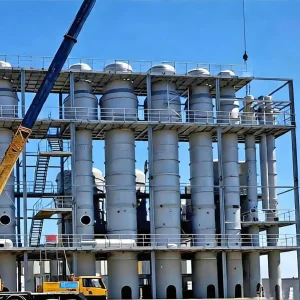
China Zongheng Degerming Mill Machine

China Zongheng Degerming Mill Machine - High-Performance Suppliers & Factory for Efficient Maize Processing

Read More
YDX Starch Washing Cyclone

China Suppliers Factory YDX Starch Washing Cyclone for Effective Starch Refining and Impurity Removal

Read More
High Quality Energy-Efficient Evaporation Solutions

High-Quality Energy-Efficient Evaporation Solutions from China Factory - High-Performance Suppliers for Liquid Concentration

Read More
YDX Starch Washing Cyclone

China Suppliers Factory YDX Starch Washing Cyclone for Efficient Starch Refining and Purity Improvement

Read More
High Performance Evaporation Plant

China High-Performance Forced Circulation Evaporation Plant from China Suppliers - Trusted Factory Solutions for Industry

Read More
Jiangsu Zongheng Starch Washing Cyclone

China Jiangsu Zongheng Starch Washing Cyclone - Top Quality Suppliers & Factory for Starch Refining

Read More
Waste Heat Evaporator Supplier

China Jiangsu Zongheng Waste Heat Evaporator Supplier, Service

Read More
MVR Evaporation Plant

CE Certification Jiangsu Zongheng MVR Evaporation Plant Suppliers, Factories

Read More

Ready to Upgrade Your Thermal Efficiency?

Partner with Jiangsu Zongheng. Consult with our senior thermal design engineers today to configure a custom Double-Effect or MVR Evaporator plant matching your exact process constraints.