High-performance engineering solutions tailored for Nigerian agricultural processing plants
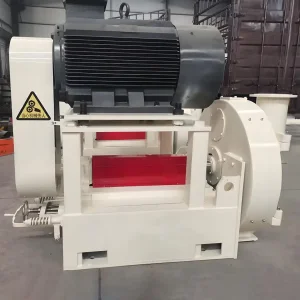
Engineered for precise germ separation in wet milling processes, maximizing starch yield and purity for Nigerian processors.
Read More →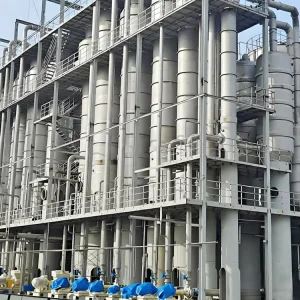
Energy-saving waste heat recovery systems designed to concentrate steep liquor and treat industrial wastewater efficiently.
Read More →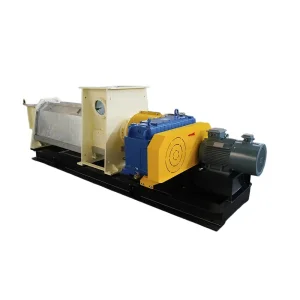
Robust mechanical dewatering for fiber, germ, and starch residues, reducing thermal drying energy requirements.
Read More →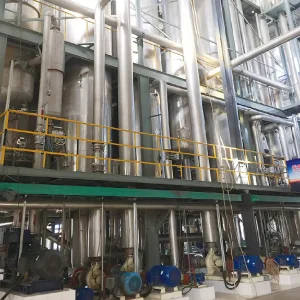
Forced circulation design prevents fouling when concentrating highly viscous liquids in industrial starch plants.
Read More →Nigeria stands as one of Africa's largest producers of maize, with annual yields exceeding 12 million metric tons. Cultivated predominantly in regions like Kaduna, Katsina, Niger, and Taraba, maize serves as a foundational crop for both food security and industrial applications. Despite this massive agricultural output, the domestic processing sector faces significant challenges. Historically, a large portion of the harvest has been relegated to low-value manual processing, leading to substantial post-harvest losses and missed economic opportunities.
In recent years, a structural shift has occurred. The Nigerian government, alongside private agro-allied conglomerates, has prioritized local value addition. This initiative aims to substitute imported corn starch, liquid glucose, and brewery adjuncts with locally processed alternatives. Industrial starch is a critical raw material for Nigeria's fast-moving consumer goods (FMCG) sector, pharmaceutical industries, textile manufacturing, and paper mills. To meet the stringent quality standards of these sectors, processing facilities must transition from rudimentary milling to advanced wet milling technologies. At the heart of this transition is the degerming mill.
"The integration of modern degerming mills in Nigerian processing plants is not merely an equipment upgrade; it is a strategic necessity to unlock high-purity starch yields and establish a viable local supply chain for corn oil and animal feed."
Degerming is the critical process of separating the germ (the oil-rich embryo) from the endosperm (the starch-rich body) and the fiber (the outer hull) of the maize kernel. In wet milling, this separation must be achieved with minimal damage to the germ itself. If the germ is ruptured during milling, free oil is released into the starch slurry, contaminating the final starch product and reducing the shelf life and quality of the corn gluten meal.
Jiangsu Zongheng's degerming mills utilize a combination of impact and friction forces. The maize kernels, having been tempered or steeped to optimize moisture distribution, are introduced into the milling chamber. Here, adjustable stator and rotor plates, equipped with specialized teeth, subject the kernels to controlled mechanical shear. This action breaks the kernel along its natural anatomical boundaries, releasing the germ intact. The process features:
Procuring heavy industrial machinery for West African installations requires a partner with robust manufacturing credentials and global logistics experience. Jiangsu Zongheng Concentrating and Drying Equipment Co., Ltd. brings over 30 years of engineering excellence to the table. Holding prestigious certifications such as the ASME "U" Stamp, ISO9001, and CE Certification, the company ensures that every piece of equipment meets international safety and operational standards.
For Nigerian procurement managers, the supply chain journey involves navigating shipping logistics to major ports like the Lagos Port Complex (Apapa) or Tin Can Island Port. Jiangsu Zongheng provides comprehensive export packaging, utilizing anti-corrosive coatings and heavy-duty wooden crates to protect precision components from maritime humidity. Furthermore, the company assists in securing SONCAP (Standards Organisation of Nigeria Conformity Assessment Programme) certification, ensuring smooth customs clearance and compliance with local regulatory frameworks.
A degerming mill does not operate in isolation. It is a cog in a larger, integrated industrial ecosystem designed to process raw agricultural inputs into refined, high-value outputs. A typical integrated maize wet milling line includes steeping systems, degerming mills, fiber separation screens, starch washing cyclones, dewatering screw presses, and thermal dryers.
Years of Engineering Experience
Factory Area (sqm)
Senior Design Engineers
Germ Separation Efficiency
The future of maize processing lies in automation and smart manufacturing. Jiangsu Zongheng is actively developing next-generation milling systems integrated with IoT sensors. These sensors monitor real-time parameters such as vibration, temperature, and motor load. By analyzing this data, the system can predict maintenance needs before a breakdown occurs, minimizing unplanned downtime in Nigerian factories where spare parts sourcing can sometimes face logistical delays.
Additionally, automated gap control systems are being introduced. These systems utilize machine learning algorithms to analyze the output slurry and automatically adjust the mill plates to maintain optimal separation efficiency, even if the incoming maize quality fluctuates. This level of technology ensures consistent product quality and maximizes profitability for large-scale industrial processors.
Investing in industrial processing machinery requires reliable after-sales support. Jiangsu Zongheng addresses this critical need by offering comprehensive technical assistance, including virtual commissioning support, detailed installation manuals, and on-site engineering services when required. By training local Nigerian operators and maintenance technicians, we ensure that the equipment is operated at peak efficiency, extending its service life and maximizing the return on investment.
Furthermore, our engineering team designs systems specifically to withstand local environmental conditions, such as high ambient temperatures and humidity, ensuring stable operation under continuous load. All electrical control panels can be customized to match local voltage standards and incorporate robust surge protection to safeguard sensitive electronics against power grid fluctuations.
Over three decades of manufacturing excellence and technological innovation
Jiangsu Zongheng operates a 54,000 square meter facility, employing over 20 senior engineers, delivering state-of-the-art evaporation and milling technology worldwide.
Obtained international quality system certification (Certificate No.: 45021), establishing a complete quality assurance system aligned with global standards.
Acquired the prestigious ASME "U" Stamp authorization, marking the company's entry into high-pressure vessel manufacturing.
Established as Yixing Yangxi Light Industry Machinery Factory, beginning our journey in concentration and drying equipment manufacturing.
Explore our full range of industrial concentration, drying, and separation machinery
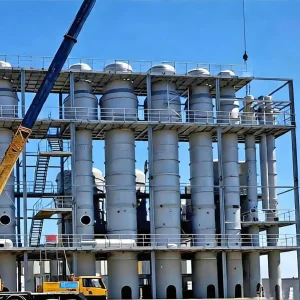
Advanced evaporation systems certified to European standards, offering high thermal efficiency for industrial processing plants.
Read More →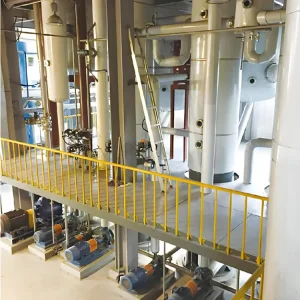
Designed specifically for heat-sensitive liquids, ensuring short residence times and minimal thermal degradation.
Read More →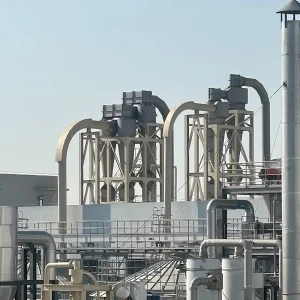
Utilizes high-velocity heated air to suspend and dry wet starch or fiber instantly, ensuring uniform moisture content.
Read More →
High-efficiency concentration solution featuring optimal liquid distribution to prevent dry tubes and scaling.
Read More →
Heavy-duty construction and wear-resistant plates make this mill ideal for continuous maize degerming operations.
Read More →
Features an impulse tube design that continuously tumbles particles during transport for rapid, efficient drying.
Read More →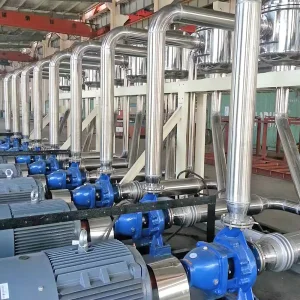
Multi-stage hydrocyclone system designed to wash, concentrate, and purify starch slurries, removing soluble proteins.
Read More →
Integrates MVR and multi-effect thermal designs to reduce steam consumption in large-scale concentration plants.
Read More →Expert answers to common queries regarding degerming mills and maize processing in Nigeria
A degerming mill is designed to break the maize kernel and separate the oil-rich germ from the starch-rich endosperm and outer fiber hull. In wet milling, this must be done with minimal damage to the germ to prevent oil from leaking into the starch slurry, which would compromise starch purity and quality.
We use high-grade, wear-resistant alloy steel for our rotor and stator plates. The tooth profiles are specifically engineered to handle the abrasive nature of flint maize varieties commonly grown in Nigeria, significantly extending the service life of the wear parts and reducing maintenance downtime.
Yes. Our degerming mills feature a modular design and standard flange connections, making them highly compatible with existing wet milling systems. Our engineering team can provide customized layout drawings to ensure seamless mechanical and electrical integration.
Our mills are equipped with high-efficiency motors (IE3/IE4 class) to minimize power draw. For installations in Nigeria, we recommend integrating variable frequency drives (VFDs) and soft starters to protect the motors from voltage fluctuations and reduce starting current spikes on local generator grids.
Jiangsu Zongheng is an ISO9001 certified manufacturer, and our pressure vessels hold the ASME "U" Stamp. We comply fully with SONCAP requirements, providing all necessary test reports and factory inspection documentation to facilitate smooth import and customs clearance through Nigerian ports.
We offer comprehensive remote technical support, including video-assisted installation guidance and commissioning supervision. We also provide detailed training programs for your local operators on routine maintenance, plate replacement, and system optimization. Spare parts can be shipped rapidly via air freight to minimize any operational delays.
Contact our engineering team today to discuss your specific throughput requirements, layout constraints, and processing goals. We will design a customized solution tailored to your operational needs.
Send Inquiry Now Zongheng