Why Is My Dryer Evaporator Freezing?

Time:2026-09-17 Author:Oliver
0%

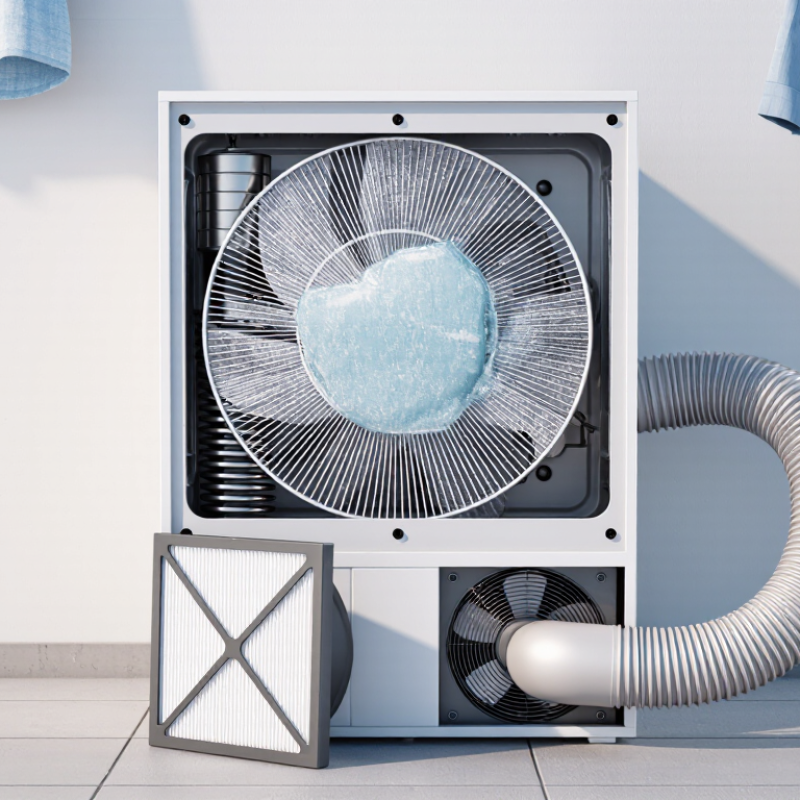
A frozen Dryer Evaporator can turn an efficient heat pump dryer into a slow, frustrating appliance. You may notice damp clothes, longer cycles, or a sharp drop in airflow. Behind the lower access panel, frost can appear as a thin white coat across the evaporator fins. Sometimes, it becomes a solid block of ice. That clue matters.

In practical service work, restricted airflow is a common cause. A packed lint filter, blocked condenser, dirty evaporator fins, or a crushed vent path can prevent warm air from circulating properly. The system then removes heat unevenly, allowing moisture to freeze on the coil. A failed fan, blocked drain, faulty sensor, or low refrigerant charge may create similar symptoms. These causes require different repairs, so guessing can waste time and damage components. The dryer may also freeze after repeated loads in a cold, poorly ventilated room. It is easy to overlook that detail.

This guide explains how to inspect the problem safely and logically. Start with the owner’s manual, disconnect power, and allow the ice to melt naturally. Do not scrape the coil or apply direct heat. I have seen rushed repairs bend delicate fins and create a second problem. A clean filter does not always mean the airflow is healthy. Careful observation remains important. If frost returns after cleaning and proper defrosting, a qualified appliance technician should test airflow, sensors, fans, and the sealed refrigeration system. Some diagnoses need instruments, not assumptions.
Why Is My Dryer Evaporator Freezing?

What a Dryer Evaporator Does During Normal Operation

Why Is My Dryer Evaporator Freezing?

What a Dryer Evaporator Does During Normal Operation

In a heat-pump dryer, the evaporator acts like a cold metal gate. Warm, damp drum air passes across its fins. The refrigerant absorbs heat, while water vapor condenses into droplets. The air then moves across the condenser and returns warmer to the drum. This closed-loop process explains why these dryers release little heat into the room.

A light frost layer can appear briefly. The control system should remove it through timed defrosting or warmer airflow. The ASHRAE Handbook—HVAC Systems and Equipment describes this basic refrigeration cycle as evaporator heat absorption, compression, condensation, and expansion. ENERGY STAR reports that certified heat-pump dryers use about 28% less energy than standard electric dryers. That efficiency depends on clean airflow and stable coil temperatures.

Heavy ice is different. Lint on the filter, a blocked condenser, poor room ventilation, or a restricted drain can keep the evaporator too cold. A weak fan or incorrect refrigerant charge may also contribute. I have seen users blame the refrigerant first, but airflow problems are often easier to find. Still, that assumption needs testing.

Tips: Clean the lint filter after every load. Check the condenser area weekly. Keep the drain hose free of sharp bends. Let the dryer cool, then inspect for thick ice. Do not scrape the coil with metal tools. Record drying time and room temperature before requesting service.

How Ice Forms on a Dryer Evaporator

Why Is My Dryer Evaporator Freezing?

How Ice Forms on a Dryer Evaporator

A heat-pump dryer’s evaporator absorbs heat from damp, warm air. Its coil surface stays below room temperature, often near the dew point. Water vapor then condenses into droplets on the fins. If the surface falls below 0°C, those droplets freeze into a thin, pale layer of ice.

Airflow problems make this worse. A packed lint filter, blocked condenser, or weak fan reduces warm air reaching the evaporator. Refrigerant undercharge, a faulty temperature sensor, or a failed defrost cycle may also push coil temperatures too low. The ice acts like a blanket. Drying slows, energy use rises, and the compressor may run for longer periods. ENERGY STAR reports that certified heat-pump dryers use about 28% less energy than conventional electric dryers, but poor airflow can erase part of that advantage.

Tips: Clean the lint filter after every load. Keep the condenser area clear. Check for frost after a short cycle, not only after failure. If ice returns quickly, stop scraping it with sharp tools. That can damage delicate fins. A service technician should measure airflow, coil temperature, and refrigerant performance. The simple explanation is not always complete. Some frost can be normal during cycling, while heavy ice signals a control or refrigeration fault.

Common Causes of Evaporator Freezing

Why Is My Dryer Evaporator Freezing?

Common Causes of Evaporator Freezing

A frozen evaporator usually signals poor heat exchange, not simply a cold room. In heat-pump dryers, warm, damp air passes over the evaporator. Moisture condenses there before the air is reheated. If airflow drops, the coil can fall below freezing and build a white layer of ice.

The lint filter is the easiest place to inspect. Fine lint may coat the screen, even when it looks clean. A blocked condenser, crushed air path, or dirty evaporator can restrict airflow. The drum may feel warm, while clothes remain damp for hours. That pattern matters. A weak fan can create the same symptom, especially with unusual humming or reduced airflow. Low room temperatures may worsen freezing, but they are not always the real cause.

Another possibility is low refrigerant from a sealed-system leak. Ice may appear on one coil section instead of covering the entire surface. Do not chip the ice with a sharp tool; bent fins can reduce heat transfer. Unplug the dryer, let it thaw completely, and clean accessible filters according to the manual. If freezing returns, a qualified technician should test airflow, fan performance, coil temperatures, and refrigerant pressure. Repeated thawing only hides the fault. One imperfect test can mislead, so measure before replacing parts.

How to Diagnose the Freezing Problem Step by Step

Why Is My Dryer Evaporator Freezing?

A frozen evaporator usually means moisture cannot leave the heat-pump system correctly. Begin with safety. Unplug the dryer and let the ice melt naturally. Never scrape the coil. Check the lint filter, condenser area, air passages, and exhaust grille. A thick lint layer can restrict airflow and reduce heat exchange. The NFPA’s 2020 report found that failure to clean caused 31% of reported dryer fires. That figure deserves attention.

How to Diagnose the Freezing Problem Step by Step

Look for frost, weak airflow, unusually long cycles, or water collecting beneath the unit. Measure the room temperature if possible. A very cold installation area can make freezing more likely. Inspect the drain hose for kinks, then confirm that condensate reaches the tank or drain. Run one short cycle after cleaning. If frost returns quickly, stop testing. Low refrigerant, a faulty temperature sensor, blocked airflow, or a defrost-control problem may be involved. These parts require sealed-system instruments and trained service work. The U.S. Department of Energy reports that heat-pump dryers can use about 28% less energy than conventional electric dryers, but restricted airflow reduces that advantage.

Tips: Keep filters clean after every load. Check airflow monthly. A clean-looking passage may still be blocked deep inside. I would not assume the evaporator is defective before checking room temperature and drainage. Record frost location, cycle time, and recent cleaning. Those small details help a technician diagnose the fault faster.

Why Is My Dryer Evaporator Freezing? - How to Diagnose the Freezing Problem Step by Step

Diagnostic reference for heat-pump dryers. Always disconnect electrical power before cleaning or opening panels, and use the appliance service manual for model-specific procedures.
Step Area to Check Symptoms or Diagnostic Question Inspection or Test Normal Finding and Corrective Action Priority
1 Confirm the Frost Pattern Is the evaporator coil covered with frost or ice while the dryer is operating? Switch the dryer off, disconnect power, and allow the coil to defrost naturally. Photograph the frost pattern before it melts if possible. Light, temporary frost can occur during operation. A solid ice block, repeated icing, or ice that remains after a complete cycle indicates a fault requiring further checks. Inspect
2 Lint Filter and Air Duct Is drying slow, and does airflow feel weak at the exhaust or internal air path? Clean the lint filter. Inspect the filter housing, air channels, condenser/evaporator air passages, and rear or lower intake for lint buildup. Air passages should be visibly clear. Restricted airflow reduces heat transfer and can make the evaporator surface fall below freezing. Clean only with approved tools and methods. User Check
3 Condenser and Heat Exchanger Does the condenser area contain lint, dust, or a sticky film that blocks heat exchange? After disconnecting power, inspect the condenser and surrounding fins with a flashlight. Do not bend delicate fins or use excessive water unless the manual permits it. The heat exchanger should be free of heavy debris. A blocked condenser can reduce system efficiency and contribute to abnormal evaporator temperatures. User Check
4 Drum Air Circulation Fan Is the fan noisy, slow, intermittent, or not operating during a cycle? Run the dryer only as directed by the service manual and listen for the fan. Check for obstructions after power is disconnected. A technician can test the motor, capacitor, wiring, and control signal. The fan should run smoothly and provide consistent airflow. A failed or obstructed fan can cause poor drying and uneven coil temperatures. Inspect
5 Room Temperature and Installation Is the dryer installed in a very cold, enclosed, or poorly ventilated room? Check the room conditions and installation clearances against the appliance manual. Avoid placing the dryer in an unheated area or directly against heat-sensitive obstructions. Heat-pump dryers require operation within their specified ambient-temperature range. Low room temperature can reduce refrigerant evaporation temperature and increase icing risk. Inspect
6 Moisture Drainage Is the water container full, or is condensate draining slowly? Empty the water container. Check the drain hose, pump inlet, filter, and float area for kinks, lint, sludge, or blockage. Condensate should drain reliably. A drainage fault can increase humidity inside the air path and may cause repeated damp operation or abnormal frost. User Check
7 Temperature Sensors Does the dryer stop too early, overheat, remain cold, or fail to control the cycle correctly? A qualified technician should inspect thermistors, connectors, wiring, and sensor resistance against the service manual. Sensor resistance is temperature-dependent, so there is no universal value. Sensors should change resistance smoothly with temperature and provide stable readings. An open circuit, short circuit, or inaccurate sensor can prevent correct defrost or temperature control. Technician
8 Defrost Function Does the evaporator repeatedly freeze even after airflow and drainage are confirmed? Check whether the control system initiates its programmed defrost routine. Inspect the defrost sensor, control board, fan operation, and related wiring. A properly operating system should periodically remove or prevent excessive frost. Failure of the sensor, control, or defrost sequence requires model-specific diagnosis. Technician
9 Refrigerant Circuit Is the frost concentrated on only part of the evaporator, while airflow and controls appear normal? Do not release refrigerant or open sealed-system tubing. A certified technician should check for leaks, charge condition, restrictions, and compressor performance using approved equipment. Uneven frost coverage can indicate low refrigerant charge, a restriction, or another sealed-system problem. Refrigerant pressure values vary by design and should not be judged by a generic chart. Technician
10 Compressor Operation Does the compressor hum, repeatedly click off, run continuously, or fail to start? Listen for unusual noise and observe whether the compressor starts during a heat-pump cycle. Electrical and refrigerant tests must be performed by a qualified technician. The compressor should start smoothly and operate within the appliance control sequence. Overheating, repeated thermal trips, or abnormal noise may indicate an electrical or sealed-system fault. Technician
11 Reset and Functional Test Does the problem disappear after cleaning and a complete defrost, then return during the next load? After the unit is fully dry and reassembled, restore power and run a small, correctly loaded test cycle. Monitor airflow, drying time, water collection, and frost recurrence. If the dryer operates normally and the frost does not return, a blocked filter or temporary airflow issue may have been the cause. Recurring ice formation needs deeper diagnosis. Verify
12 Decide Whether to Stop Using the Dryer Is there a burning smell, damaged wiring, water near electrical parts, repeated breaker tripping, or severe ice buildup? Stop the appliance, disconnect power if safe, and do not restart it until the cause has been identified. These conditions can create electrical, mechanical, or water-related hazards. Arrange professional service rather than bypassing safety controls. Stop Use
Key diagnostic rule: Begin with airflow, lint removal, room conditions, and drainage because these are accessible causes. If the evaporator freezes again after those checks, the likely areas are temperature sensing, defrost control, fan operation, refrigerant charge, restrictions, or compressor performance. Sealed-system work and refrigerant handling should be performed only by appropriately qualified personnel.

Ways to Prevent Future Evaporator Ice Buildup

Preventing evaporator ice buildup starts with airflow, not scraping ice away. In heat-pump dryers, warm, moist air must move steadily across the evaporator. A clogged lint filter can restrict airflow and leave moisture on cold fins. Clean the filter after every load, even when it looks nearly clear. Vacuum the filter housing gently each week. Keep air-intake and outlet grilles unobstructed. A narrow gap can matter.

Check the evaporator area according to the appliance manual. Unplug the dryer before opening any access panel. Remove lint with a soft brush or low-pressure vacuum, and avoid bending the delicate fins. Empty the water container regularly, or inspect the drain hose for kinks. Do not overload the drum. Dense loads, such as wet towels, can hold moisture too long. Cold rooms also increase freezing risk, so keep the dryer within its recommended operating temperature. Small detail. It is easy to overlook.

I once focused on cleaning the filter and ignored the room temperature. That was incomplete. If ice returns after proper cleaning, the cause may involve a weak fan, blocked drainage, faulty sensors, or low refrigerant. These faults require a qualified appliance technician.

Do not chip ice with a knife or pour hot water over the evaporator. Both actions can damage fins, wiring, or plastic parts. Record when freezing occurs, how long drying takes, and whether airflow changes. Those observations make professional diagnosis faster and more reliable.

FAQS

Why does ice form on a heat-pump dryer evaporator?

Warm, damp air reaches a cold coil. Moisture condenses on its fins and freezes below 0°C.

Can a dirty lint filter cause evaporator freezing?

Yes. Fine lint can block airflow, even when the filter looks clean. Clean it after every load.

What other airflow problems can create ice?

A blocked condenser, crushed air path, dirty evaporator, or weak fan can reduce warm airflow.

What drying symptoms suggest a frozen evaporator?

Clothes remain damp for hours, while the drum still feels warm. Drying may become unusually slow.

Can a low room temperature cause freezing?

It can worsen the problem, but it is not always the main cause. Check airflow before blaming the room.

Could a refrigeration fault create uneven ice?

Yes. Low refrigerant from a sealed-system leak may freeze only one coil section. That pattern deserves testing.

What should I do when I see ice?

Unplug the dryer and let it thaw completely. Do not scrape the fins with sharp tools.

When should a technician inspect the dryer?

Contact a qualified technician if ice returns quickly. They should measure airflow, fan performance, coil temperature, and refrigerant pressure.

Is every thin layer of frost abnormal?

Not necessarily. Some frost may appear during normal cycling. Heavy or repeated ice suggests a control or refrigeration fault.

Can repeated thawing solve the problem?

Usually not. It only hides the fault temporarily. One imperfect test can mislead, so measure before replacing parts.

Conclusion

A Dryer Evaporator plays an important role in removing moisture from air during normal operation. As warm, humid air passes over the cold evaporator coil, water vapor condenses and drains away, allowing the system to produce cooler, drier air. However, if the coil becomes too cold or airflow is restricted, moisture can freeze on its surface and gradually form a layer of ice.

Evaporator freezing may be caused by blocked filters, dirty coils, poor ventilation, low refrigerant, a faulty fan, or inaccurate temperature controls. Diagnosis should begin with checking airflow, cleaning accessible components, inspecting the drain system, and observing whether the fan and controls operate correctly. If the problem continues, a qualified technician should test the sealed system and electrical parts. Regular filter cleaning, proper ventilation, adequate maintenance, and avoiding excessive loads can help prevent future ice buildup and keep the dryer operating efficiently.


Oliver

Oliver

Oliver is a seasoned marketing professional with a wealth of expertise in driving brand awareness and engagement. With a deep understanding of our company's product offerings, he consistently delivers high-quality content that enriches our professional blog. His insights not only shed light on......