Selecting reliable Falling Film Evaporator Ethanol manufacturers requires more than comparing catalog images or advertised capacity. Ethanol evaporation demands stable heat transfer, controlled residence time, and careful vapor management. A well-designed system should protect product quality while supporting efficient solvent recovery under suitable operating conditions.
This guide reviews ten manufacturers through practical engineering criteria. These include evaporator configuration, stainless-steel construction, vacuum capability, automation, cleanability, and after-sales support. It also considers documented experience with ethanol-based processing, pilot testing, installation guidance, and compliance with applicable safety standards. Details such as tube diameter, feed distribution, steam consumption, and cleaning access can affect daily performance. Small design choices matter.
The ranking is not absolute. A supplier with strong laboratory equipment may not suit a large industrial plant. Another manufacturer may offer excellent fabrication but limited commissioning support in certain regions. That distinction is easy to overlook. We compare available technical evidence, customer-service practices, and application suitability rather than repeating promotional claims. Readers should still request process guarantees, material certificates, performance data, and references for similar ethanol duties. Site conditions vary, and even a respected manufacturer may need further testing before final selection. This review aims to provide a practical starting point for engineers, procurement teams, and plant owners seeking dependable equipment, clearer comparisons, and fewer costly surprises during installation and operation.
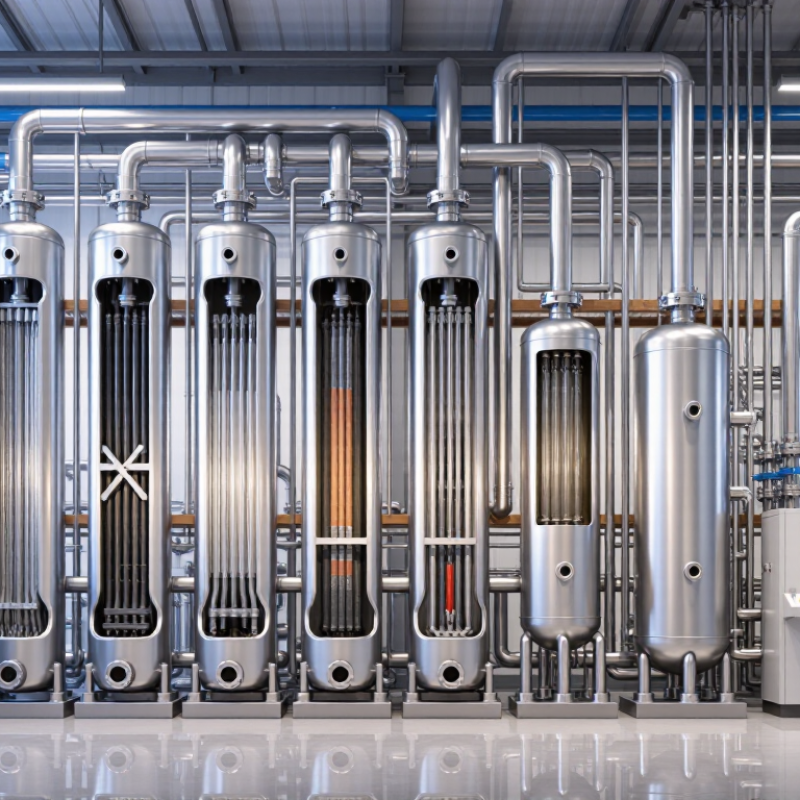
Falling film evaporators concentrate ethanol by spreading a thin liquid layer inside heated vertical tubes. The feed enters from the top and flows downward under gravity. Steam heats the tube walls, while vacuum lowers the boiling temperature. Ethanol and water vaporize at different rates, then enter a separator for vapor-liquid separation. The concentrated liquid leaves through the bottom. Short residence time helps reduce thermal damage and limits unnecessary energy exposure.
Ethanol boils at about 78.4°C at atmospheric pressure, according to NIST Chemistry WebBook. Under vacuum, the operating temperature can fall further. This matters when fermentation residues contain heat-sensitive compounds. The Renewable Fuels Association reported more than 15 billion gallons of U.S. fuel ethanol production in 2023, showing the scale behind these systems. Even small efficiency gains can affect steam demand significantly. The U.S. Department of Energy identifies process heat as a major industrial energy-use category.
A falling film unit is not automatically efficient. Poor liquid distribution can create dry tube areas, scaling, or unstable concentration. Feed viscosity also changes as solids increase. Operators should monitor temperature difference, vacuum pressure, feed rate, and outlet composition.
The ethanol-water azeotrope remains a limitation near 95.6% ethanol by mass at atmospheric pressure, as documented in chemical engineering references. Evaporation can concentrate ethanol, but final purification may require another separation step. Design assumptions deserve review. Real plants are rarely perfect.
Selecting a falling film evaporator manufacturer for ethanol production requires more than comparing prices. Evaluate the supplier’s process experience, engineering depth, and documented results. Ask how the system handles ethanol feed variation, foaming, heat-sensitive components, and changing solids levels. A capable manufacturer should explain these issues clearly.
Review the evaporator’s heat-transfer area, vacuum control, circulation design, and clean-in-place procedure. Request material certificates, welding records, pressure-test reports, and energy calculations. Stainless steel selection matters, especially around hot, oxygen-exposed surfaces. The supplier should also provide realistic steam-consumption data, not only ideal laboratory figures.
Details matter. Visit an operating installation when possible. Observe condensate quality, control-panel clarity, maintenance access, and cleaning time. Speak with operators, not only sales staff. Ask whether performance guarantees include feed composition, inlet temperature, and operating pressure. Vague guarantees deserve caution.
After-sales support is equally important. Check spare-parts availability, response times, remote troubleshooting, and technician training. Reliable manufacturers use traceable documentation and explain deviations instead of hiding them. No supplier is perfect. A minor design weakness may remain after testing, and honest disclosure builds more trust than polished claims. I would also compare pilot-test data with production needs, because a successful small-scale trial may not predict stable operation at full capacity. Fit matters.
Top 10 Falling Film Evaporator Ethanol Manufacturers
The top ten falling film evaporator ethanol manufacturers should be judged by engineering evidence, not advertising claims. Reliable suppliers understand ethanol plant conditions, including variable feed solids, foaming, vacuum operation, and heat-sensitive materials. Their systems should create a thin, even liquid film across each heating tube. This improves heat transfer and reduces residence time. Short residence time matters.
A strong manufacturer provides clear evaporation capacity, steam consumption, and final solids data. It should also explain how the unit performs during startup, shutdown, and changing feed rates. Practical designs may include multiple effects, automated condensate control, hygienic tube layouts, and effective clean-in-place circulation. Stainless steel selection must match the feed chemistry. Skilled suppliers also offer pilot testing before final sizing. That step can reveal problems that spreadsheets miss.
The best ten manufacturers usually demonstrate field experience, documented testing, and responsive technical support. Ask for references from comparable ethanol facilities. Check whether operators can inspect tubes without excessive disassembly. Review control logic, maintenance access, spare-part availability, and safety documentation. A polished proposal is not enough. Some suppliers overstate capacity under ideal conditions, while actual plants face fouling, unstable vapor loads, and imperfect cleaning. This is where careful buyers should remain skeptical. My own assessment would favor transparent assumptions over impressive numbers. The ranking may change when energy prices, feed composition, or local engineering standards change.
Comparing ten falling film evaporator manufacturers requires more than checking evaporation capacity. The technology must match ethanol concentration, feed variability, and available steam pressure. Experienced buyers examine tube diameter, liquid distribution, residence time, and cleaning access. A well-designed distributor keeps each tube evenly wetted, reducing dry spots and product degradation.
Some manufacturers offer multi-effect systems, thermal vapor recompression, or mechanical vapor recompression. These options can reduce steam consumption, but their value depends on plant conditions.
Heat recovery matters.
A supplier should provide measured energy data, not only theoretical efficiency. I would request heat and material balances, trial results, and operating references from similar facilities. Stainless steel selection also deserves attention, especially around seals, gaskets, and condensate zones.
Service quality often separates comparable equipment. Strong manufacturers support pilot testing, installation supervision, operator training, and performance validation. Remote monitoring can identify unstable feed flow or rising pressure before production suffers. Spare tube sheets and pump components should have clear delivery times.
Small details matter.
However, service promises may sound better than actual response times. Buyers should check warranty limits, documentation quality, and the availability of trained technicians. My comparison would not rank every supplier perfectly, because local utilities and maintenance skills can change the result. A technically excellent
Choosing a falling film evaporator manufacturer starts with the actual ethanol stream, not a catalog capacity. Share feed composition, flow range, target concentration, and operating temperature. A supplier should explain how these values shape tube dimensions, recirculation, and vapor separation. Ask for performance assumptions in writing. Small details matter: a few degrees of temperature change can alter product quality and utility demand.
Look for experience with volatile, temperature-sensitive process streams and ask how the design manages vapor containment, leak detection, and cleaning. Review wetted materials against the feed, cleaning agents, and expected operating conditions. Request drawings, control descriptions, and references for comparable duties. A factory test can reveal practical issues, but it cannot replace commissioning with the plant’s real feed. It’s worth checking.
Service matters after delivery. Confirm spare-part lead times, technician availability, operator training, and warranty boundaries. Ask how the manufacturer handles unstable feed rates or startup conditions; steady-state figures alone may flatter a proposal. Compare energy estimates using the same assumptions for steam, cooling water, and feed temperature. A spreadsheet can hide weak assumptions. I would also leave room for uncertainty: actual fouling and cleaning frequency may differ from early estimates, so build review points into the acceptance plan.
Review process experience, engineering details, test records, and support. Price alone is not enough.
Ask how it handles changing solids, foaming, and heat-sensitive components. Feed conditions vary.
Request capacity, steam use, final solids, and energy calculations. Ask for realistic operating data.
Even wetting reduces dry spots and helps limit product exposure to heat. Small details matter.
Check condensate quality, control-panel clarity, tube access, and cleaning time. Speak with operators, too.
Multiple effects and vapor recompression may help. Their value depends on plant conditions and utilities.
Request material certificates, welding records, pressure-test reports, and clear safety documents. Keep records traceable.
Check spare-part delivery times, troubleshooting response, and technician training. Promises need checking.
Not always. Small trials may miss fouling or unstable vapor loads at production scale.
It should state feed composition, inlet temperature, and operating pressure. Vague terms deserve caution.
This article explores how Falling Film Evaporator Ethanol systems concentrate ethanol efficiently by allowing a thin liquid film to flow over heated surfaces, improving heat transfer while reducing residence time and thermal exposure. It explains the main design factors that influence evaporation performance, including energy efficiency, vapor separation, temperature control, material compatibility, cleaning requirements, scalability, and process automation.
The guide also presents a practical framework for evaluating the top ten manufacturers in this specialized field without focusing solely on equipment price. It compares their technologies, customization capabilities, technical support, installation services, maintenance options, and ability to meet plant-specific production requirements. Finally, the article outlines how ethanol processors can select a suitable manufacturer by assessing capacity, operating conditions, lifecycle costs, reliability, safety features, and after-sales service, helping them make a balanced and informed investment decision.

Zongheng