How to Choose a Water Evaporation System in 2026?

Time:2026-10-02 Author:Isabella
0%

Choosing a Water Evaporation System in 2026 requires more than comparing equipment prices. It requires matching heat demand, wastewater chemistry, operating hours, and discharge targets. A system that looks efficient on paper may struggle with scaling, foaming, corrosion, or unstable feed conditions.

The International Energy Agency reports that industry consumes roughly 37% of global final energy, making thermal efficiency a serious investment issue. The UN World Water Development Report 2024 also highlights growing pressure on freshwater resources, especially in water-stressed industrial regions. These trends support stronger water recovery, but they do not make every evaporation system suitable. A compact mechanical vapor recompression unit may reduce steam use. A multi-effect evaporator may suit steady, high-volume operation. A forced-circulation design may handle difficult concentrates more reliably.

The fundamentals still matter. Chemical-engineering authority Warren L. McCabe wrote, “The object of evaporation is to concentrate a solution consisting of a nonvolatile solute and a solvent.” That principle sounds simple. Real plants are not.

A practical selection begins with a measured feed analysis, not a hopeful estimate. Record flow rate, dissolved solids, temperature, viscosity, and cleaning frequency. Then test how the concentrate behaves inside real tubes and separators. Pilot data can expose problems that brochures hide.

Energy is only one part of the decision. Consider labor, spare parts, condensate quality, noise, footprint, and future capacity. The lowest purchase price may become the highest lifecycle cost. That uncomfortable possibility deserves attention. A reliable Water Evaporation System should protect water resources while remaining maintainable on an ordinary Monday morning, not only during a successful commissioning trial.
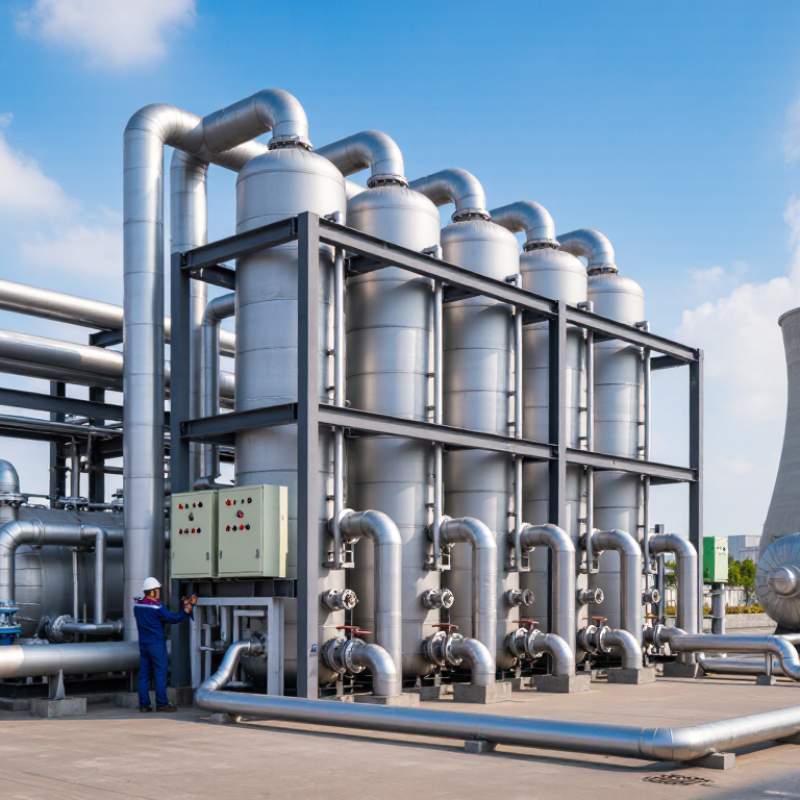
How to Choose a Water Evaporation System in 2026?

What Is a Water Evaporation System and How Does It Work?

How to Choose a Water Evaporation System in 2026?

A water evaporation system separates water from dissolved solids through controlled heating. It receives wastewater, raises its temperature, and converts part of the liquid into vapor. The vapor then condenses into cleaner water, while salts and other non-volatile materials remain concentrated. That is the core process.

Simple, but not effortless.

Industrial systems may use atmospheric evaporation, vacuum evaporation, or mechanical vapor recompression. Vacuum operation lowers the boiling temperature and can protect heat-sensitive materials. Mechanical vapor recompression reuses vapor energy, reducing external heat demand. The correct choice depends on wastewater chemistry, flow rate, target recovery, and available energy.

Real operating conditions matter. A system treating brine behaves differently from one treating oily wastewater. Scaling can coat heat-transfer surfaces, reducing performance and increasing cleaning time. Operators should test conductivity, hardness, suspended solids, and chemical compatibility before selecting equipment. I have seen designs fail because laboratory water looked cleaner than daily production wastewater.

Water efficiency is becoming more important. The UNESCO World Water Development Report 2024 states that agriculture accounts for roughly 70% of global freshwater withdrawals. Industrial users therefore face stronger pressure to recover and reuse water. The International Energy Agency also identifies industrial energy efficiency as a major route for lowering emissions. For 2026 projects, review both water recovery and energy consumption. A high recovery rate may still be uneconomical if the system requires excessive heat. Check real performance data, maintenance records, and seasonal operating limits—not only supplier estimates.

Which Water Evaporation Technologies Are Available in 2026?

Choosing a water evaporation system in 2026 starts with the water itself. Salinity, suspended solids, temperature, and scaling potential can change the best option. A clear sample analysis is more useful than a polished equipment brochure.

Mechanical vapor recompression uses recovered vapor as a heat source. It can reduce steam demand, but it needs dependable electricity and careful compressor control. Multiple-effect evaporation transfers heat through several stages. It suits continuous operations, although each added effect increases equipment complexity. Vacuum evaporation lowers the boiling temperature. This helps protect heat-sensitive liquids and can reduce thermal damage. Atmospheric evaporation remains simple for some low-volume applications, but it may require more energy and larger exhaust controls.

Hybrid systems combine these methods with heat pumps, waste heat, or solar thermal input. They can work well where energy prices and operating conditions change during the day. Crystallizing evaporators handle concentrated brines, yet they demand strict solids management and regular inspection. Fouling is easy to underestimate. A thin deposit on a heat-transfer surface can quietly reduce output and raise power use. Pilot testing with real feedwater is valuable, even when the laboratory results look promising. Some designs appear efficient on paper but perform poorly during cleaning cycles. Operators should compare water recovery, energy use, maintenance access, noise, controls, and disposal requirements under realistic loads. The cheapest unit may become the most expensive choice after one difficult operating season.

How to Choose a Water Evaporation System in 2026?

Water evaporation technologies differ in recovery rate, energy demand, operating temperature, and suitability for high-salinity wastewater. The chart compares representative water-recovery performance for commonly available systems. Actual results depend on feed composition, scaling potential, temperature, and plant design.

How to Match System Capacity With Water Treatment Requirements

How to Choose a Water Evaporation System in 2026?

Matching evaporation capacity begins with the water balance, not the equipment brochure. Measure average flow, peak flow, operating hours, and seasonal variation. Then define the required concentrate volume and final water quality. For example, treating 100 cubic metres daily at a fivefold concentration factor requires roughly 80 cubic metres of evaporation. The numbers must be verified through sampling.

Water chemistry changes the calculation. High silica, hardness, oils, or suspended solids can increase fouling and cleaning time. A system rated for 100 cubic metres daily may deliver much less during a dirty feed cycle. Include downtime, startup losses, and a practical turndown range. Avoid choosing capacity from one laboratory sample. It is a common mistake.

Industry data gives useful context. The UNESCO World Water Development Report 2024, drawing on FAO AQUASTAT, reports that agriculture uses about 70% of global freshwater withdrawals. Industrial users therefore face growing pressure to recover process water. The U.S. Department of Energy’s Industrial Decarbonization Roadmap states that process heating represents about 51% of energy use in U.S. manufacturing. Evaporation capacity must therefore match energy availability, not only water volume. Check steam, electricity, cooling, and discharge limits together. A large unit can waste energy when the daily load is small. A 20% design margin may look safe, yet it can still fail during fouling. Pilot testing under worst-case chemistry is usually more reliable than optimistic spreadsheet assumptions.

What Factors Affect Energy Use, Cost, and Environmental Impact?

Choosing a water evaporation system in 2026 requires more than comparing purchase prices. Start with a measured water analysis, including flow rate, dissolved solids, temperature, and fouling risk. These details determine the required heat-transfer area and cleaning frequency. The cheapest quote may not be the lowest-cost option. I once reviewed a system that used little energy but required frequent manual cleaning. Its hidden labor costs changed the decision.

Energy use depends heavily on the heat source and vapor design. Mechanical vapor recompression can reduce steam demand, especially during steady operation. Heat recovery from warm wastewater or exhaust streams can also lower fuel consumption. However, compressors consume electricity, and their climate benefit depends on the local power mix. Test real operating conditions, not only laboratory figures. Small mistakes matter.

Cost should include installation, maintenance, downtime, chemicals, wastewater handling, and replacement parts. Environmental impact includes direct emissions, electricity demand, concentrate disposal, and noise. A system running at high temperature may evaporate faster but increase scaling and corrosion. Lower temperature operation can protect equipment, though it may need more surface area. There is no universal winner. Request performance data from comparable sites, verify the assumptions, and leave room for seasonal changes. No spreadsheet is perfect. Fresh water quality can shift unexpectedly.

How to Compare Installation, Maintenance, Safety, and Compliance Needs

How to Choose a Water Evaporation System in 2026?

Installation, Maintenance, Safety, and Compliance Needs

Start with the wastewater, not the equipment brochure. Test chloride, hardness, silica, organics, pH, and seasonal flow changes. These values affect corrosion, scaling, pretreatment, and cleaning frequency. The International Energy Agency reported that industry consumed about 37% of global final energy in 2022. Evaporation can therefore create a serious energy burden. Compare steam, electricity, waste heat, and heat-pump options using measured operating data. A small footprint may look attractive, but restricted access can make maintenance expensive.

Maintenance details deserve physical inspection. Ask whether operators can open inspection ports safely, replace sensors, and remove deposits without lifting heavy covers. Record cleaning chemicals, cycle duration, spare-part lead times, and expected downtime. The U.S. Environmental Protection Agency’s industrial wastewater guidance emphasizes pollutant characterization and controlled discharge monitoring. That means condensate quality should be verified, not assumed. One imperfect assumption can distort the entire business case.

Safety and compliance must be designed together. Include pressure relief, vacuum protection, hot-surface guarding, chemical segregation, confined-space controls, and automatic shutdowns. Review applicable occupational, boiler, electrical, and environmental requirements before installation. The 2024 UN World Water Development Report states that agriculture represents roughly 70% of global freshwater withdrawals, increasing pressure on industrial water recovery. However, water reuse does not remove compliance duties. Check air emissions, concentrate disposal, worker exposure, permits, and sampling records. I would not trust a single efficiency estimate. Pilot testing with real wastewater is slower, but usually more honest.

How to Choose a Water Evaporation System in 2026? - How to Compare Installation, Maintenance, Safety, and Compliance Needs

Evaporation System Best-Fit Application Typical Energy Profile Installation Requirements Maintenance Profile Main Safety Considerations Compliance Considerations Overall Selection Signal
Single-Effect Vacuum Evaporator Small to medium wastewater flows, heat-sensitive liquids, batch or intermittent operation, and facilities with limited steam demand. Usually requires an external heat source. Thermal energy demand is commonly higher than multi-effect or vapor-recompression systems because vapor is generally used once. Medium
Requires a vacuum system, condenser, feed and concentrate tanks, pumps, ventilation, and a suitable heat source.
Medium
Regular inspection of heat-transfer surfaces, vacuum equipment, pumps, seals, instruments, and condensate quality.
Hot surfaces, steam or hot-water pressure, vacuum implosion protection, chemical exposure, and oxygen-deficient or confined-space hazards where applicable. Discharge or reuse requirements for distillate, hazardous-waste classification of concentrate, pressure-equipment rules, chemical storage, and worker-safety regulations may apply. Suitable when capacity is moderate and simple process control is more important than minimum energy consumption.
Multiple-Effect Evaporator Continuous operation with relatively stable feed composition and moderate-to-high evaporation capacity. Uses vapor from one effect to heat the next effect. Steam consumption is typically lower than single-effect operation, with savings increasing as the number of effects increases. High
Requires several heat-transfer effects, interconnecting vapor lines, condensate handling, vacuum control, instrumentation, and a larger process layout.
High
More heat-transfer surfaces and control valves require systematic cleaning, fouling monitoring, gasket inspection, and performance testing.
Multiple hot zones, pressure and vacuum transitions, chemical carryover, thermal burns, and potential overpressure in steam and condensate circuits. Requires documented pressure-system controls, emissions or vent management, wastewater characterization, concentrate disposal records, and validated monitoring of treated water where required. Strong option for larger, steady flows when steam is available and energy reduction justifies higher mechanical complexity.
Mechanical Vapor Recompression (MVR) Large and continuous evaporation duty where electricity is available and the facility wants to reduce dependence on external steam. Recycles vapor by compressing it to a higher pressure and temperature. Electrical demand is commonly in the range of approximately 15–40 kWh per cubic metre of water evaporated, depending on feed conditions, temperature lift, and system design. High
Needs a robust electrical supply, compressor foundations, vibration control, feed pretreatment, condensate routing, and adequate heat-exchanger access.
High
Compressor condition monitoring, lubrication or sealing checks, vibration analysis, fouling control, and periodic inspection of heat-transfer equipment are important.
Rotating machinery, high electrical fault current, pressure vessels, hot condensate, noise, vibration, and automatic shutdown requirements. Electrical safety, machinery guarding, pressure-equipment compliance, noise limits, condensate quality verification, concentrate management, and energy-performance documentation may be required. Often preferred for high operating hours and high steam costs, provided electrical infrastructure and skilled maintenance are available.
Thermal Vapor Recompression (TVR) Facilities with an existing steam system and a need to reduce steam use without installing a large electrically driven compressor. Uses motive steam to recompress part of the vapor. It generally reduces steam consumption compared with single-effect evaporation but still requires a dependable steam supply. High
Requires steam-quality control, ejector or thermocompressor piping, condensate recovery, vacuum equipment, and integration with the plant steam network.
Medium
Maintenance commonly focuses on steam valves, ejector performance, vacuum leaks, heat-transfer fouling, condensate systems, and instrumentation.
Steam burns, high-pressure steam release, condensate hammer, vacuum hazards, hot chemical solutions, and inadequate isolation during maintenance. Steam and pressure-system rules, boiler-house procedures, condensate discharge limits, chemical handling requirements, and concentrate disposal obligations apply according to jurisdiction. Practical where steam is already available and electrical capacity is constrained or expensive.
Forced-Circulation Crystallizer High-salinity wastewater, near-zero-liquid-discharge projects, and streams that must be concentrated beyond the point where conventional evaporators can operate reliably. Typically has high electrical and thermal demand because it must circulate concentrated liquor, evaporate water, and manage crystal formation. Energy use varies substantially with salt load and recovery target. High
Requires heavy-duty pumps, large recirculation piping, solids-handling equipment, crystallizer vessels, robust foundations, and space for cleaning and solids removal.
High
Abrasion, scaling, corrosion, pump wear, density control, solids removal, and frequent inspection of heat-transfer surfaces are common concerns.
High-temperature concentrated chemicals, rotating equipment, crystallized solids, blocked lines, pressure excursions, confined spaces, and difficult manual-cleaning conditions. Solid-waste classification, leachability testing, hazardous-material controls, wastewater permits, worker exposure limits, and documented mass-balance results are commonly relevant. Best when liquid discharge must be minimized and the project can support higher capital cost, operating complexity, and solids management.
Atmospheric or Natural-Circulation Evaporator Low-complexity applications with relatively clean feed, moderate concentration requirements, and access to low-cost waste heat or ambient cooling conditions. May use ambient air, waste heat, or low-grade thermal energy. Performance depends strongly on climate, humidity, feed temperature, airflow, and available heat-transfer area. Low to Medium
Generally simpler than vacuum systems, but may require large surface area, air handling, condensate collection, and weather protection.
Medium
Cleaning, corrosion control, fan or pump inspection, drift prevention, and monitoring of heat-transfer surfaces are required.
Biological exposure, aerosols or drift, hot liquid, chemical mist, fan guarding, slip hazards, and potential odor or vapor release. Air-emission and odor requirements, drift control, wastewater discharge rules, chemical storage, environmental sampling, and local nuisance regulations may apply. Attractive when energy cost is low and land or heat-transfer area is available; less suitable for compact, high-throughput projects.
The energy ranges and application guidance above are indicative industry planning values, not guaranteed performance figures. Actual results depend on feed flow, dissolved-solids concentration, boiling-point elevation, fouling tendency, required recovery, operating temperature, heat-source conditions, local climate, and condensate quality targets. Before selection, confirm the design through a representative feed trial, a heat-and-mass balance, a corrosion review, a safety assessment, and a jurisdiction-specific compliance review.

FAQS

How should evaporation capacity be calculated?

Start with measured flow, not equipment brochures. Record average flow, peak flow, operating hours, and seasonal changes. Define the required concentrate volume and final water quality. For 100 cubic metres daily, fivefold concentration requires about 80 cubic metres of evaporation. Verify this estimate with samples. Numbers can mislead.

Why can a rated capacity be lower in real operation?

Silica, hardness, oils, and suspended solids may cause fouling. Fouling reduces heat transfer and increases cleaning time. A system rated for 100 cubic metres daily may process less during dirty cycles. Include startup losses, downtime, and practical turndown limits. One laboratory sample is not enough.

How does water chemistry affect system selection?

Test chloride, hardness, silica, organics, pH, temperature, and dissolved solids. These values influence corrosion, scaling, pretreatment, and cleaning frequency. High-temperature operation may increase evaporation speed. It can also accelerate deposits and corrosion. Lower temperatures may protect equipment but require more surface area. There is no universal winner.

How can energy use be compared fairly?

Compare steam, electricity, recovered heat, and heat-pump options. Mechanical vapor recompression may reduce steam demand during steady operation. However, compressors still consume electricity. The local power mix affects environmental performance. Include cooling needs and discharge limits. Test real conditions.

What costs should be included beyond the purchase price?

Include installation, maintenance, chemicals, downtime, spare parts, and concentrate handling. Also calculate cleaning labor and replacement intervals. A low-energy system may require frequent manual cleaning. That hidden labor can change the decision. Cheap is not always cheap.

What installation features make maintenance easier?

Inspect access ports, sensor locations, lifting points, and deposit-removal paths. Operators should open equipment safely and replace sensors without awkward lifting. Record cleaning duration, chemical requirements, spare-part lead times, and expected downtime. A compact footprint may restrict access. That matters later.

What safety features should an evaporation system include?

Consider pressure relief, vacuum protection, hot-surface guards, and automatic shutdowns. Separate cleaning chemicals from incompatible materials. Provide confined-space controls and clear operating procedures. Review workplace, pressure, electrical, and environmental requirements before installation. Safety cannot be added casually.

How should environmental performance and compliance be checked?

Verify condensate quality through regular sampling. Do not assume treated water is always suitable for reuse. Assess electricity demand, direct emissions, concentrate disposal, noise, and worker exposure. Review permits and discharge limits before operation. Water recovery does not remove compliance duties. Pilot testing is slower, but more honest.

Conclusion

Choosing the right Water Evaporation System in 2026 requires a clear understanding of how evaporation separates water from dissolved solids and contaminants through controlled heating, airflow, or reduced pressure. Available technologies may include thermal evaporation, vacuum evaporation, mechanical vapor recompression, and solar-assisted methods. Each option offers different advantages in efficiency, operating conditions, scalability, and suitability for industrial or specialized wastewater treatment.

The system’s capacity should match the treatment flow rate, contaminant concentration, desired water quality, and future expansion plans. Energy consumption and environmental impact depend on heat recovery, power sources, insulation, automation, and operating temperature. Buyers should also compare installation requirements, maintenance access, corrosion resistance, operator safety, monitoring features, and applicable environmental and discharge regulations. A well-selected system balances performance, lifecycle cost, reliability, and compliance while providing a practical solution for long-term water management.


Isabella

Isabella

Isabella is a dedicated marketing professional with a sharp focus on driving brand growth and engagement through strategic content creation. With an extensive background in digital marketing, she combines her passion for storytelling with her keen understanding of industry trends to deliver......